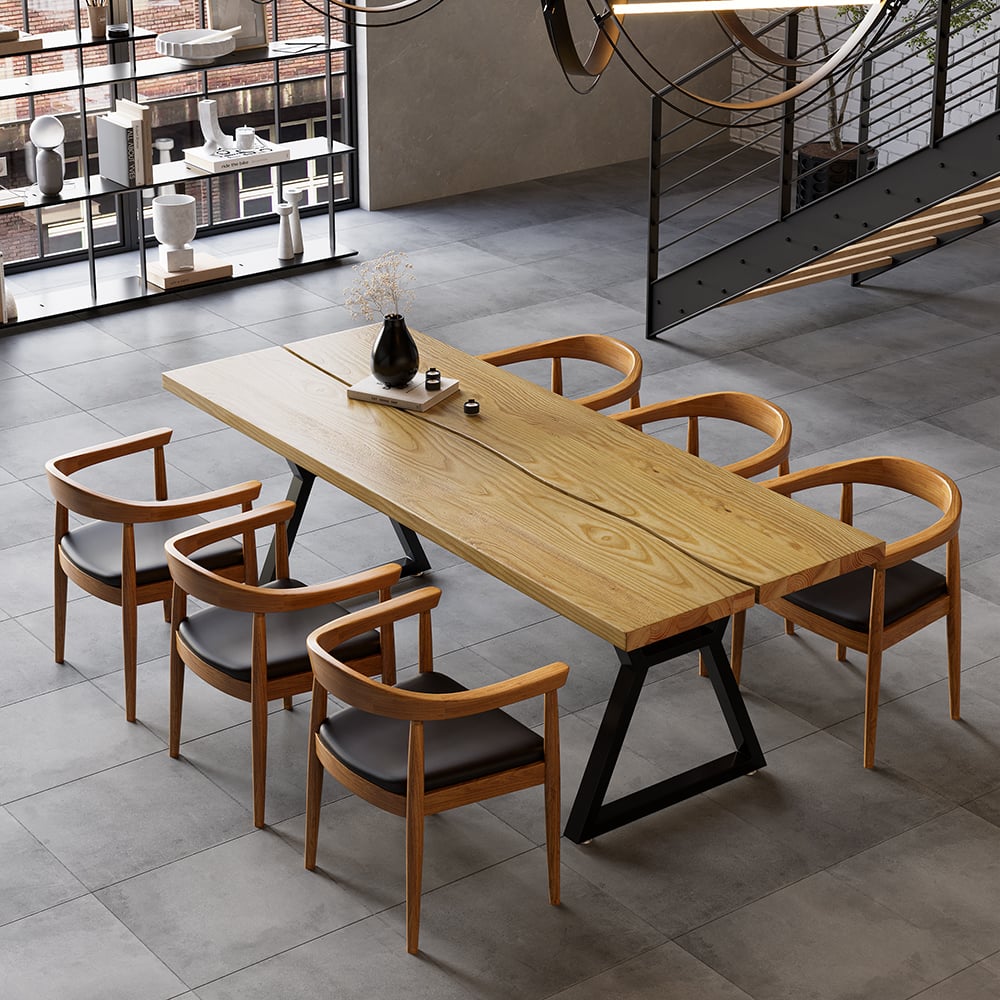
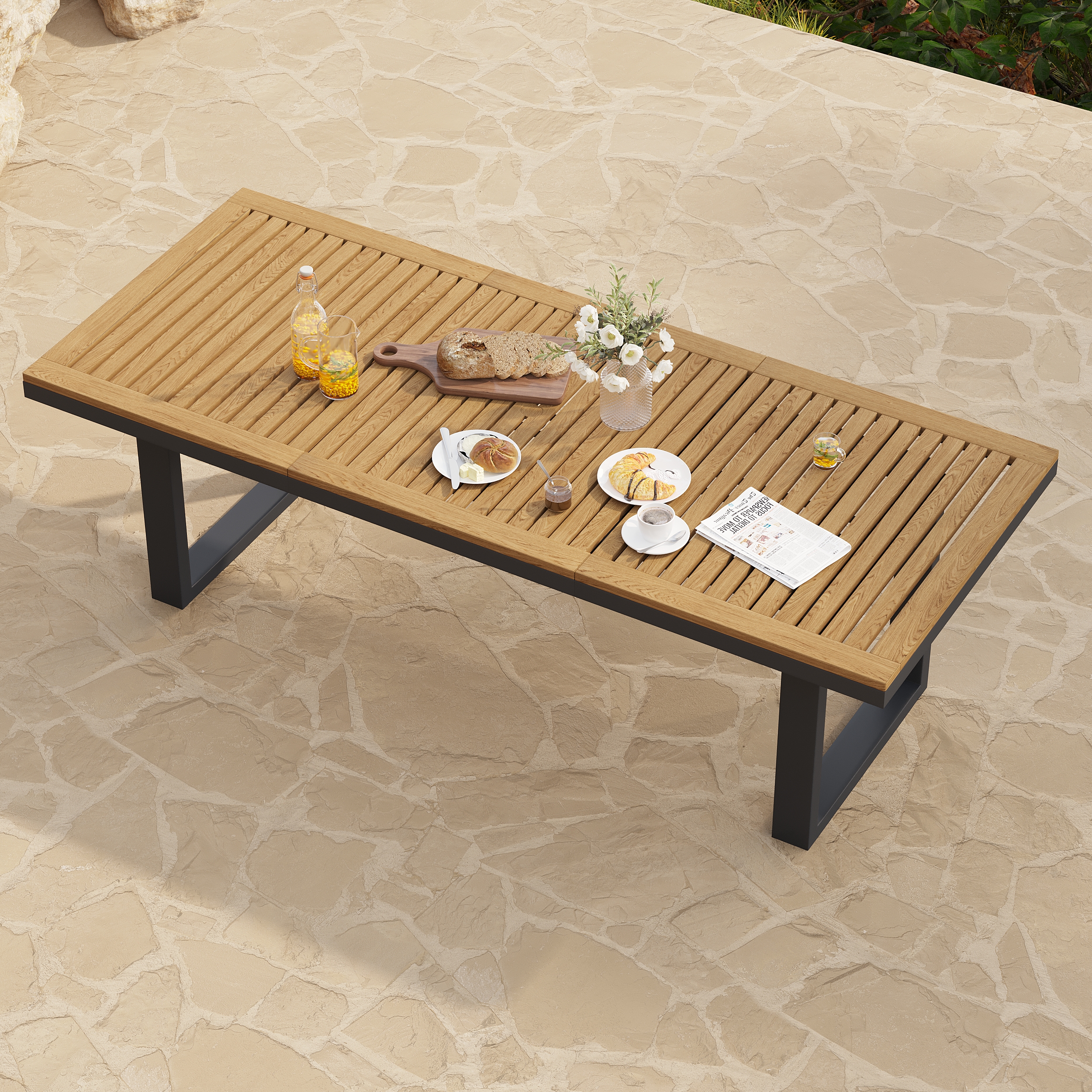
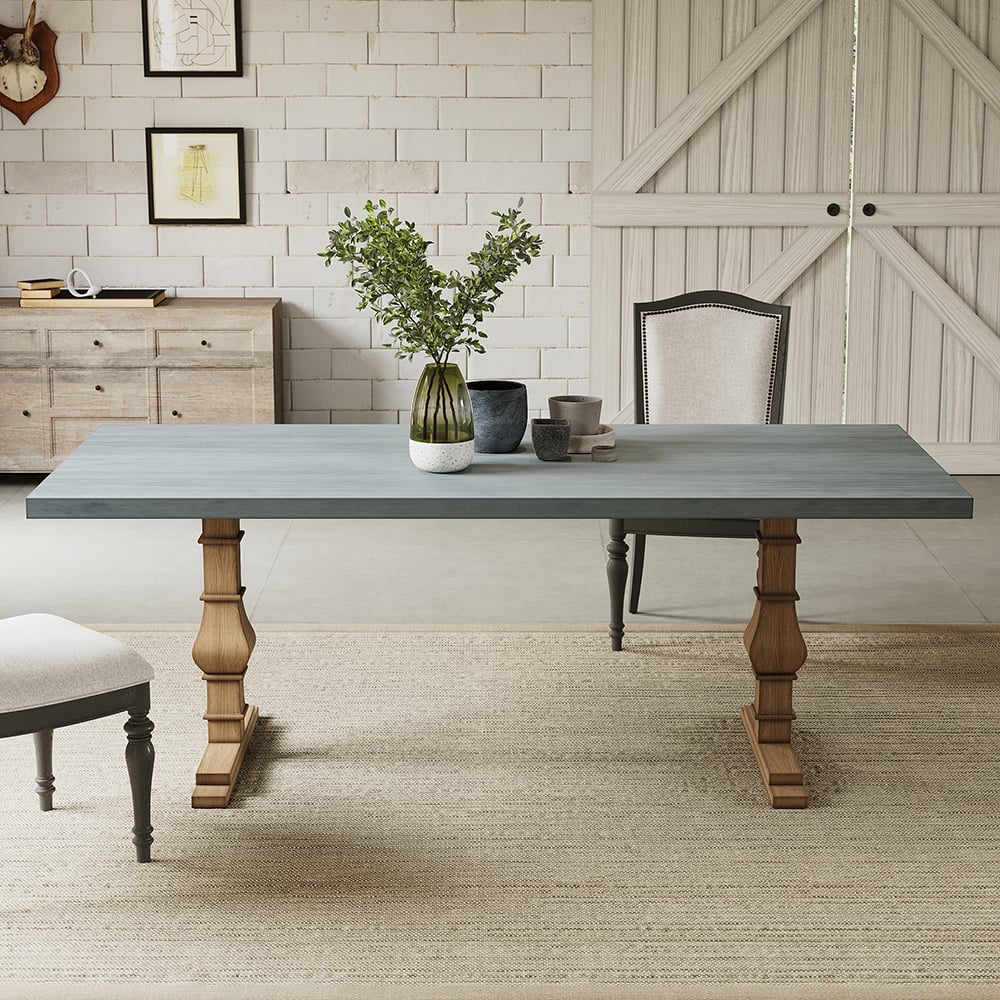
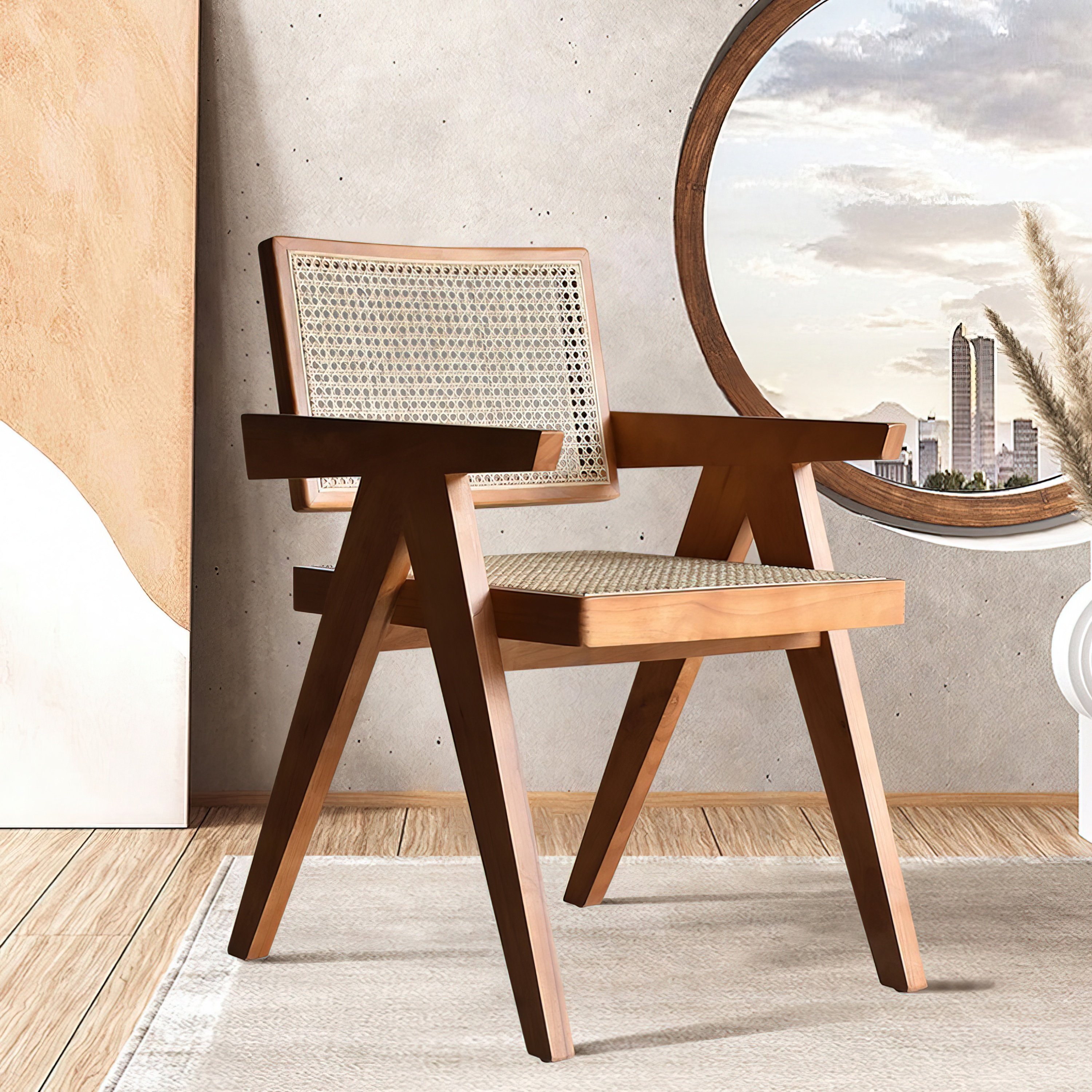
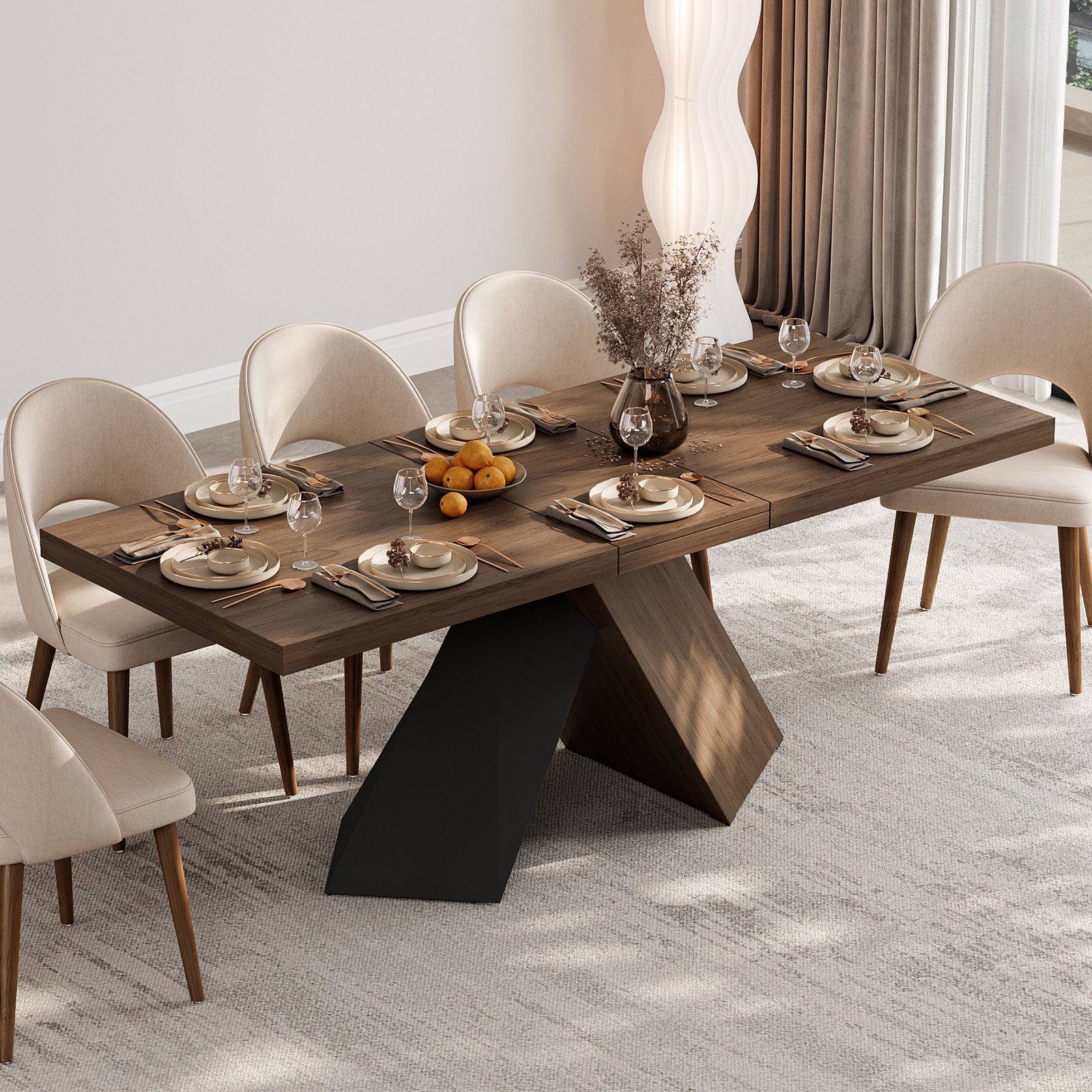
Choosing the perfect farmhouse dining table is about finding the sweet spot between rustic charm and daily durability. As the focal point of your dining room or kitchen, your table needs to comfortably seat your family and guests while standing up to decades of meals, homework sessions, and gatherings. Whether you are looking for an extendable table, a reclaimed wood centerpiece, or styling tips, this hub gathers all our expert guides to help you make an informed choice.
Before diving into styles, we highly recommend starting with our two essential guides: review the Farmhouse Dining Table Size & Seating Guide to map your room dimensions, and read our 7 Farmhouse Dining Table Buying Mistakes to Avoid so you don’t run into clearance or delivery issues.
To explore all your options, browse our complete list of articles below, or check out our dedicated guides on Dining Chairs and Dining Room Styling to complete your space.
My aunt in Ohio has had the same dining table for eleven years. It’s a thick-topped pine rectangle with two chunky pedestal legs, a little scarred from birthday candles and one memorable spilled pot of chili. She didn’t buy it because a magazine told her to. She bought it because her kitchen table had gotten too small for the grandkids, and this one felt like it could take a beating and still look good doing it. That’s the whole appeal of a farmhouse dining table in one sentence: it’s furniture built to be lived on, not just looked at.
A farmhouse dining table is a solid or solid-look wood table, usually with a thick tabletop, simple joinery, and a sturdy base (trestle, pedestal, or turned legs), designed to look handmade and hold up to daily family use rather than sit as a showpiece. The style borrows from actual 19th-century American farmhouses, especially in the Midwest and New England, where tables had to survive kids, harvest dinners, and decades of wear with almost no maintenance beyond a wipe-down. If you’re shopping for one in 2027, the real questions aren’t “is farmhouse still trendy.” They’re: what size do I actually need, what wood should I buy, and which of the hundred nearly-identical options is worth the money.
This guide answers all three, with real measurements, a wood comparison you can act on, and specific tables you can actually buy today from Homary, priced from about $550 to $1,200.
What Makes a Table “Farmhouse,” Exactly
A true farmhouse dining table usually has four things in common: a thick tabletop (often 1.5 inches or more), a base built for stability rather than delicacy (trestle, double pedestal, or turned/tapered legs), a finish that looks natural or slightly distressed rather than glossy, and joinery simple enough that you can picture someone building it in a barn. Modern farmhouse tables keep that shape but clean up the finish, usually pairing warm wood tones with black metal accents, gray washes, or two-tone combinations like a walnut top with a painted base.
The style’s roots are genuinely American. Houzz’s architectural history coverage traces farmhouse design back to 19th-century agricultural homes in the Midwest, where settlers blended Colonial, Pennsylvania Dutch, and German building traditions into practical, unfussy houses built for work, not show (Houzz). New England farmhouses tell a slightly different story: smaller, closer together, built on rocky land that didn’t leave much room for anything ornamental (Nina Hendrick Design Co.). The “modern farmhouse” look most people picture today, the shiplap, the black-and-white palette, the oversized dining table, owes a lot to Chip and Joanna Gaines and HGTV’s Fixer Upper, which ran through 2018 and pushed the style into the mainstream nationally from their base in Waco, Texas.
What Size Farmhouse Dining Table Do You Actually Need
Here’s the part almost every buying guide skips: real numbers for how much room a table needs, not just “measure your space first.”
The standard rule from furniture and design sources is about 24 inches of table width per seated person, though people using wide upholstered or arm chairs may want closer to 26 to 30 inches (Castlery; 2Modern). Beyond the table itself, you need clearance to actually use the room. Most design sources recommend 36 to 48 inches of open floor space from the table’s edge to the nearest wall or furniture, with an 18 to 24 inch minimum just to slide a chair back and stand up comfortably.
Here’s how that translates to real table sizes and real rooms:
| Seats | Typical Table Length | Recommended Room Size |
|---|---|---|
| 4 | 48 to 60 inches | 10 x 12 ft |
| 6 | 60 to 78 inches | 12 x 14 ft |
| 8 | 78 to 96 inches (or extendable) | 14 x 18 ft |
If your dining area is smaller than these numbers, look at round or oval tables instead of rectangular ones. A round table seats the same number of people in less footprint because there are no corners eating up floor space, and it makes conversation easier since nobody’s stuck at “the end of the table.” An extendable table is the other smart option if you host occasionally but don’t want a huge table taking up space daily, more on that below.
Farmhouse Wood Types: What’s Actually Durable
This is the section most articles skip entirely, and it’s the one that actually matters for a purchase you’ll live with for a decade. Not all “farmhouse” tables are solid wood, and not all wood species wear the same way.
Hardness matters because a dining table takes daily abuse: hot dishes, dragged chairs, kids leaning on it, the occasional dropped fork. Wood hardness is measured on the Janka scale, which tests how much force it takes to embed a steel ball halfway into a piece of wood. Higher numbers mean more resistance to dents and scratches. Based on Janka hardness data compiled by furniture material sources (Bell Forest Products), here’s how common farmhouse table woods stack up:
| Wood Type | Approx. Janka Hardness | Best For |
|---|---|---|
| Oak (red/white) | 1,220 to 1,360 lbf | Heavy daily use, families with kids |
| Acacia | About 1,180 lbf | Good durability, distinct grain pattern |
| Mango wood | About 1,070 lbf | Solid mid-range durability, budget-friendly |
| Pine | Notably softer (varies by grade) | Classic farmhouse look, more prone to dents |
Pine is the wood most associated with the traditional farmhouse look, partly because early American farmhouse furniture was often built from whatever lumber was locally available, and pine was common and affordable. It’s genuinely softer than oak or acacia, though, so it will show dents and scratches faster, which some people actually like because it ages into a more “lived-in” look over time. If you have young kids or plan to use the table hard every day, oak or acacia will hold up with fewer visible marks. If you want that classic farmhouse patina and don’t mind a nick or two, pine is the historically accurate choice.
One more material note: some modern farmhouse-style tables use engineered materials like MDF with a wood veneer, tempered glass accents, or metal framing instead of solid wood, especially in space-saving or extendable designs. These aren’t lesser tables, they’re just built for a different priority (weight, cost, or mechanism reliability for extending parts), so check the material specs on any table before assuming “farmhouse” automatically means solid wood.
Farmhouse Dining Table Styles Worth Knowing
“Farmhouse” isn’t one look. A few real sub-styles show up constantly in search and in stores:
Modern farmhouse softens the rustic edges with cleaner lines, mixed materials (wood plus black metal or glass), and a more neutral palette. This is the Joanna Gaines-adjacent look.
Rustic farmhouse leans harder into raw texture: visible wood grain, distressed finishes, chunkier joinery, sometimes reclaimed or reclaimed-look wood.
Japandi farmhouse blends farmhouse warmth with Japanese and Scandinavian minimalism, usually lighter or grayer wood tones, oval or rounded shapes, and a calmer, less cluttered feel.
French farmhouse brings in curvier legs, softer whites and creams, and a slightly more formal edge, borrowing from French country design rather than American homestead roots.
None of these are better or worse. They’re a matter of what the rest of your room looks like, and whether you want the table to feel like the rustic centerpiece or blend into a quieter, more neutral space.
Real Farmhouse Dining Tables Worth Buying
Rather than send you to another 40-item roundup, here are three real, in-stock farmhouse-style dining tables from Homary that cover different needs and budgets. Prices and availability were verified directly on the product pages.
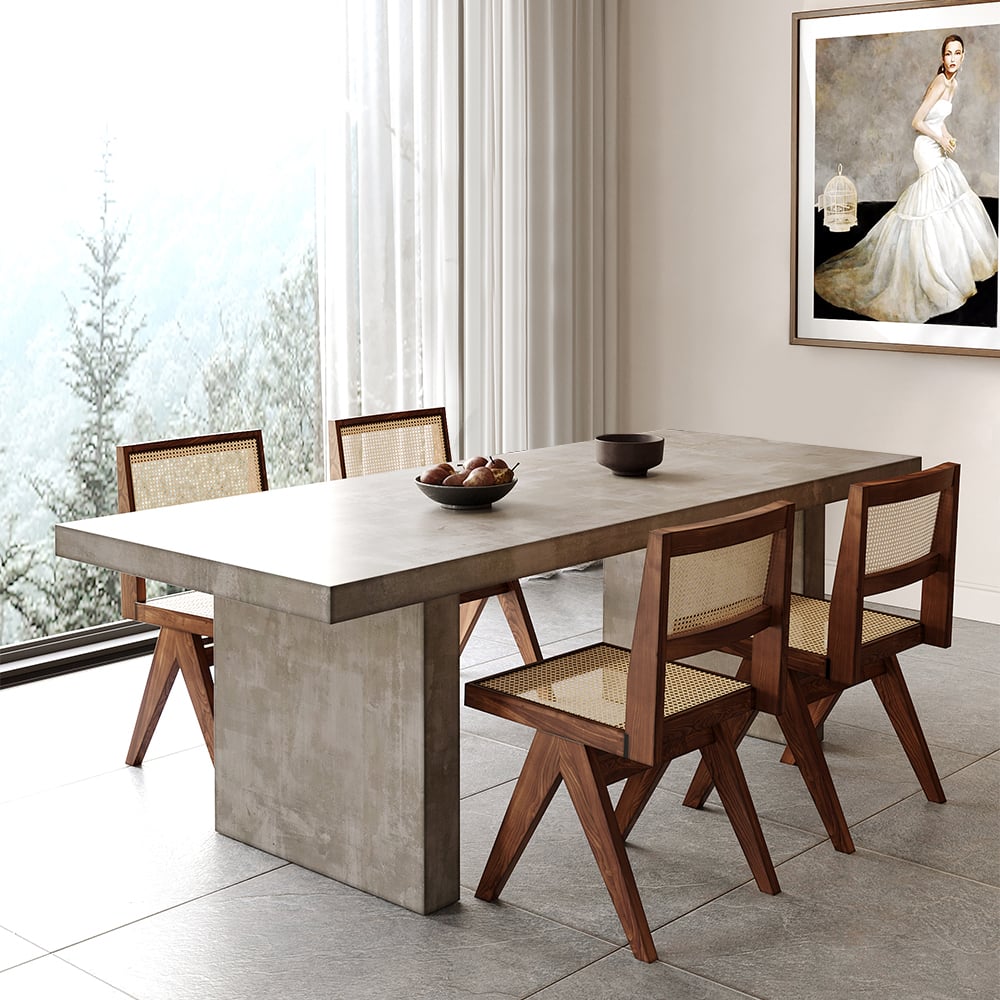
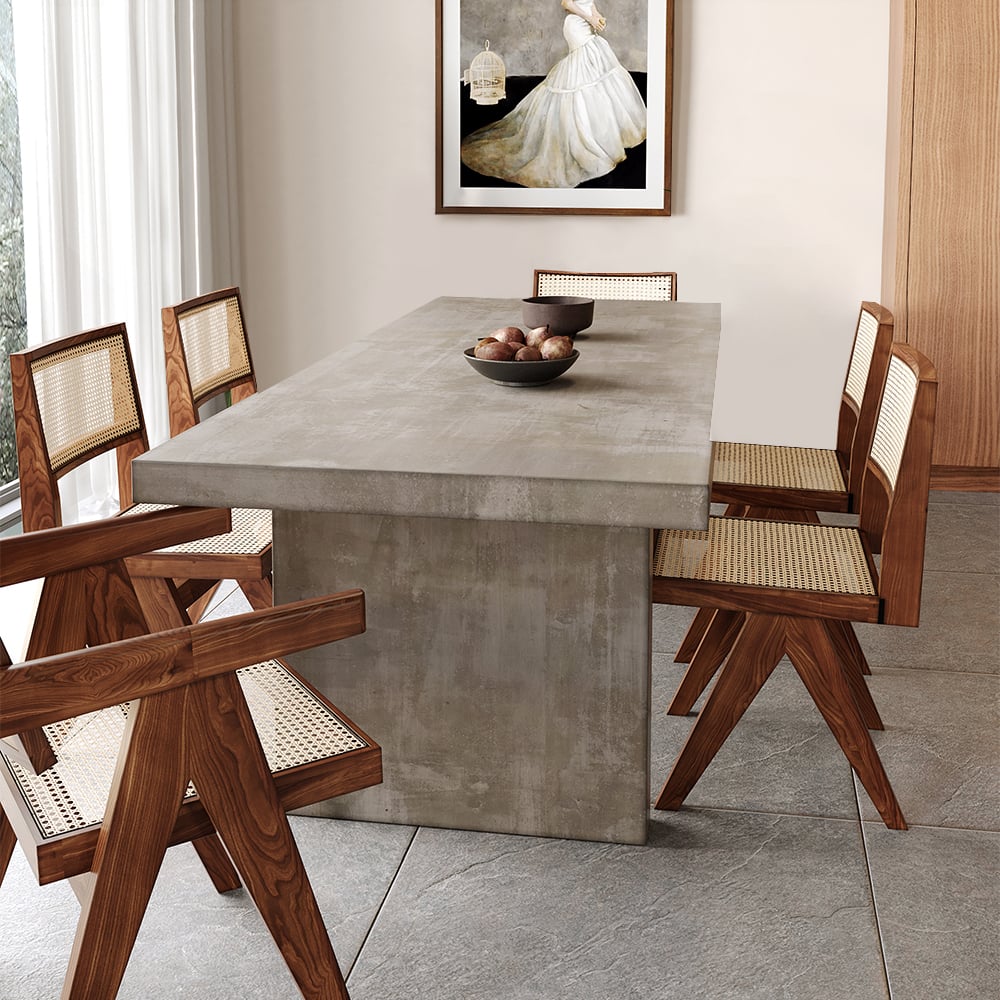
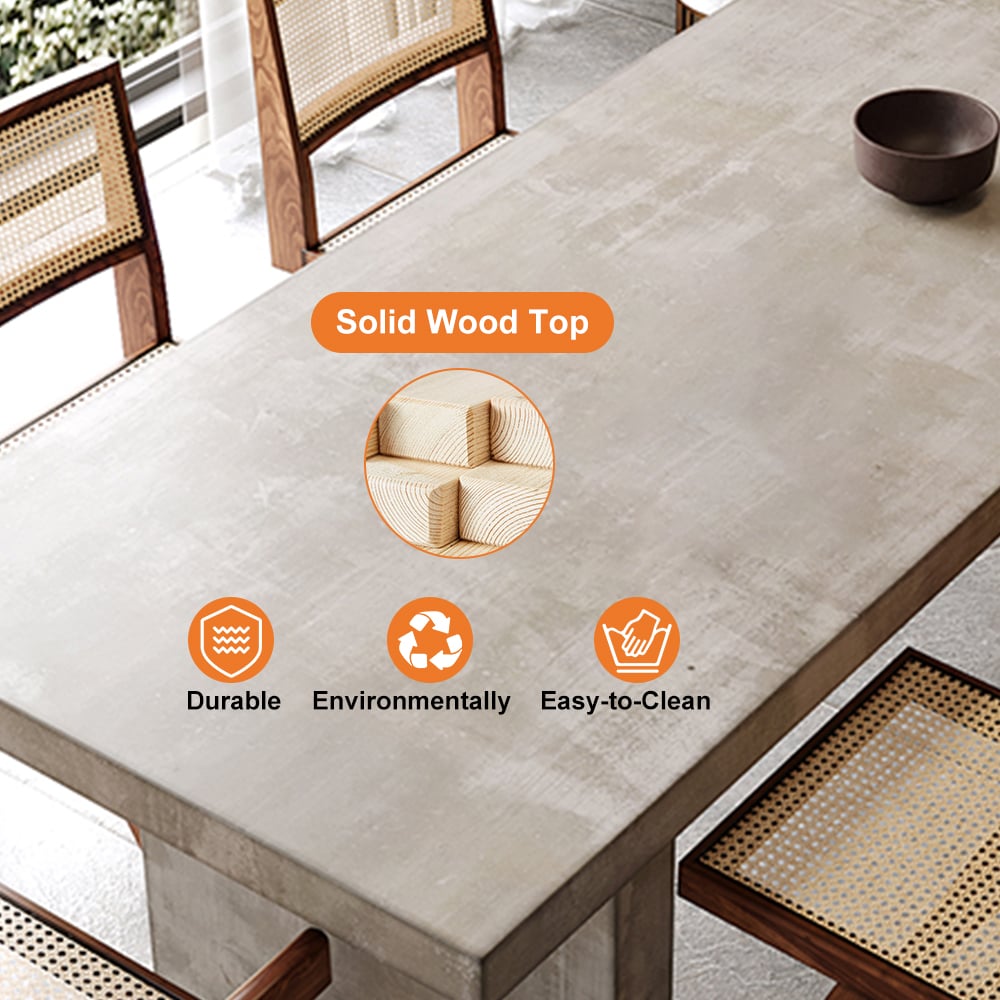
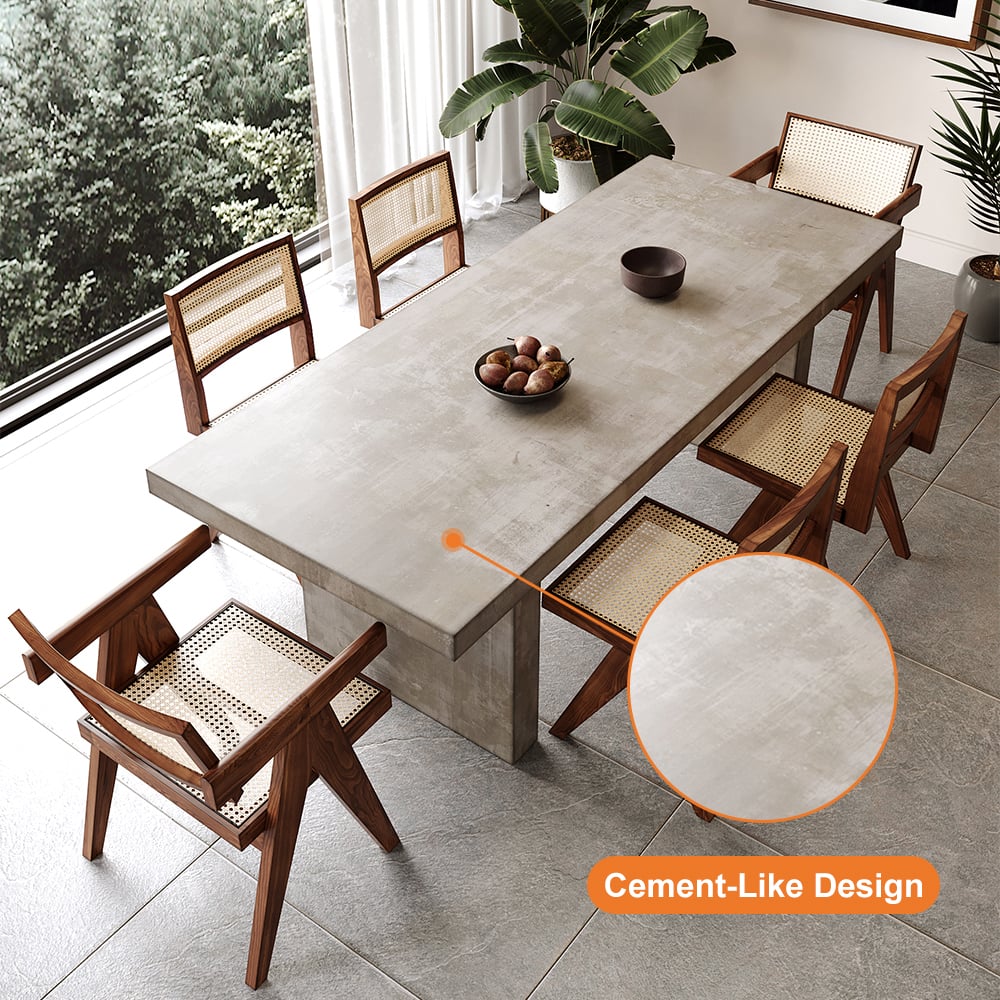
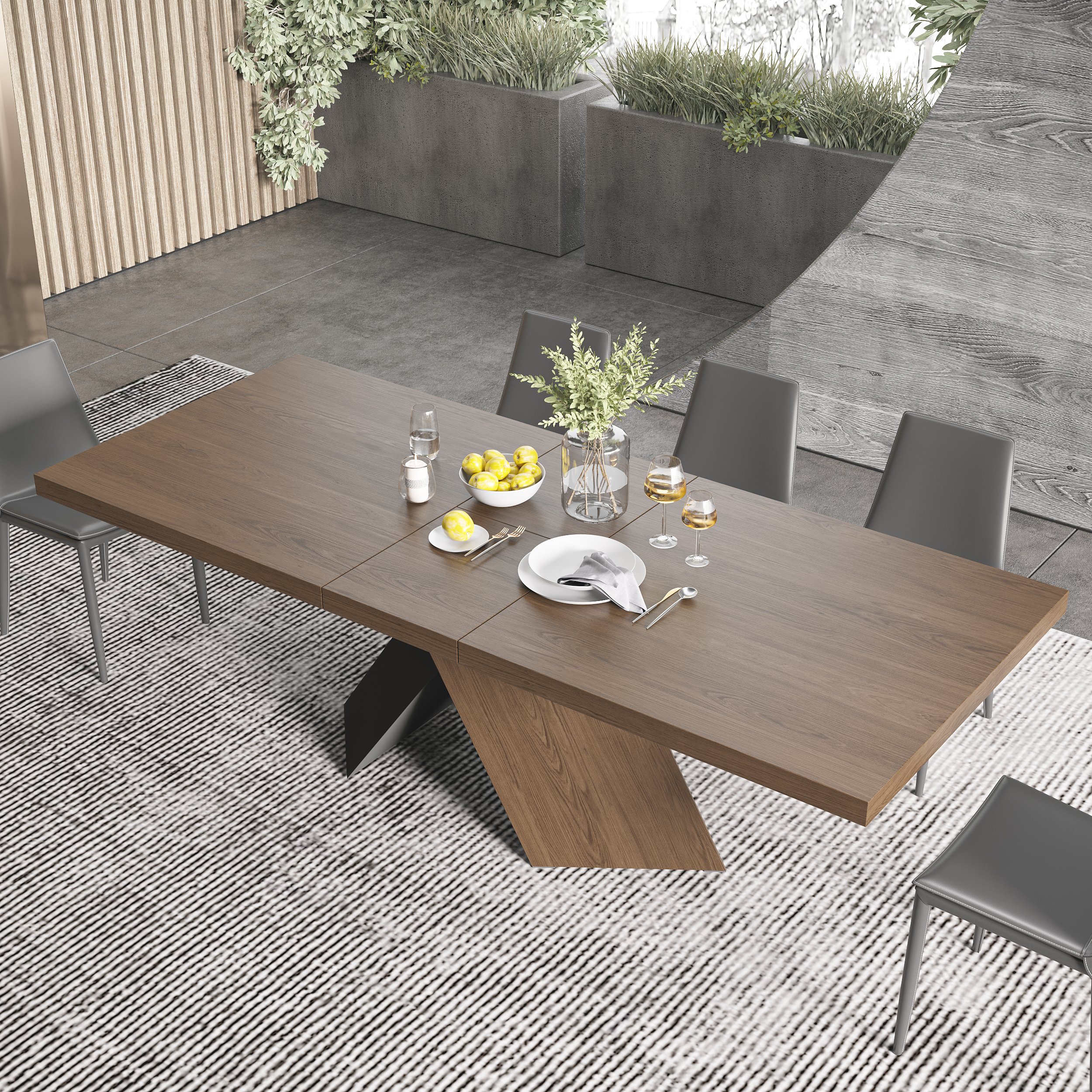
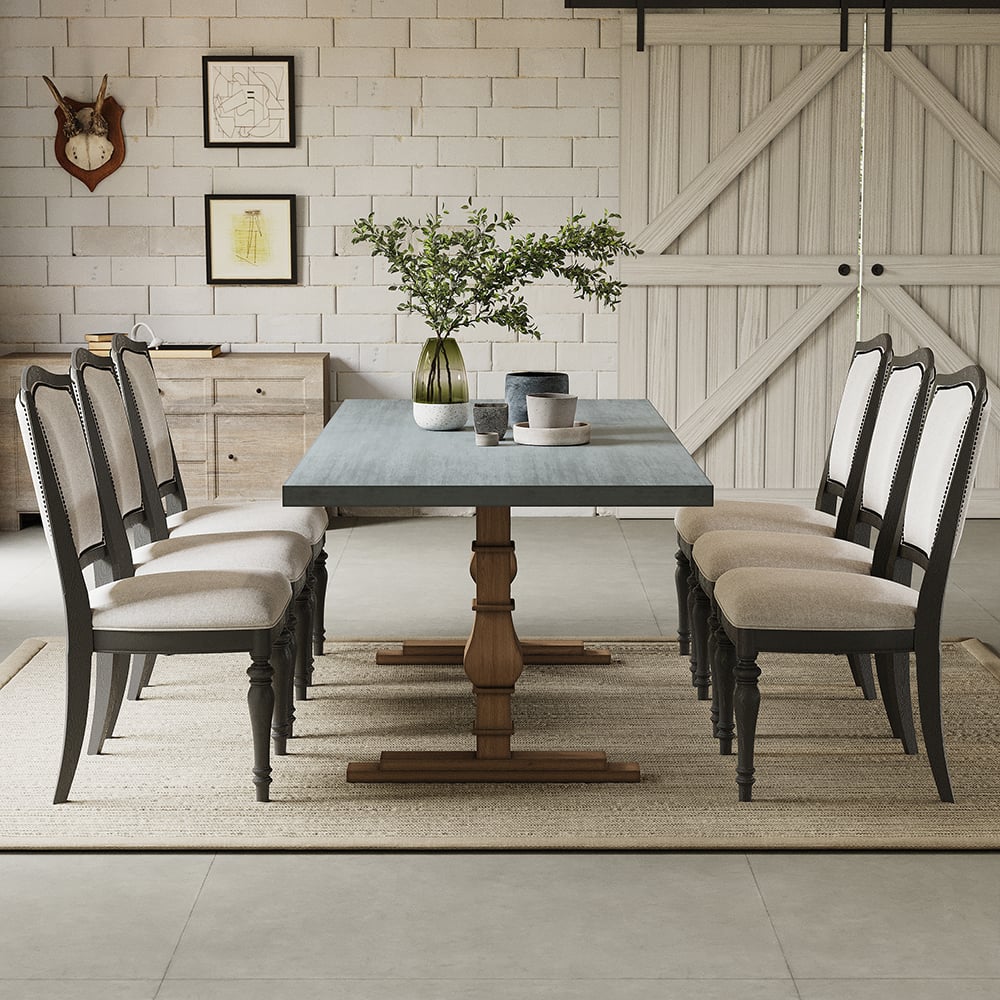
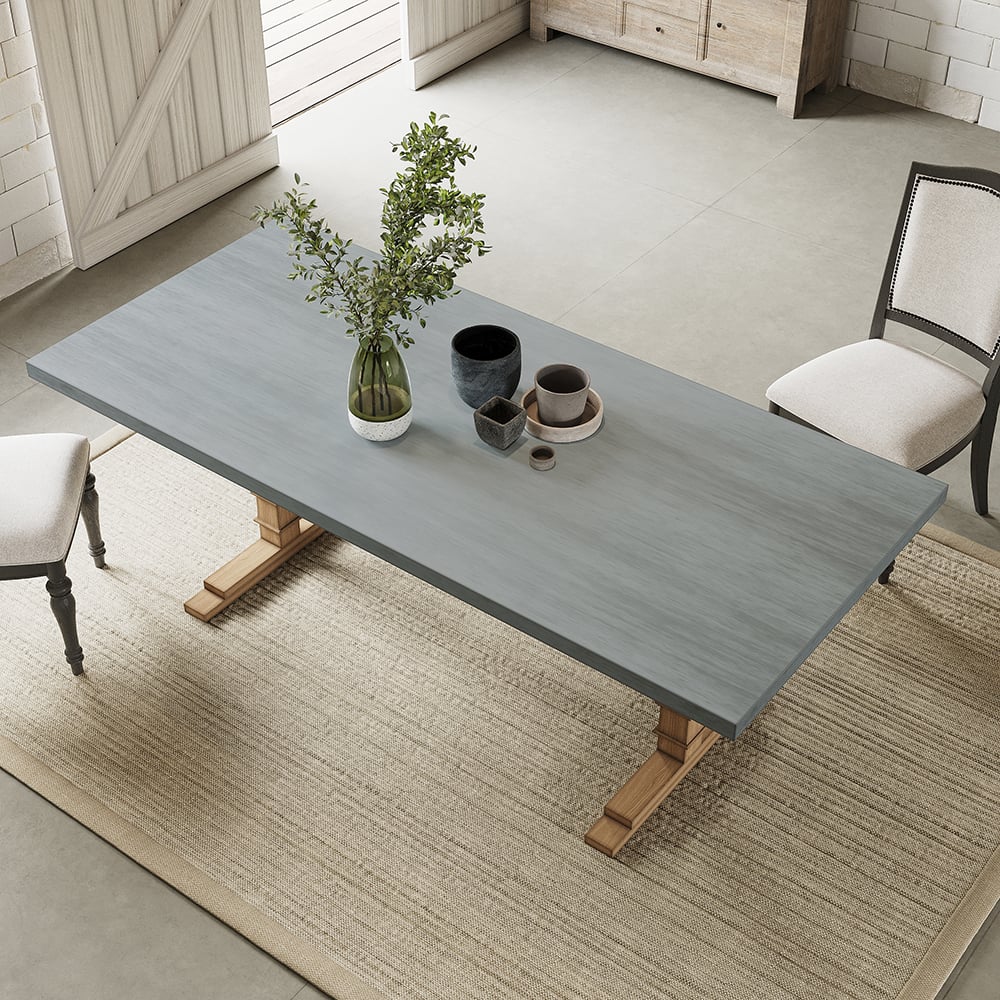
Upoak Series 70.9” Farmhouse Rectangle Wood Dining Table ($1,159.99, rated 4.9 from 36 reviews) is the closest thing here to the classic farmhouse look: solid wood construction, a gray finish with visible grain, and a double pedestal base that seats six comfortably. This is the pick if you want the rustic look front and center and don’t need an extending mechanism.
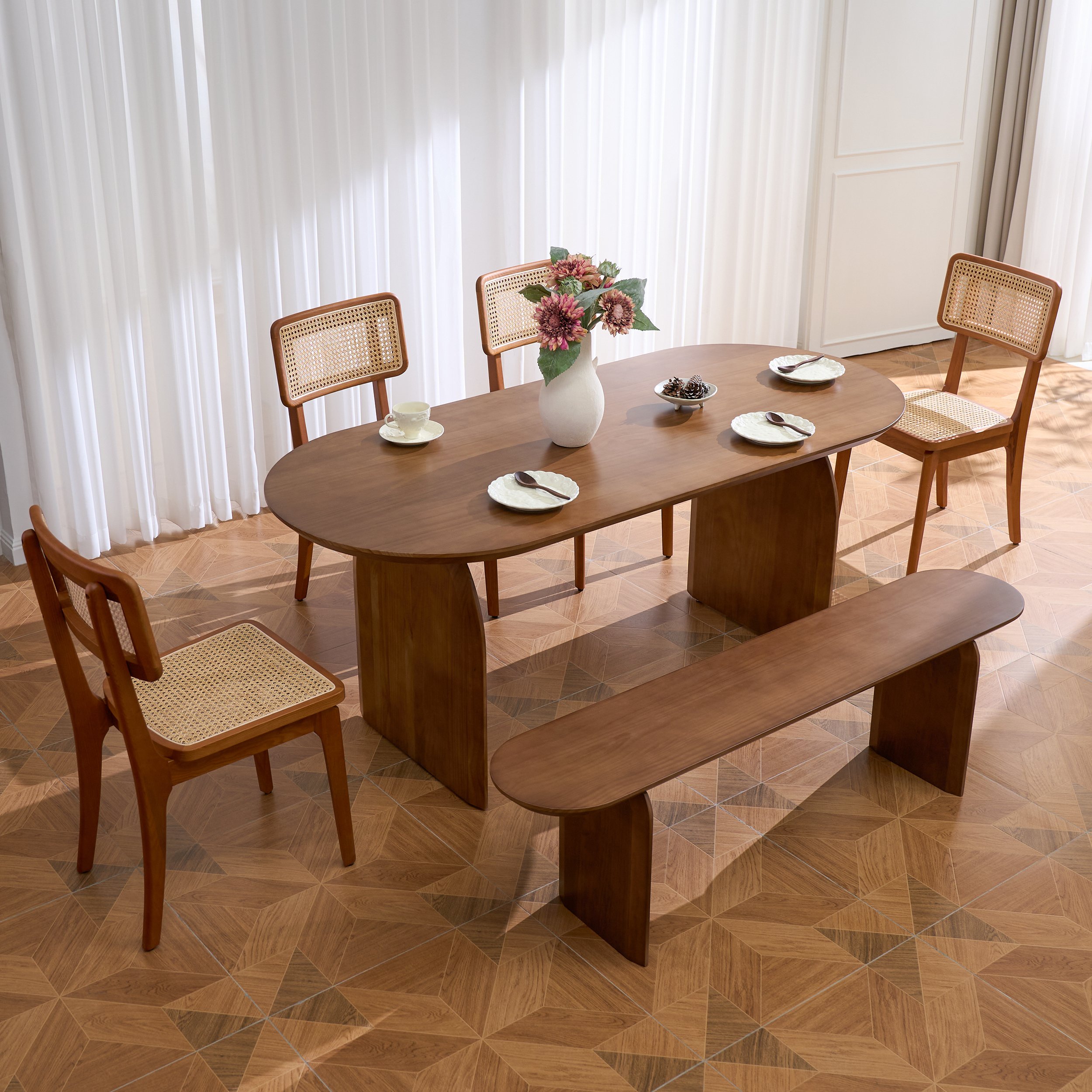
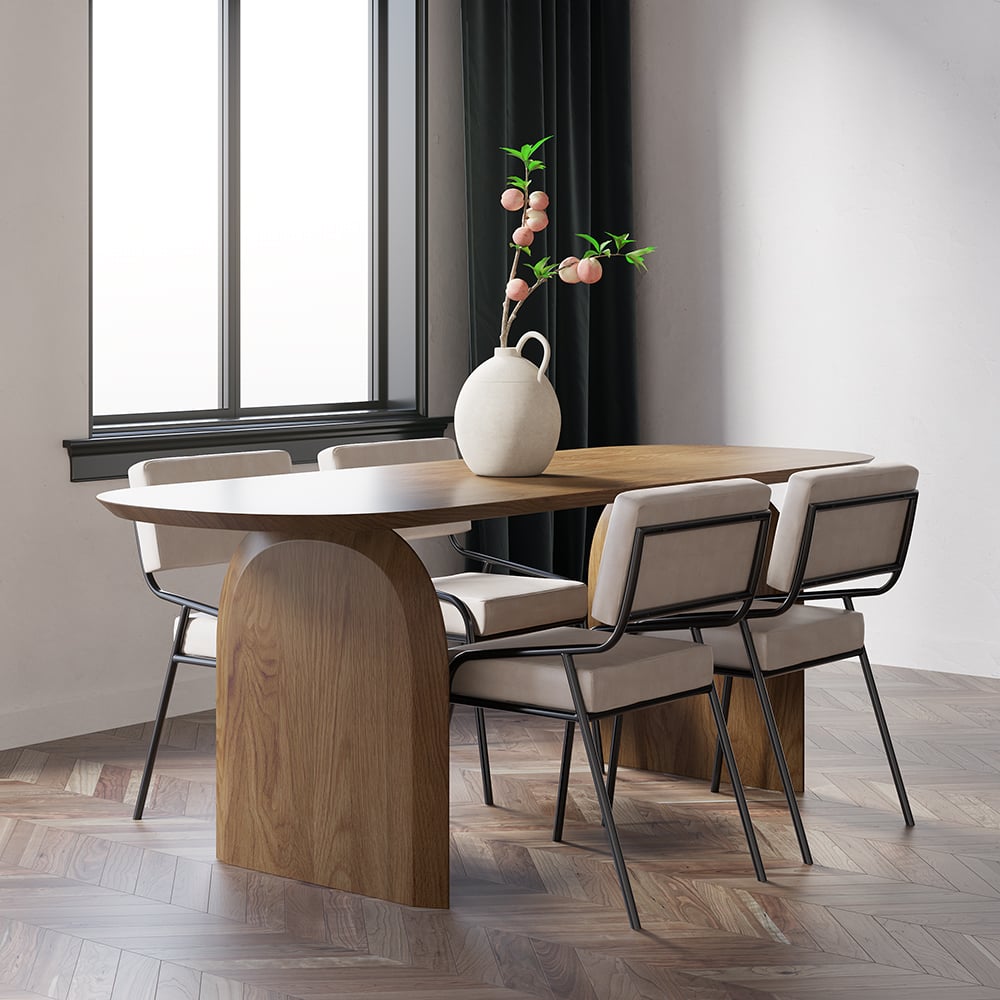
Tintica Series 70.9” Japandi Oval Farmhouse Wood Dining Table ($759.99, marked down from $1,119.99, rated 4.8 from 132 reviews) is solid pine wood on a double pedestal base, but the oval shape and gray tone lean into the calmer Japandi-farmhouse crossover. Good choice if your room is a little tight and you want the seating capacity of a rectangle without the sharp corners.
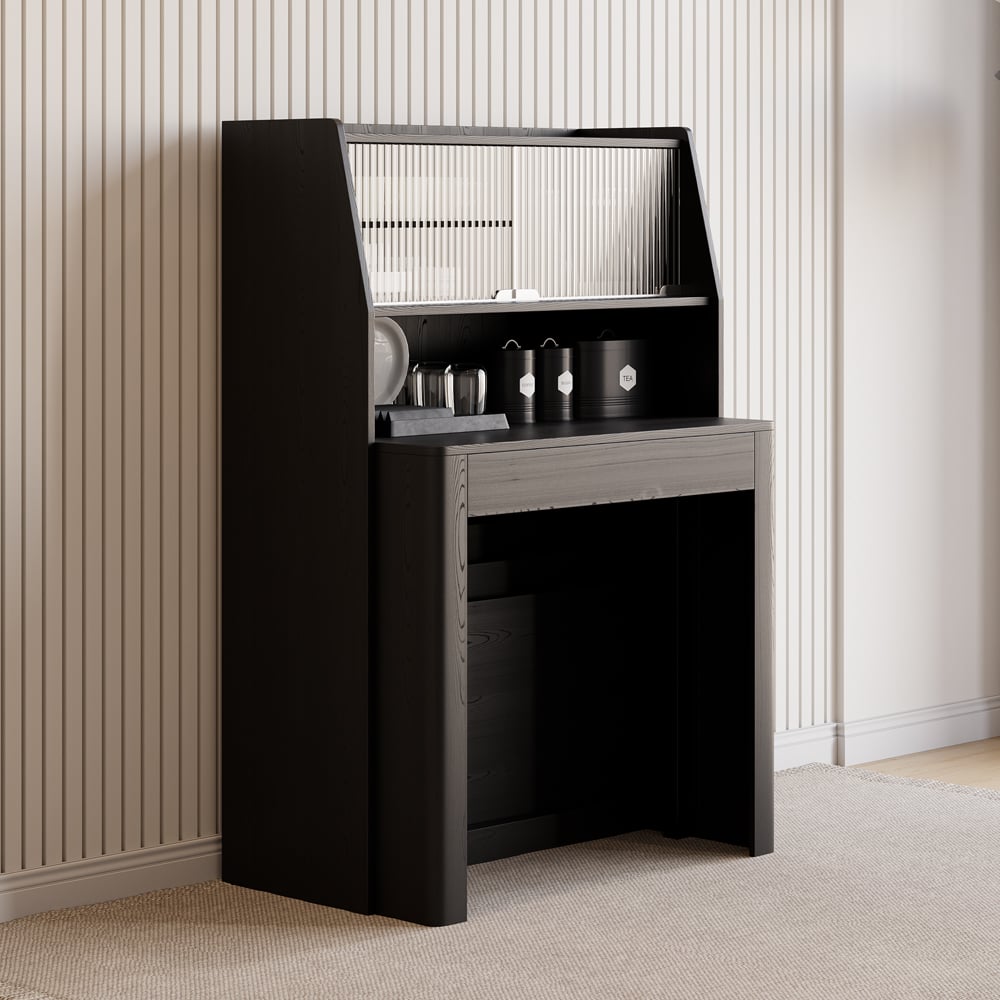
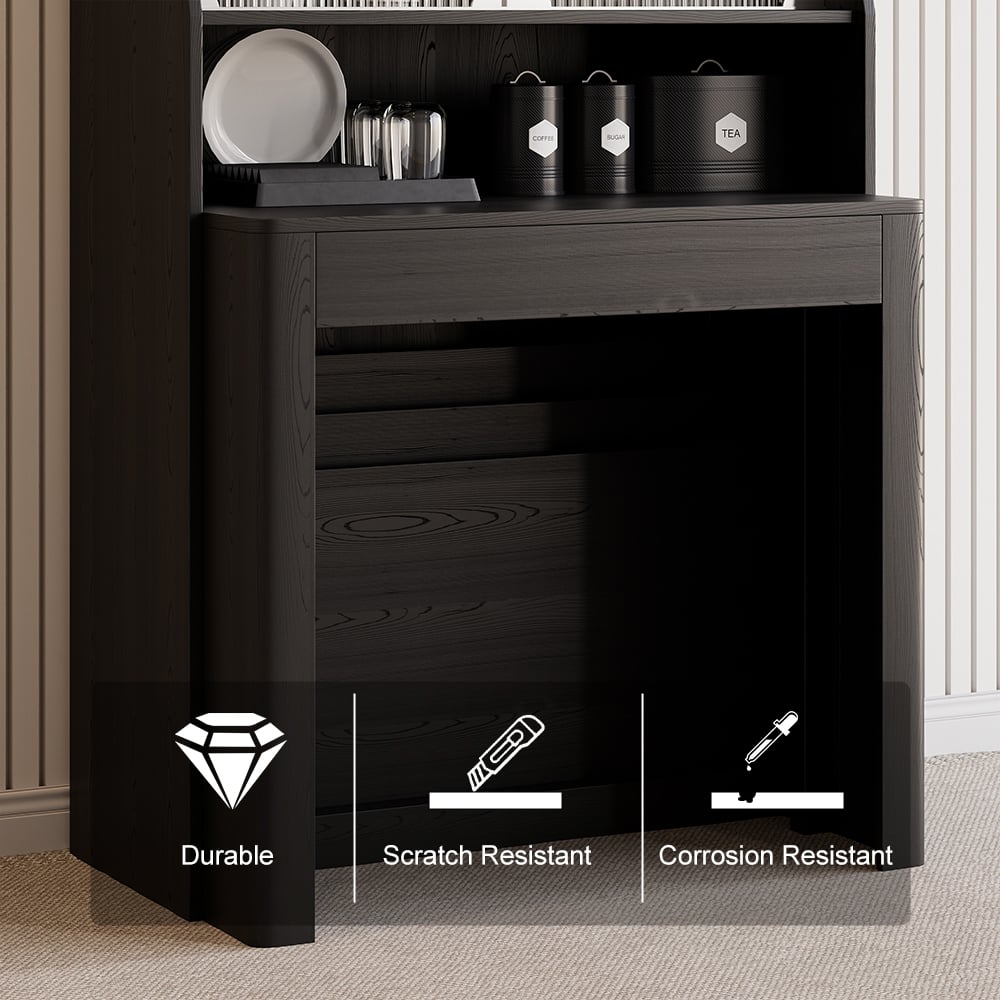
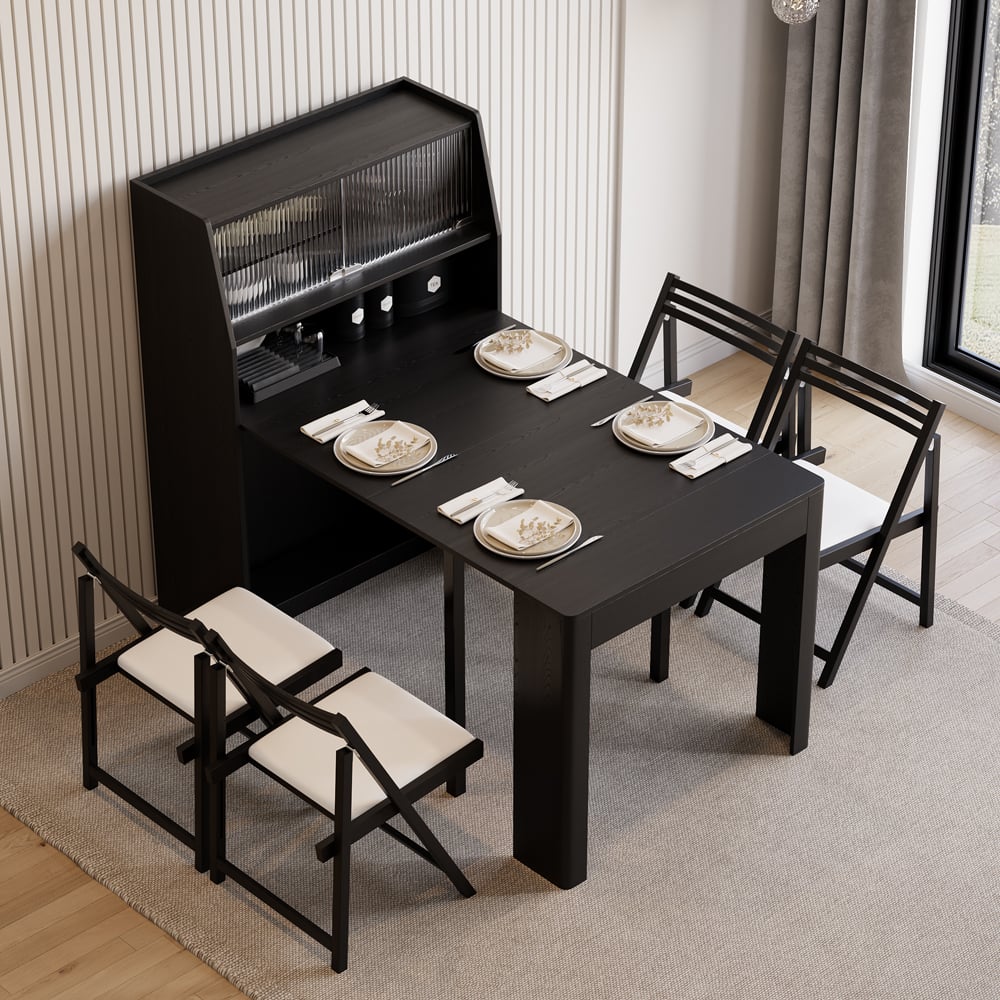
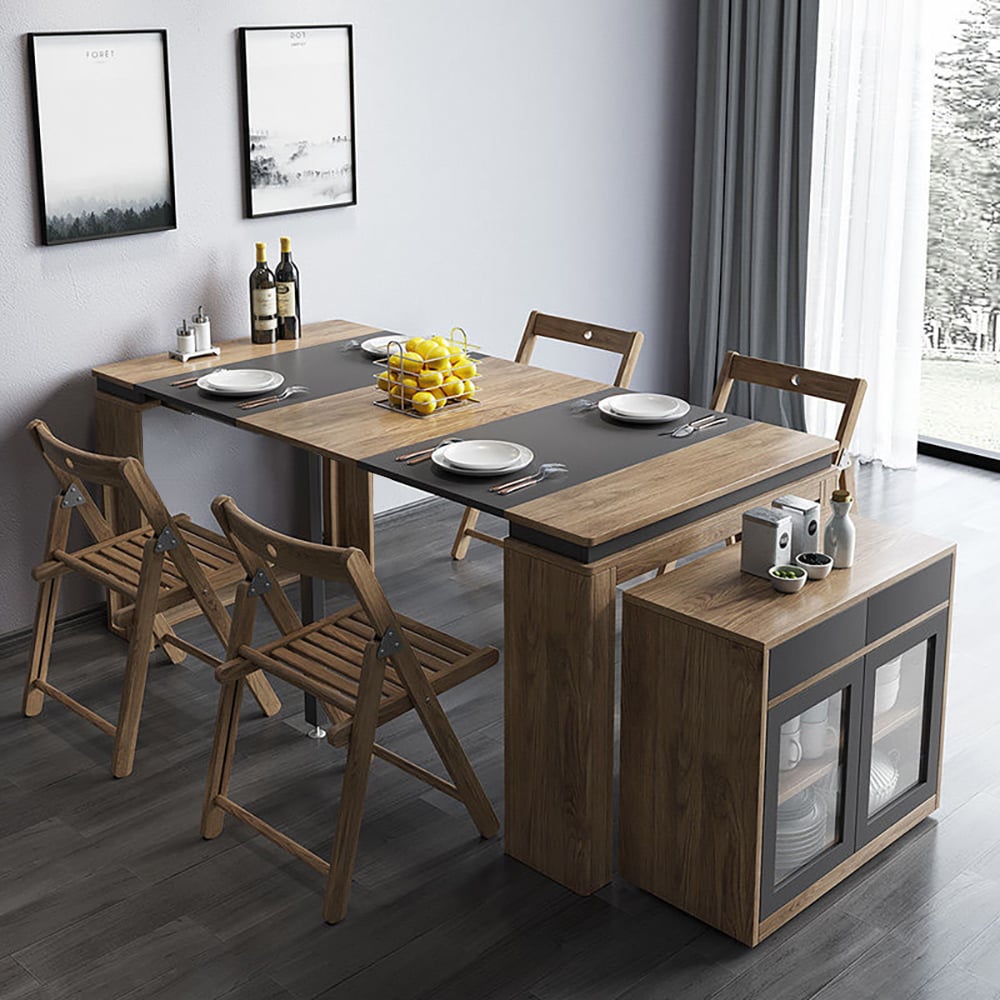
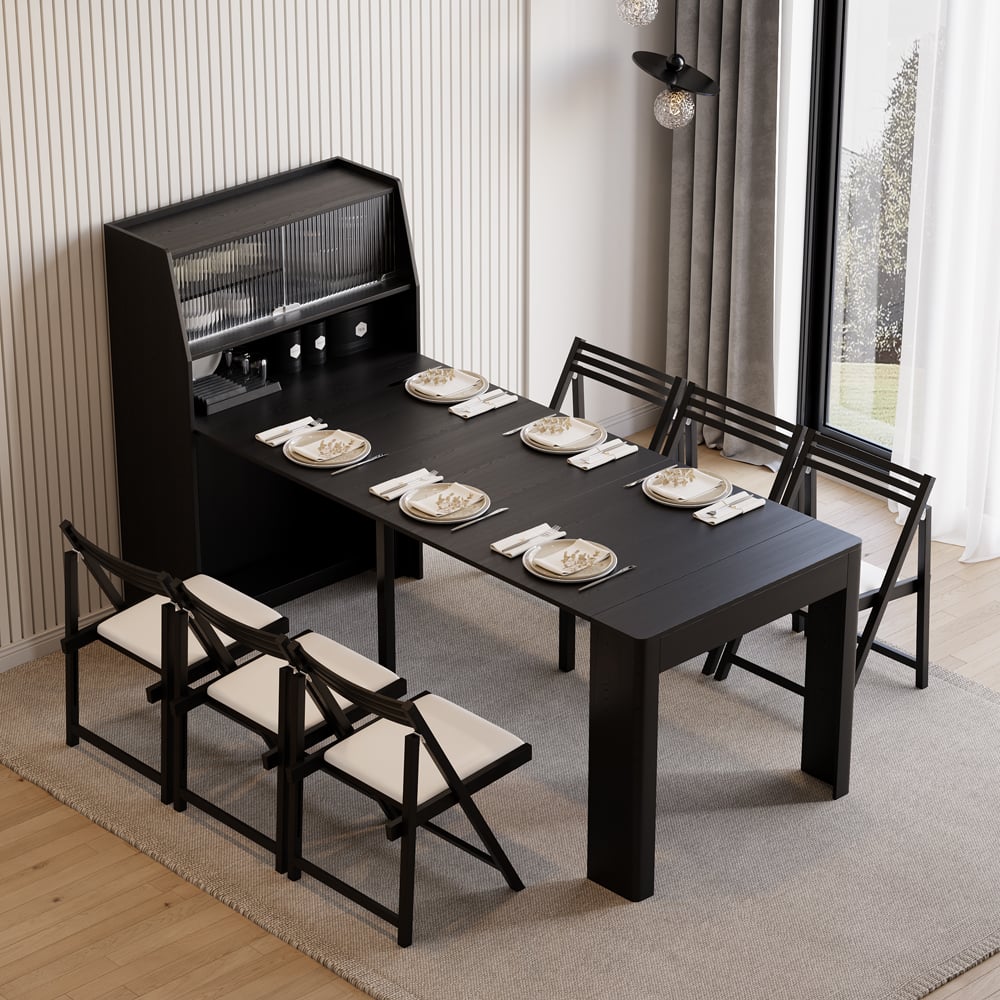
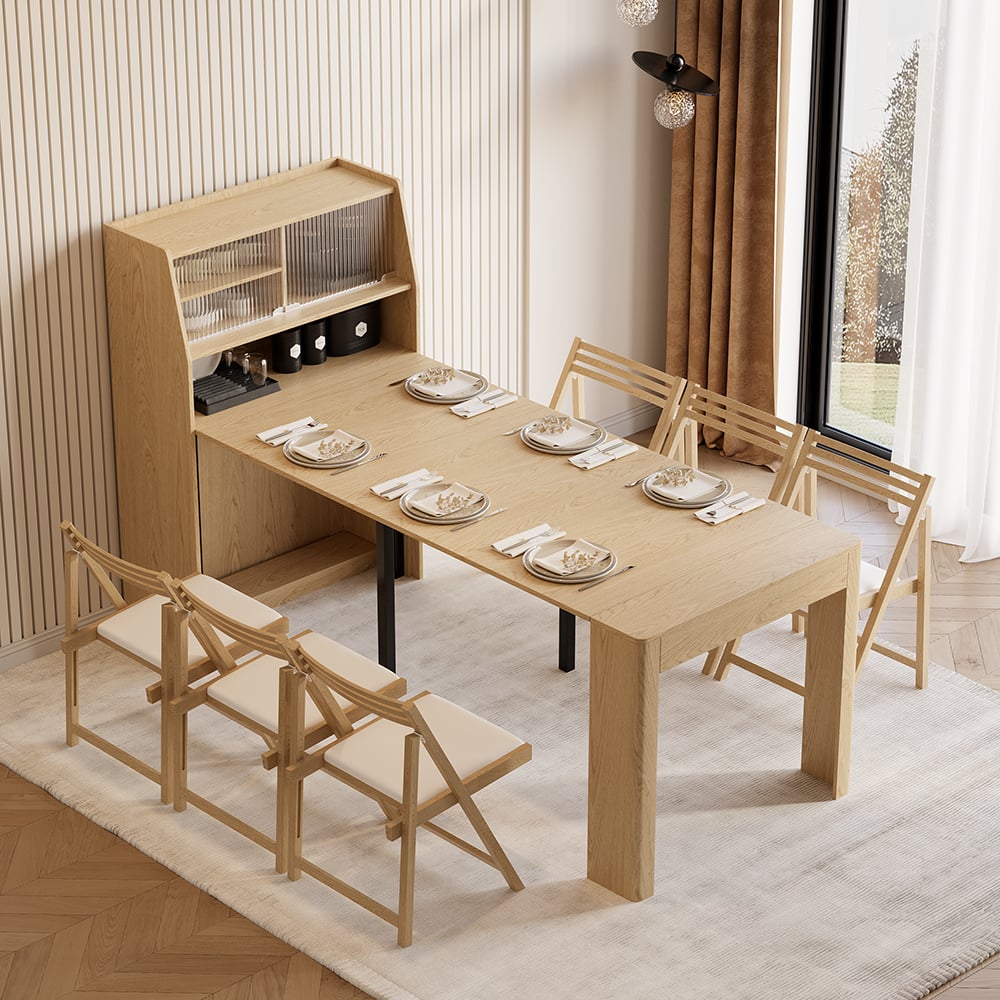
70.9” Farmhouse Extendable Dining Table with Storage Sideboard ($549.99, marked down from $749.99, rated 4.7 from 78 reviews) solves the “I host twice a year” problem directly: it seats 4 to 6 daily and extends to seat up to 8, with a built-in storage sideboard for linens or serving pieces. It’s built from MDF, tempered glass, and metal rather than solid wood, so it’s the budget and space-saving pick, not the heirloom pick.
If you’re furnishing the whole dining area at once, a guide to matching dining chairs and benches to this table style is a natural next page to link here once your site has one published (leaving this as a placeholder rather than a fake link, since this is the first article on the site).
Caring for a Farmhouse Dining Table
Solid wood farmhouse tables are low-maintenance but not zero-maintenance. Wipe spills quickly, especially on pine, which is more porous and prone to staining than oak or acacia. Use coasters or trivets under hot dishes even if the finish is sealed, since repeated heat exposure can dull a finish over years. For distressed or reclaimed-look finishes, a little unevenness is the point, so don’t over-polish trying to make it look brand new. For engineered tabletops with a wood veneer or laminate, avoid abrasive cleaners that can wear through the surface layer, a soft cloth with mild soap is usually enough.
Bringing It Together
A farmhouse dining table earns its reputation by being genuinely practical: thick, stable, and built to take a family’s daily use without falling apart or looking precious about it. Before you buy, nail down three things: the actual size your room supports (use the 24-inch-per-person rule and the room-size chart above), the wood that matches how hard you’ll actually use it (oak or acacia for heavy daily wear, pine if you want the classic look and don’t mind character marks), and whether you need an extendable table if your headcount changes a few times a year.
The right table isn’t the one with the most reviews or the prettiest photo. It’s the one sized correctly for your room, built from a wood that matches your family’s actual habits, and priced in a way that doesn’t make you nervous every time someone leans on it.
Frequently Asked Questions
What is a farmhouse dining table? A farmhouse dining table is a wood dining table styled after 19th-century American farmhouse furniture, typically featuring a thick tabletop, a sturdy trestle or pedestal base, and a natural or lightly distressed finish. It’s built for durability and daily family use rather than as a formal showpiece.
How big should a farmhouse dining table be for 6 people? A table for 6 typically needs to be 60 to 78 inches long, based on the standard guideline of about 24 inches of table width per seated person. This size generally fits comfortably in a dining room of at least 12 by 14 feet, allowing enough clearance to pull chairs back.
What wood is best for a farmhouse dining table? Oak and acacia are the most durable choices, with Janka hardness ratings around 1,220 to 1,360 for oak and about 1,180 for acacia, making them resistant to dents and scratches from daily use. Pine is the more traditional farmhouse choice and gives that classic rustic look, but it’s notably softer and shows wear marks faster.
Is modern farmhouse style still popular in 2027? Modern farmhouse remains a widely searched and purchased style, though some interior designers have said in media interviews that the most maximalist “shiplap everywhere” version of the trend has cooled. The core elements, thick wood tables, simple sturdy bases, and mixed wood-and-metal finishes, remain common in new furniture releases.
What’s the difference between farmhouse and rustic dining tables? Farmhouse style generally refers to the overall silhouette and history (thick tops, pedestal or trestle bases, practical design), while “rustic” more specifically describes a rougher, more heavily textured or distressed finish. A farmhouse table can be rustic, but it can also be cleaned up into a more polished “modern farmhouse” look.
Can a farmhouse dining table be extendable? Yes, extendable farmhouse dining tables are common and solve the problem of needing extra seating only occasionally. Many use leaf inserts or a pull-apart mechanism to go from seating 4 to 6 people daily up to 8 or more when extended for guests.
How much clearance space do I need around a dining table? Most design guidance recommends 36 to 48 inches of open floor space between the table’s edge and the nearest wall or furniture, with an 18 to 24 inch minimum specifically to allow chairs to be pulled out and people to stand comfortably.
Are farmhouse dining tables made of solid wood? Many are, but not all. Traditional and higher-end farmhouse tables are typically solid pine, oak, or acacia, while some modern farmhouse-style tables, especially extendable or space-saving designs, use engineered materials like MDF with a wood veneer, sometimes combined with metal or tempered glass accents.
What size dining table fits an 8-person table? An 8-person dining table is typically 78 to 96 inches long, or achieved through an extendable table that reaches that length when needed. This size generally requires a dining room of at least 14 by 18 feet to leave enough clearance around the table.
How do I keep a farmhouse dining table looking good over time? Wipe up spills quickly, especially on more porous woods like pine, and use coasters or trivets to protect against heat damage even on a sealed finish. For tables with a distressed or reclaimed-look finish, minor unevenness is part of the intended look, so avoid over-polishing in an attempt to make it look new.