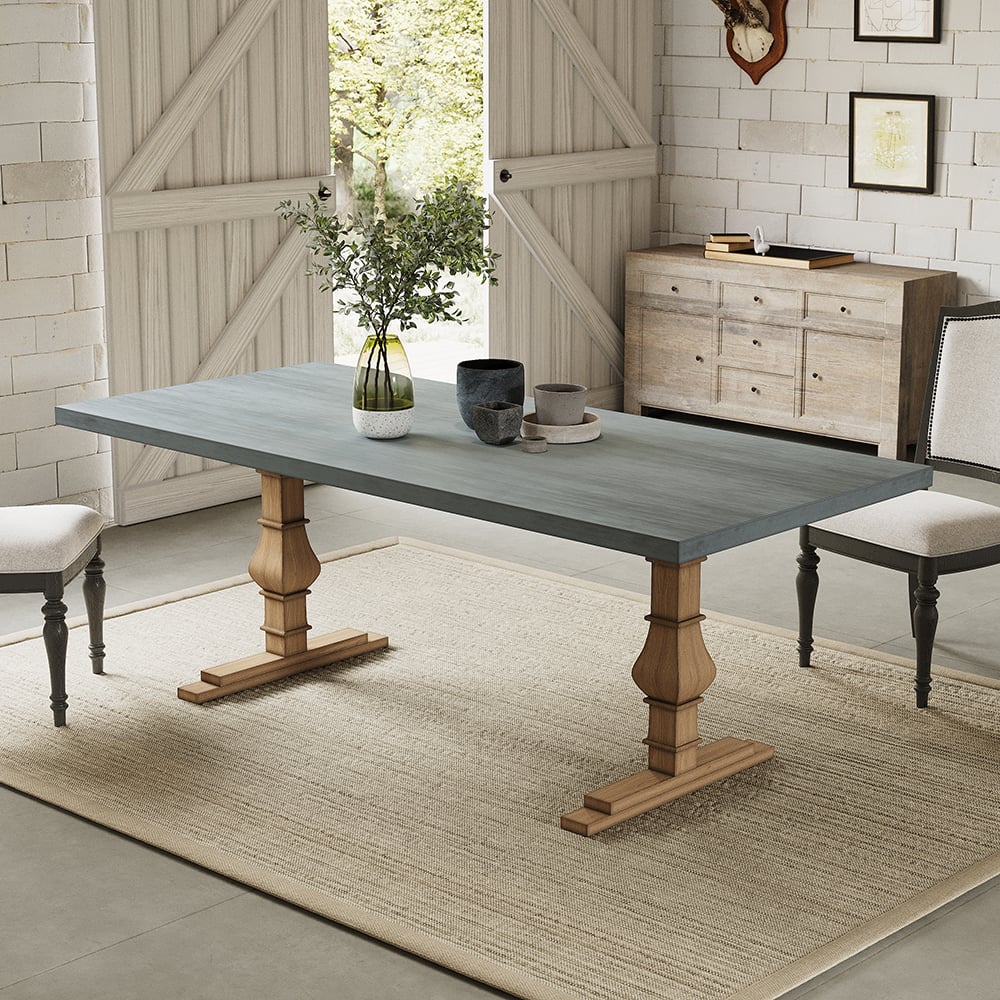
A farmhouse table left outside through one Ohio winter taught a lot of people the same lesson: the thick, chunky look that reads “built to last” indoors can rot, crack, or gray out in a single season if the wood and finish aren’t made for weather. That gap between how a table looks and how it actually holds up is the whole story with outdoor farmhouse dining tables.
What Makes a Dining Table Truly “Outdoor Farmhouse”
An outdoor farmhouse dining table is a farmhouse-style table (thick tabletop, trestle or turned legs, a simple rustic profile) built from materials rated for constant sun, rain, and temperature swings, usually teak, acacia with marine-grade sealant, or powder-coated weather-resistant metal. The style gives you the look; the materials and construction give you the years of actual use. A table can have one without the other, and that’s where most buying mistakes happen.
Materials That Actually Hold Up Outdoors
Not every wood that looks like farmhouse furniture belongs on a patio. Here’s what separates the tables that last from the ones that don’t.
Teak. This is the gold standard for outdoor wood furniture, and for a real reason: teak has a naturally high oil content that repels water and resists rot, warping, and insect damage without any finish at all. Left untreated, it weathers to a soft silvery gray. Sealed, it keeps its honey-brown color longer. Either way, it’s stable in heat, cold, and humidity.
Acacia (with proper sealant). Acacia is a popular, more affordable stand-in for teak, and it can perform well outdoors, but only with a real marine-grade oil or sealant applied at the factory and reapplied by the owner. Acacia has less natural oil than teak, so an unsealed or poorly sealed acacia table absorbs water at the joints and end grain first, which is where cracking starts.
Weather-resistant metal. Powder-coated aluminum or galvanized steel frames pair well with wood tabletops on farmhouse-style outdoor sets. Aluminum won’t rust because it doesn’t contain iron, which makes it a better long-term bet than steel unless the steel has a thick, well-applied powder coat.
What to avoid: untreated pine. Pine is common in indoor farmhouse furniture because it’s cheap and takes a distressed finish well. Outdoors, pine is a poor choice unless it’s pressure-treated specifically for exterior use. Regular pine soaks up moisture, swells, and rots at a fraction of the time teak or acacia would take.
| Material | Outdoor Durability | Maintenance Needed | Typical Lifespan Outdoors |
|---|---|---|---|
| Teak | Excellent | Low (occasional oiling optional) | 15 to 25+ years |
| Acacia (sealed) | Good | Moderate (yearly resealing) | 5 to 10 years |
| Untreated pine | Poor | High, often futile | 1 to 3 years |
| Powder-coated aluminum | Excellent | Very low | 15 to 20+ years |
| Uncoated steel | Poor to fair | High (rust prevention) | 3 to 8 years |
Outdoor-Style Look vs. Genuinely Weatherproof Construction
A lot of “farmhouse” tables sold online are styled for outdoor photos but built for a covered porch at best. The tell is in the details, not the marketing copy.
Check the wood species listed in the actual specs, not just the words “outdoor collection” in the title. Look for whether joints are glued, doweled, or use weather-stable hardware like stainless steel or brass screws, since regular zinc or plain steel screws rust and stain the wood around them. Check if the finish is described as a sealant or oil rated for exterior use, or if it’s just a stain meant for indoor pieces.
Homary’s outdoor lineup is a useful example of the distinction. Its farmhouse-style dining tables are built for indoor use, with finishes and joinery meant for climate-controlled rooms. What Homary does sell as genuinely outdoor-rated are its Tevara collection pieces, which use FSC-certified teak tabletops paired with rust-resistant aluminum frames. The style leans modern rather than classic farmhouse, but the construction is the real thing: teak wood rated for exterior use and metal that won’t corrode.
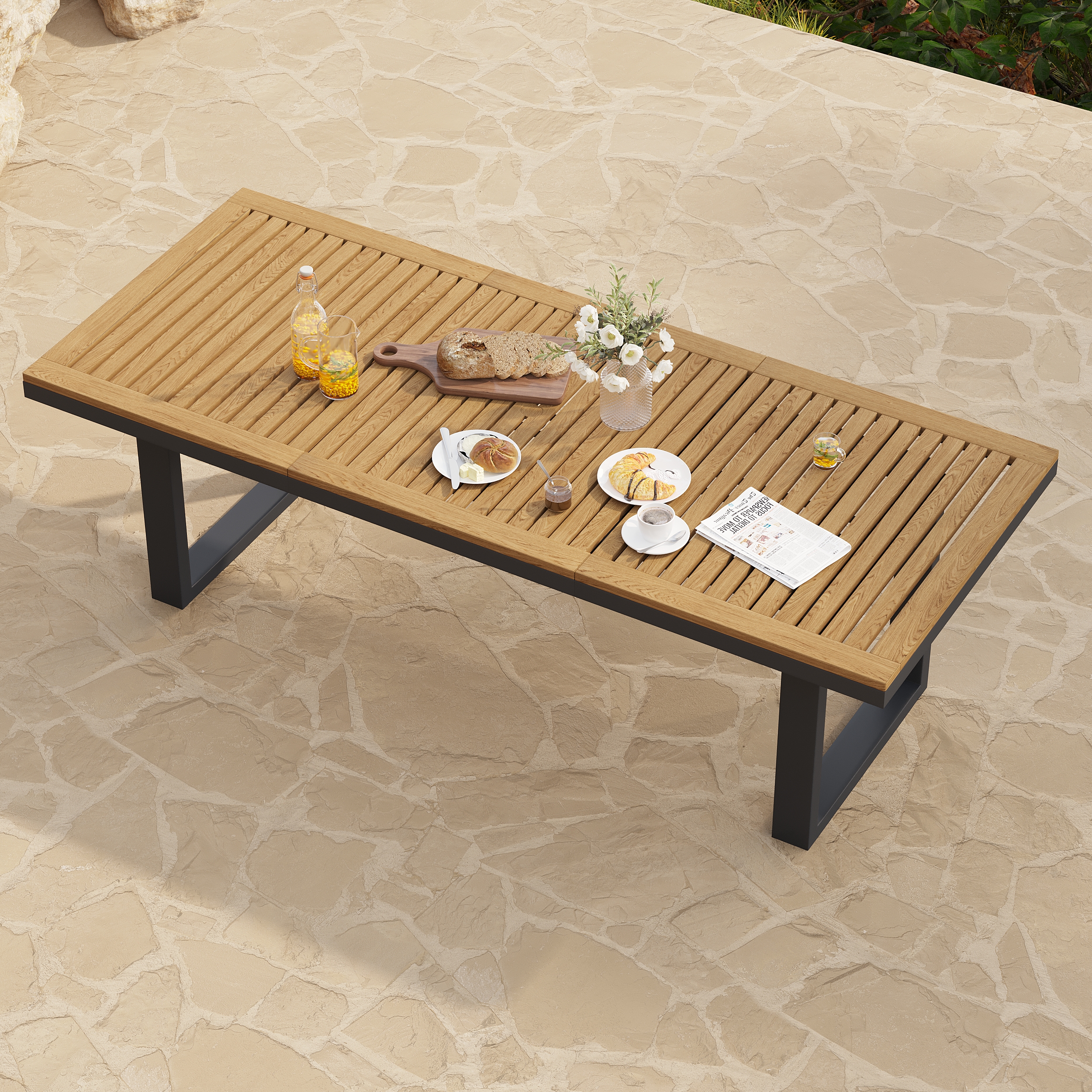
One example is the Tevara Outdoor Teak & Aluminum Dining Table in Gray, Seats 6-8, priced at $1,499.99 with a 4.8 rating across 26 reviews. It has FSC-certified teak on top, a rust-resistant aluminum frame, and a built-in umbrella hole. For a larger group, the Tevara 7-Piece Rectangle Teak & Aluminum Outdoor Patio Dining Set for 6 Person runs $2,759.99 (on sale at time of writing) and holds a 4.8 rating from 129 reviews, with a teak tabletop, aluminum frame, and weather-resistant cushions included on the chairs.
If your priority is a specifically farmhouse silhouette (trestle legs, thick turned posts, a rustic distressed finish) sold as genuinely outdoor-rated, that’s a narrower search. Brands built specifically around outdoor teak, like Country Casual Teak and similar specialty outdoor furniture makers, focus on that look more directly than general home retailers do. Worth checking those against the same material and hardware standards above before buying.
Maintenance Specific to Outdoor Use
Even weather-rated tables need upkeep, just less of it than pine or unsealed wood would need.
Cover it in winter, or during long stretches of bad weather. A breathable, waterproof cover keeps snow load, ice, and freeze-thaw cycling off the table and hardware. Avoid plastic tarps that trap condensation underneath, since trapped moisture can cause mildew even on teak.
Reseal wood yearly. Acacia and other sealed woods need a fresh coat of exterior-rated oil or sealant about once a year, more often in intense sun or coastal salt air. Teak doesn’t need sealing to survive, but an annual teak oil application keeps the original color if you don’t want the natural gray patina.
Watch for rust on metal hardware. Screws, brackets, and unprotected joints are the first place rust shows up, even on otherwise rust-resistant frames. A quick inspection each spring, with touch-up paint or a rust-inhibiting spray on any bare metal, stops small spots from spreading.
Clean regularly, but simply. Mild soap and water with a soft brush handles dirt and pollen. Pressure washers and harsh chemical cleaners can strip finishes and force water into joints, so skip those.
Sizing Considerations for Patios and Decks
Outdoor tables need more clearance than indoor ones because chairs get pushed back further and people move around grills, planters, and steps.
Plan for at least 36 inches of clearance on all sides of the table for chairs to slide out and guests to walk past comfortably. A table for 6 typically needs a space at least 10 feet by 10 feet once chairs and walking room are factored in. Rectangular tables fit long, narrow decks better, while round or square tables work better on square patios where you want people to see each other from every seat.
Measure your covered area separately from your open patio space if you’re deciding on umbrella placement, since the umbrella hole location affects how much shade coverage you actually get during peak sun hours.
Key Takeaways
- Teak and powder-coated aluminum are the two safest material bets for true outdoor durability. Sealed acacia is a reasonable mid-range option if you commit to yearly resealing.
- A “farmhouse-style” label doesn’t guarantee outdoor-ready construction. Check the actual wood species, hardware type, and finish before assuming a table can live outside year-round.
- Covering the table in winter, resealing wood annually, and checking metal hardware for rust each spring will add years to any outdoor set.
- Measure your patio or deck space with at least 36 inches of clearance per side before choosing a table size, and match the shape to your space rather than to the photo you liked online.
If you want a farmhouse look built specifically for the outdoors, compare a few options against the material and hardware checklist above rather than going by name alone. It’s a bigger factor in how the table looks in five years than anything else on the spec sheet.
FAQ
What is the best wood for an outdoor farmhouse dining table? Teak is generally considered the best choice because of its natural oil content, which resists rot and moisture without needing heavy maintenance. Acacia is a solid budget alternative as long as it’s properly sealed and resealed yearly.
Can I leave a farmhouse dining table outside all winter? Teak and powder-coated aluminum tables can generally stay outside year-round, though a breathable cover during snow or ice season extends their life. Wood with sealants, like acacia, benefits more from winter storage or a dedicated cover, since freeze-thaw cycles stress the sealant layer.
Is acacia wood good for outdoor furniture? Acacia holds up reasonably well outdoors when it’s properly sealed at the factory and resealed by the owner about once a year. Without that upkeep, it absorbs moisture faster than teak and can crack or warp at the joints within a few seasons.
How do I know if a table is really weatherproof or just styled to look outdoor? Check the listed wood species and hardware, not just the product title or category. Genuine outdoor tables use woods like teak or treated acacia, rust-resistant hardware such as stainless steel or brass, and a sealant or oil finish rated for exterior use.
Do outdoor dining tables need to be covered? A cover isn’t mandatory for teak or aluminum tables, but it reduces wear from prolonged rain, snow, and UV exposure over time. A breathable, waterproof cover is better than a plastic tarp, which can trap moisture underneath.
How often should I reseal an outdoor wood dining table? Most sealed woods, including acacia, need resealing about once a year, or more often in areas with intense sun or salt air. Teak doesn’t require sealing for durability, though yearly oiling keeps its original color instead of the natural silver-gray patina.
What size table do I need for a small patio? For a table seating 4 to 6 people, plan for roughly 8 feet by 8 feet of total patio space once you include 36 inches of clearance on each side for chairs and walking room. A round table often fits small or square patios better than a long rectangular one.
Does untreated pine work for outdoor furniture? Untreated pine is a poor choice outdoors because it absorbs moisture quickly and can rot or warp within one to three years of exposure. Pressure-treated pine rated specifically for exterior use performs better, but it’s still less durable than teak or properly sealed acacia.
How do I prevent rust on metal table hardware? Inspect screws, brackets, and joints each spring for any bare metal, then apply touch-up paint or a rust-inhibiting spray as soon as you spot it. Choosing stainless steel or brass hardware from the start avoids most rust problems before they begin.
Are farmhouse-style outdoor dining tables more expensive than regular patio tables? Genuinely weather-rated farmhouse-style tables tend to cost more than basic resin or plastic patio tables because of the solid wood and metal construction involved. Teak and aluminum combinations, like several Homary Tevara sets, typically run from about $1,500 to $3,600 depending on size and seating capacity.