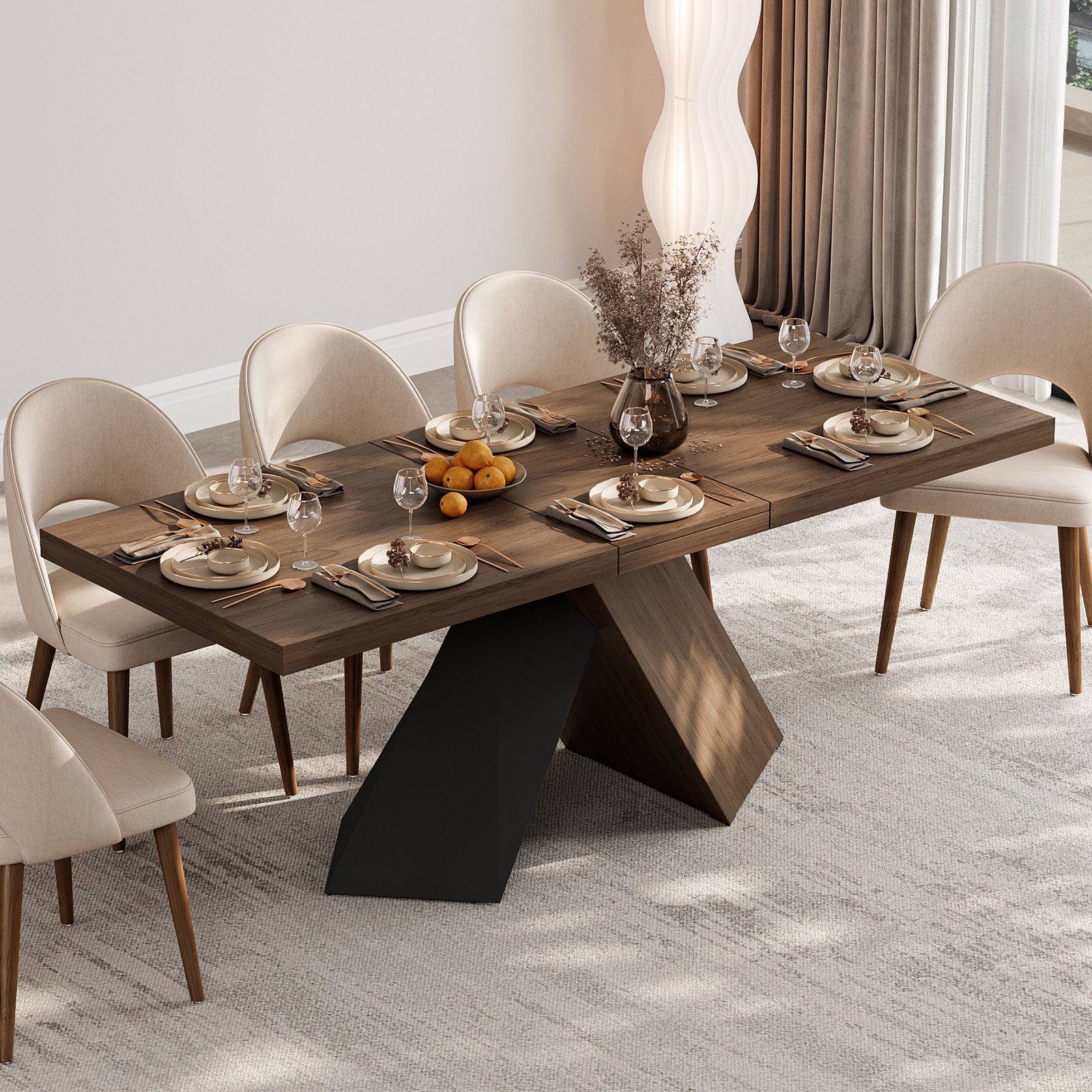
You finally got the farmhouse table you wanted. Then you stood back and noticed the light fixture above it looks tiny, or hangs so low your guests keep glancing up at it during dinner. This is one of the most common furniture mistakes, and it has nothing to do with the table itself.
Getting the light right over a farmhouse table comes down to two numbers: how high it hangs and how wide it is. Get those two things close, and almost any farmhouse style, from a linear chandelier to a lantern pendant, will look like it belongs there.
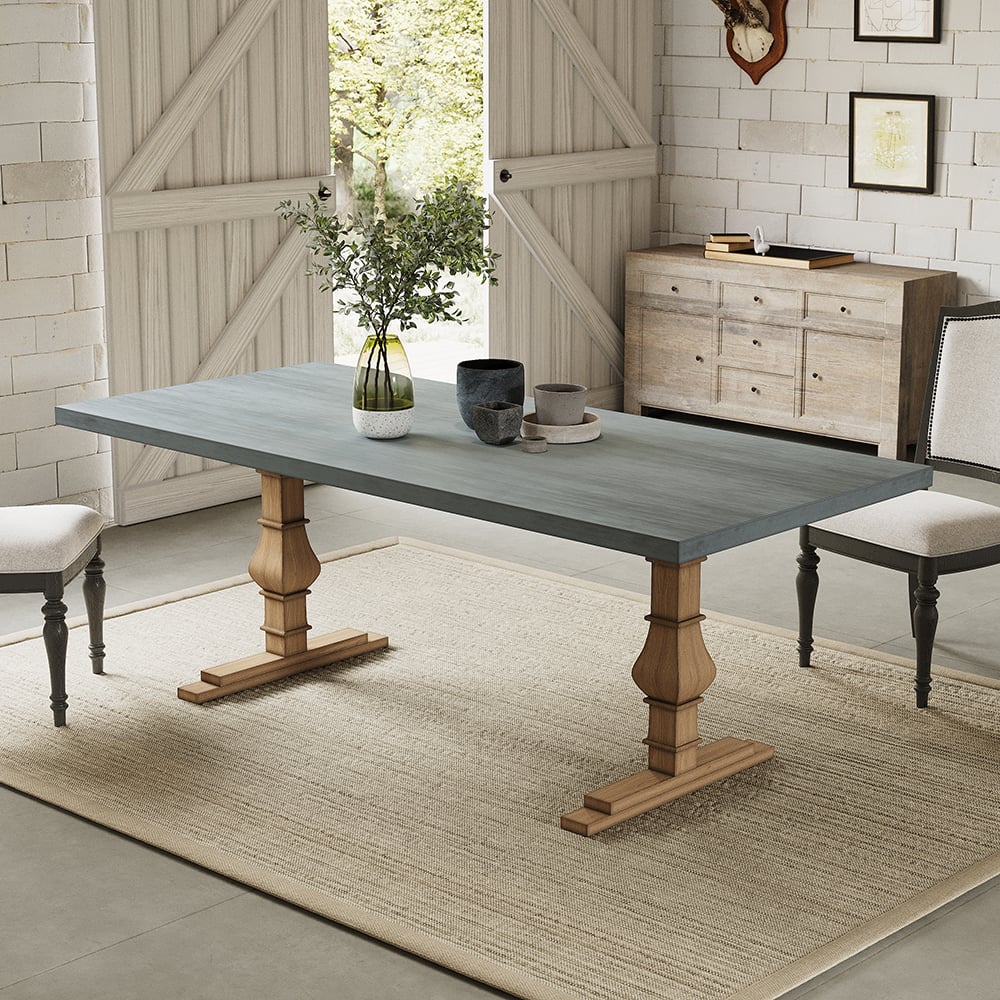
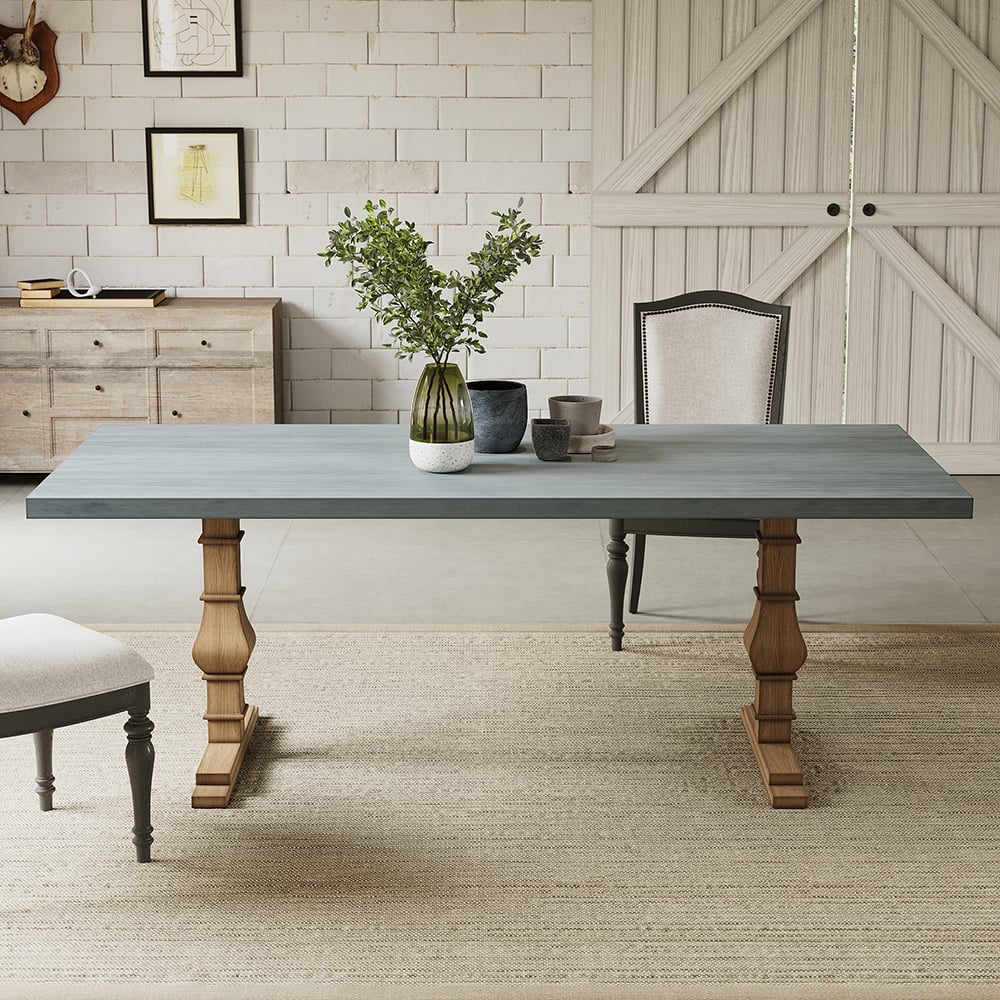
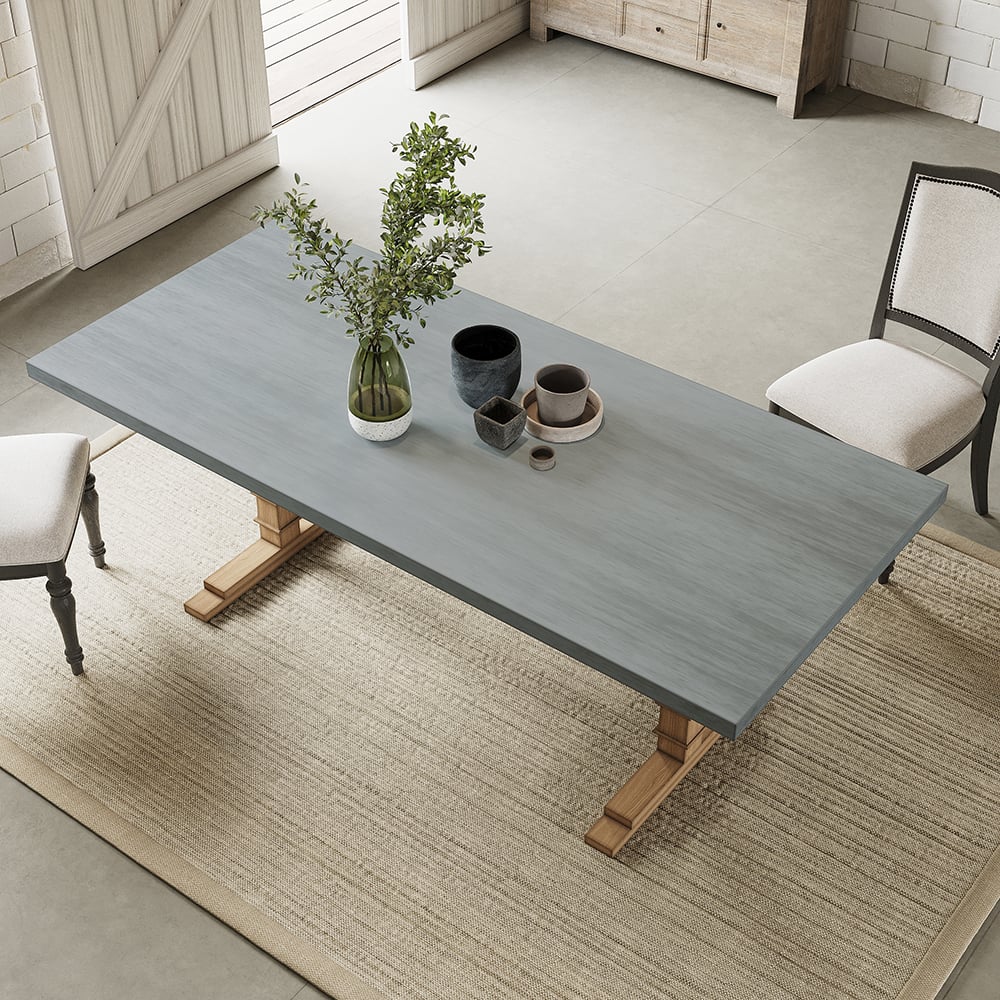
The short answer: hang your fixture 30 to 36 inches above the table surface, and choose a fixture that’s roughly one third to one half as wide as the table (or about 12 inches narrower than the table on each side). Adjust upward a few inches for every foot your ceiling exceeds 8 feet.
The Height Rule: 30 to 36 Inches Above the Table
Lighting retailers and interior designers largely agree on this range. Room & Board’s design team recommends the bottom of the fixture sit 30 to 36 inches above the tabletop, and Studio McGee’s design guide backs the same range for a standard 8-foot ceiling.
This height keeps the light close enough to cast a warm glow on plates and faces, but high enough that nobody bumps their head standing up or has to duck sideways to see the person across the table.
If your ceiling is taller than 8 feet, add about 3 inches of hanging height for every extra foot. A 9-foot ceiling calls for 33 to 39 inches above the table. A 10-foot ceiling calls for 36 to 42 inches.
A simple way to check the height in person: sit down at the table. You should be able to look straight across at another chair without the fixture blocking your view. Stand up, and the bottom of the fixture should land roughly at eye level or just above it.
The Width Rule: One Third to One Half the Table’s Width
Once the height is right, width is what makes a fixture look proportional instead of undersized or overwhelming.
The general guideline from lighting designers is that a chandelier or pendant cluster should measure about one third to one half of the table’s width. A simpler version of the same rule: leave roughly 12 inches of clearance between the edge of the fixture and the edge of the table on each side.
For a farmhouse table that’s 36 inches wide, that puts you in the 12 to 18 inch range for fixture width. For length over a rectangular table, aim for a fixture that’s about half to two thirds of the table’s total length, so it reads as a centered feature rather than a single dot of light over one end.
| Table Width | Fixture Width Target (1/3 to 1/2 rule) |
|---|---|
| 36 inches | 12 to 18 inches |
| 40 inches | 13 to 20 inches |
| 42 inches | 14 to 21 inches |
| 44 inches | 15 to 22 inches |
These numbers describe the shade or the visual width of a cluster, not the ceiling canopy or mounting hardware.
Popular Farmhouse Fixture Styles
Farmhouse dining rooms tend to favor a handful of fixture styles that pair with wood tables, iron hardware, and simple lines. Here’s how each one tends to perform in a real dining room.
Linear chandeliers. These stretch along the length of a rectangular table instead of hanging as a single round shape. They’re the easiest style to size correctly for long farmhouse tables because their proportions are built for a rectangle, not a square footprint.
Lantern-style pendants. A single lantern, or a row of two to three smaller lanterns, gives a farmhouse room a cottage or coastal farmhouse feel. Because each lantern is compact, a row of them across a long table often reads better than one oversized lantern in the center.
Wagon-wheel chandeliers. Built around a circular metal frame with hanging bulbs or small shades, these lean into a rustic, ranch-style farmhouse look. They work best over rectangular tables when their diameter stays close to the width guideline above, since a wagon wheel that’s too wide will crowd the space over the chairs.
Exposed-bulb industrial-farmhouse fixtures. These pair black or aged metal with visible Edison-style bulbs, often in a linear bar or a cluster of two to three pendants. Homary carries several pieces in this style, including a rustic bell jar pendant with a black metal frame and an industrial mini pendant with an exposed bulb, both suited to a single accent or a paired arrangement over a smaller farmhouse table or a kitchen island next to one. Homary’s current catalog leans more toward compact and island-style pendants than long linear farmhouse chandeliers, so for a full-length fixture over a large table, a dedicated lighting retailer will likely have more direct matches.
Sizing a Fixture for an Extendable Table
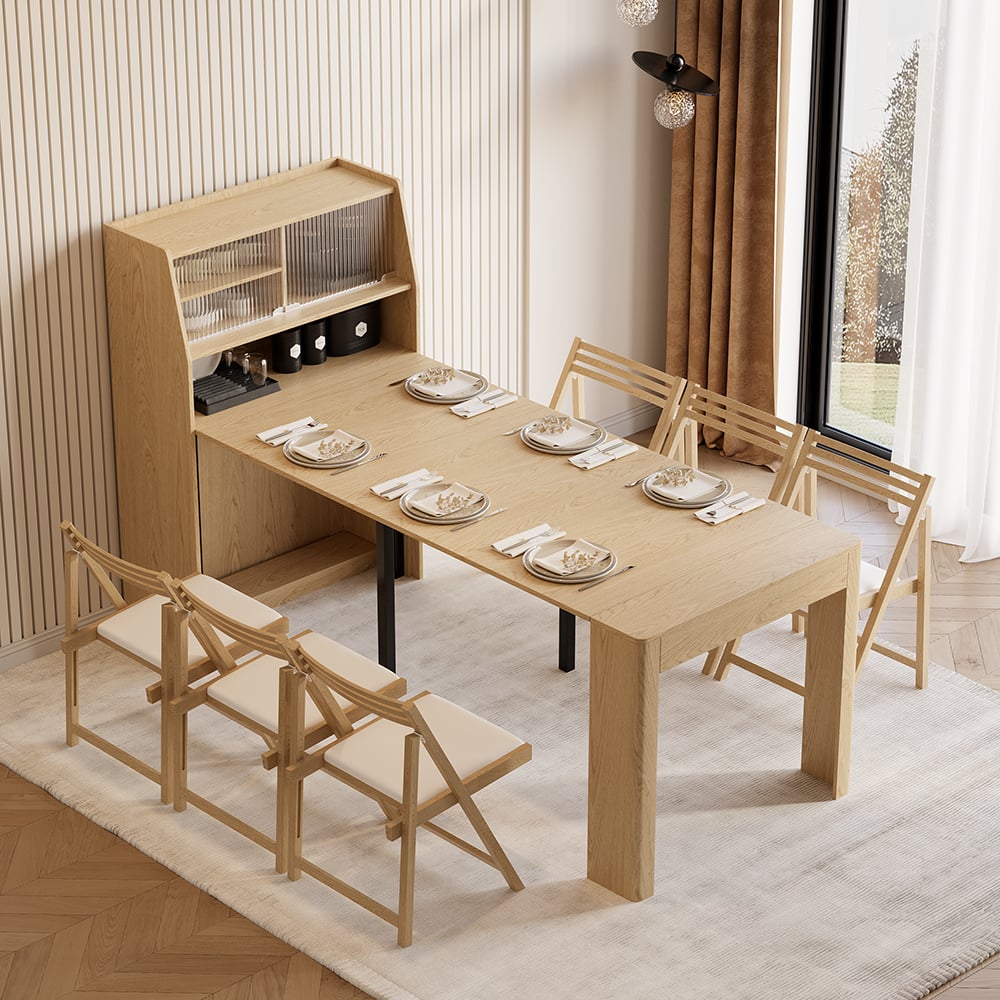
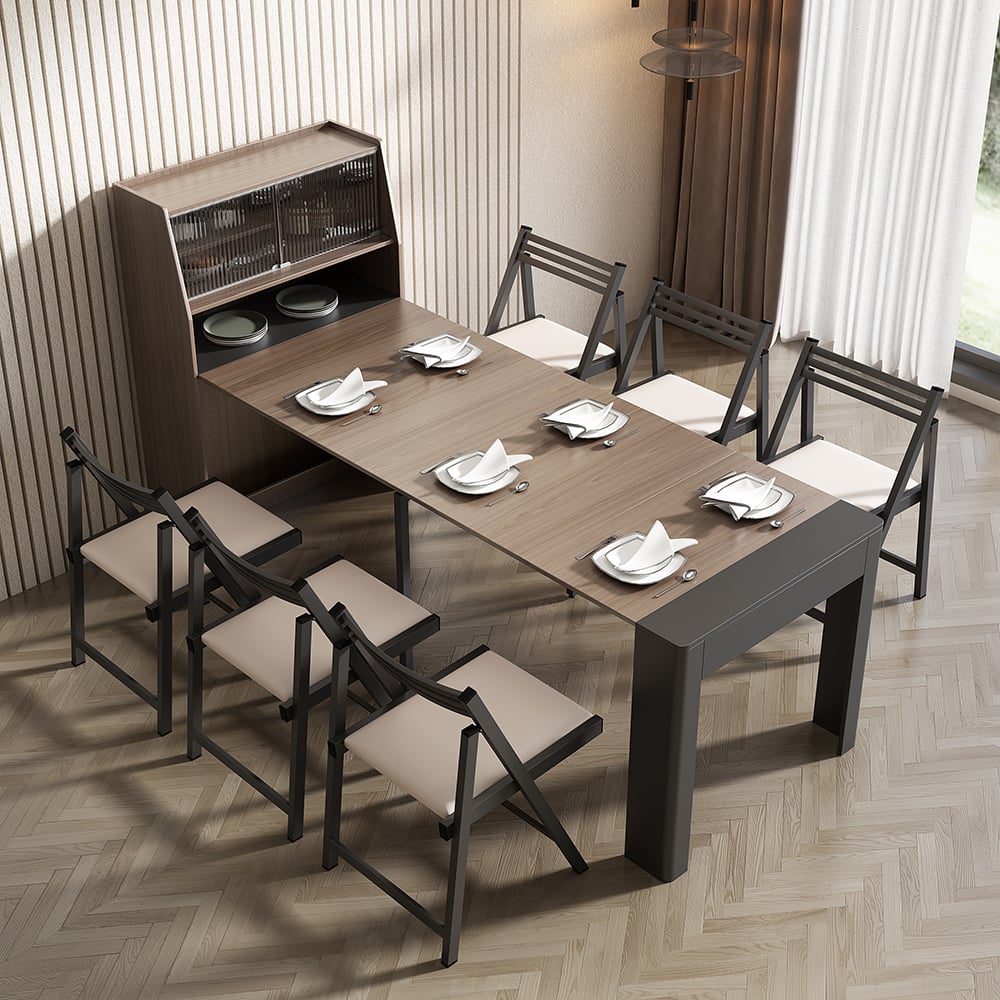
Extendable farmhouse tables create a sizing problem most guides skip. A table that seats 6 at its everyday length might stretch to seat 10 with a leaf added, and a fixture sized for the extended length will look lost and undersized every single day the table isn’t stretched out.
The fix is to size the fixture for the table’s everyday, non-extended length, not its maximum length. Most families use the leaf a handful of times a year for holidays or guests, so the fixture should look balanced for the other 350 days.
If you host large gatherings often enough that the extended length matters, a linear chandelier with two to three separately hung pendants (rather than one solid fixture) gives you a middle ground. The spread reads as full over the everyday length and doesn’t look broken up when the table is extended.
Quick Reference Table
| Factor | Guideline |
|---|---|
| Height above table (8 ft ceiling) | 30 to 36 inches |
| Height above table (9 ft ceiling) | 33 to 39 inches |
| Height above table (10 ft ceiling) | 36 to 42 inches |
| Fixture width vs. table width | 1/3 to 1/2 of table width |
| Clearance from table edge | About 12 inches per side |
| Fixture length vs. table length | 1/2 to 2/3 of table length |
| Sizing basis for extendable tables | Everyday length, not extended length |
Key Takeaways
Hang your fixture 30 to 36 inches above the table surface on a standard 8-foot ceiling, adding about 3 inches per extra foot of ceiling height. Size the fixture to about one third to one half of the table’s width, or roughly 12 inches narrower than the table on each side. For an extendable table, size the fixture to the everyday length you use most, not the rare fully-extended length. Linear chandeliers, lantern pendants, wagon-wheel styles, and exposed-bulb industrial fixtures all work in a farmhouse room as long as the height and width fall inside these ranges. If you want a look at pieces suited to farmhouse and industrial styling, Homary’s lighting section has a small but growing selection worth a look while you plan the rest of the room.
Frequently Asked Questions
How far should a light hang above a dining table? Most lighting designers recommend hanging the bottom of the fixture 30 to 36 inches above the tabletop. This applies to a standard 8-foot ceiling, with a few extra inches added for taller ceilings.
What size chandelier do I need for my dining table? Aim for a fixture that’s about one third to one half of the table’s width and roughly half to two thirds of its length. A simple backup rule is to leave about 12 inches of clearance between the fixture’s edge and the table’s edge on each side.
Should the chandelier be centered over the table or the room? Center the fixture over the table itself, not the room, unless the table is permanently fixed in a specific spot and the room’s layout demands otherwise. Most dining tables aren’t centered in the room, so centering the light on the room would leave it off to one side of the table.
Can a light fixture be too low over a dining table? Yes. A fixture hung below about 30 inches above the table tends to block sightlines between people seated across from each other and can be a head-bump hazard when guests stand up. Raising it into the 30 to 36 inch range usually solves both problems.
What kind of light fixture works best over a farmhouse table? Linear chandeliers, lantern-style pendants, wagon-wheel chandeliers, and exposed-bulb industrial fixtures are the most common choices for farmhouse dining rooms. The right pick depends on whether the room leans more rustic, cottage, or industrial in its other finishes.
How do I light an extendable farmhouse table? Size the fixture to the table’s everyday, unextended length rather than its maximum length with leaves in. A fixture with two or three separate pendant drops can also flex visually better than one solid piece when the table is stretched out for guests.
Do I need more than one light fixture over a long table? For tables longer than about 8 feet, two smaller pendants or a longer linear chandelier usually look more balanced than a single small fixture centered in the middle. This also gives more even light across the full length of the table.
What ceiling height changes do I need to make for pendant height? Add roughly 3 inches to the hanging height for every foot your ceiling exceeds the standard 8 feet. A 10-foot ceiling would put your fixture around 36 to 42 inches above the table instead of 30 to 36.
Should the fixture match the table’s wood tone or metal finish? It helps visually, but it isn’t a strict rule. Matching the metal finish (black, brass, or aged iron) to other hardware in the room, like door handles or faucet finishes, usually ties the room together more than matching wood tones exactly.
How wide should a fixture be for a round farmhouse table? For a round table, use the same one third to one half width rule based on the table’s diameter rather than its length. A 48-inch round table would pair well with a fixture in the 16 to 24 inch diameter range.