Most of the year, it is just you, maybe a partner, maybe two kids, sitting down for dinner at a table built for four. Then Thanksgiving shows up, or your partner’s whole side of the family decides to visit, and suddenly four seats turns into a real problem. This is the exact situation an extendable farmhouse dining table solves, and it is why so many people search for one right before a holiday instead of months ahead of time.
An extendable farmhouse dining table is a table with a leaf system built in, so it can shrink down for everyday meals and stretch out to seat more guests when needed. Farmhouse style adds the warm wood tones, simple lines, and sturdy legs that make the table feel like it belongs in a real home, not a showroom. The best versions combine a smooth extension mechanism with a weight capacity that can actually handle a full table of food and plates.
Why a Fixed-Size Table Doesn’t Work for Most Homes
A table sized for your biggest holiday dinner sits in your dining room the other 350 days a year, eating up floor space you don’t have. A table sized for daily use leaves guests standing at Thanksgiving, or crammed onto folding chairs pulled from the garage.
An extendable table splits the difference. It stays compact for Tuesday night dinner and grows when your sister-in-law calls to say she’s bringing the whole family. You get daily comfort and occasional capacity from one piece of furniture instead of two.
This matters more in smaller homes and apartments, where a permanently oversized table would block a walkway or crowd a kitchen. Extendable design gives you the seating without the year-round footprint.
How Extension Mechanisms Actually Work
Not all extendable tables extend the same way. The mechanism affects how much effort it takes to expand the table, where you store the extra pieces, and how the table looks both closed and open.
Leaf insert tables use one or more separate wood panels, called leaves, that you insert into a gap in the tabletop. You typically pull the two table halves apart, drop the leaf into the opening, and push the halves back together. This gives you the most size flexibility since some tables support two or three leaves, but you need somewhere to store the leaves when they are not in use.
Self-storing (pull-apart) leaf tables solve the storage problem. The leaf lives inside the table itself, folded or tucked under the tabletop, so you never have to find a closet for it. You pull the table apart and the leaf swings or slides into place automatically. This style costs a bit more but saves you from losing a leaf in the garage for three years.
Drop-leaf tables work differently. Instead of a separate panel, the table has hinged sides that fold down when not needed and lift up (often supported by a swing-out leg or bracket) when you need more surface. Drop-leaf tables tend to be smaller overall and work well in tight kitchens or apartments where even a closed extendable table feels too big.
| Mechanism | Storage Needed | Typical Size Range | Best For |
|---|---|---|---|
| Leaf insert | Yes, separate leaf | Widest range, often 2 to 3 leaves | Big families, frequent large gatherings |
| Self-storing leaf | No, leaf stays in table | Moderate, usually 1 to 2 leaves | People who don’t want to store extra parts |
| Drop-leaf | No, sides fold down | Smallest closed size | Small kitchens, apartments, occasional guests |
What to Look for Before You Buy
A smooth, one-person mechanism. Sit or stand at the table and picture pulling it apart alone, because that is usually how it happens. Sliding rails or guided tracks make this a lot easier than a table that requires you to lift and align a heavy leaf by hand.
Leaf storage that fits your space. If you’re choosing a leaf insert table, figure out where the leaf will live when it’s not in use. A leaf that never gets pulled out because it’s buried in a closet defeats the point of buying an extendable table.
Weight capacity for real use. A table might list a maximum weight for the whole surface, or per leaf section. Check this against what you’d actually put on it: a full spread of Thanksgiving dishes is heavier than most people assume, especially with cast iron pans or a stand mixer on the counter’s overflow space.
Base and leg placement. Some extendable tables use a center pedestal or trestle base, which frees up legroom on the sides, useful when you add chairs for extra guests. A four-leg base at the corners can bump knees when you’re seated closer together.
Material that matches how you’ll use it. Solid wood tops resist scratches and dents better over decades, but engineered wood or wood-look laminate tops cost less and still hold up fine for typical family use. Neither choice is wrong, it depends on your budget and how hard the table gets used.
Real Extendable Farmhouse Options Worth Considering
Two Homary tables show the range of what’s available in this style, from compact space-savers to larger family tables.
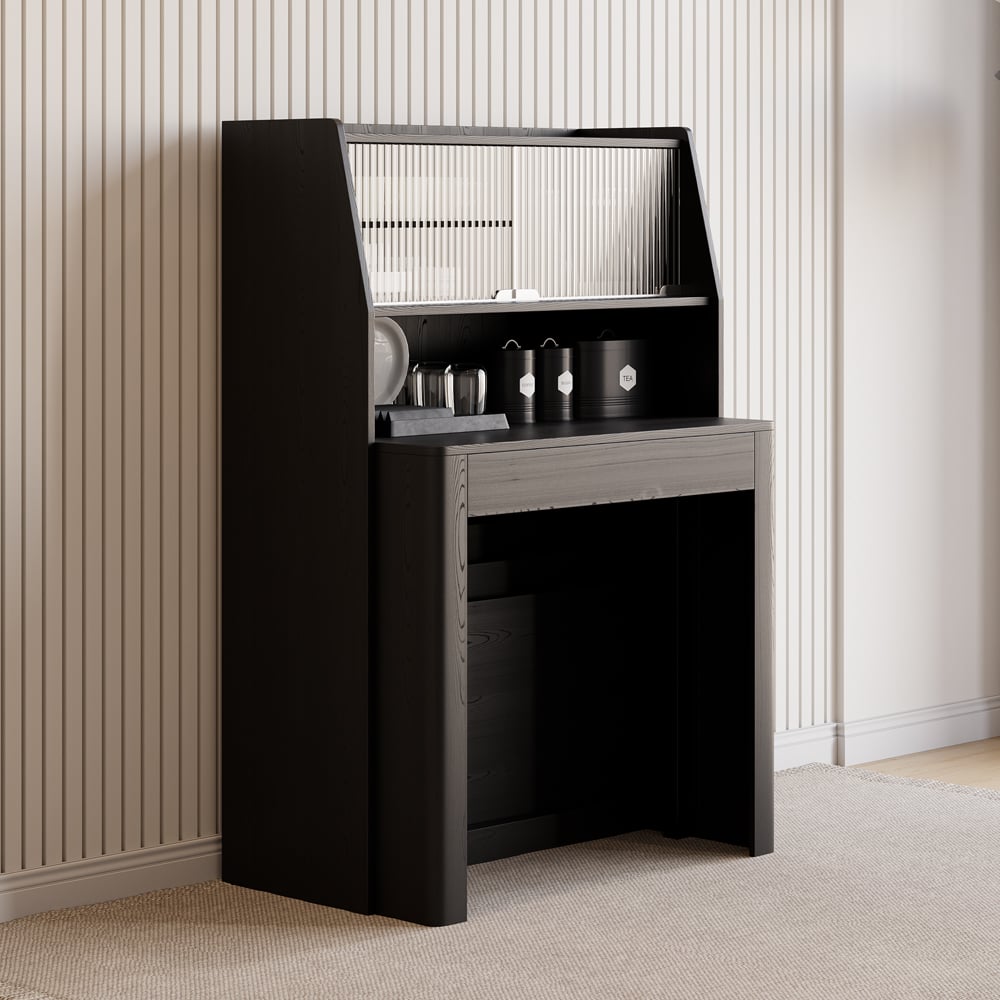
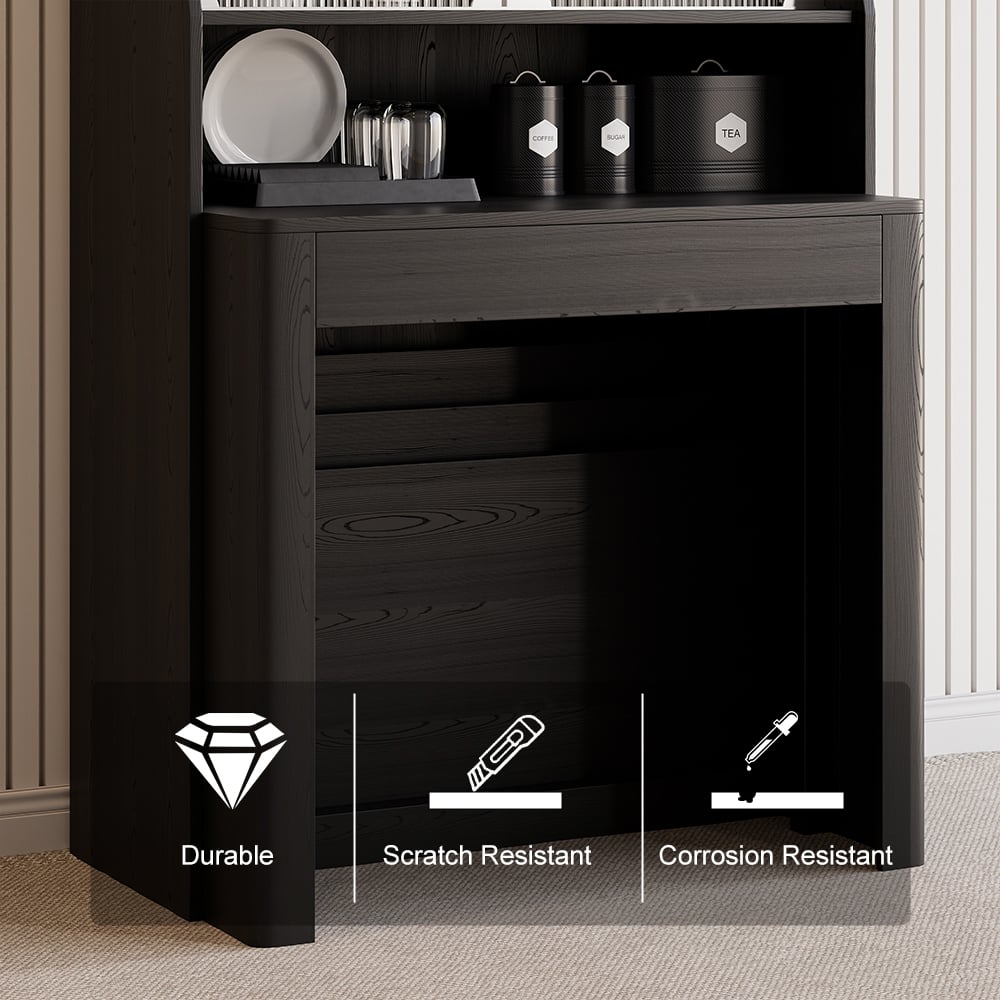
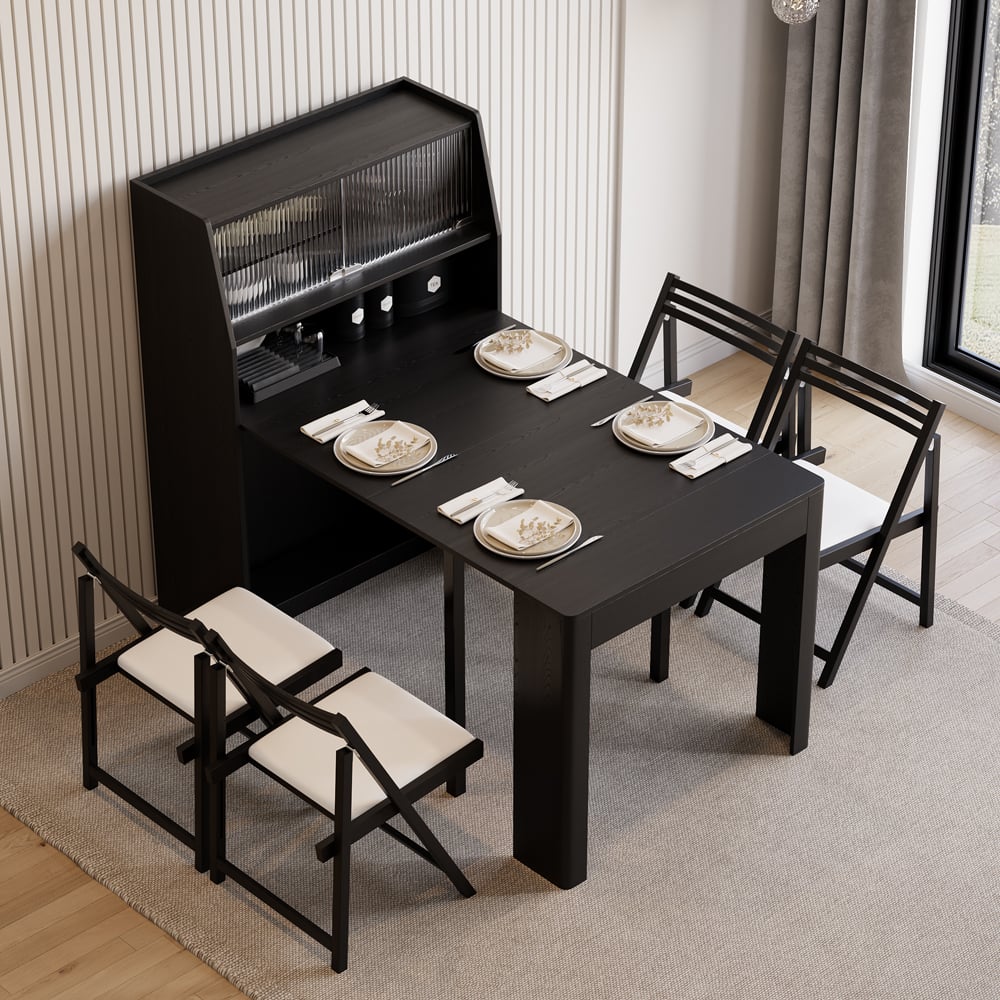
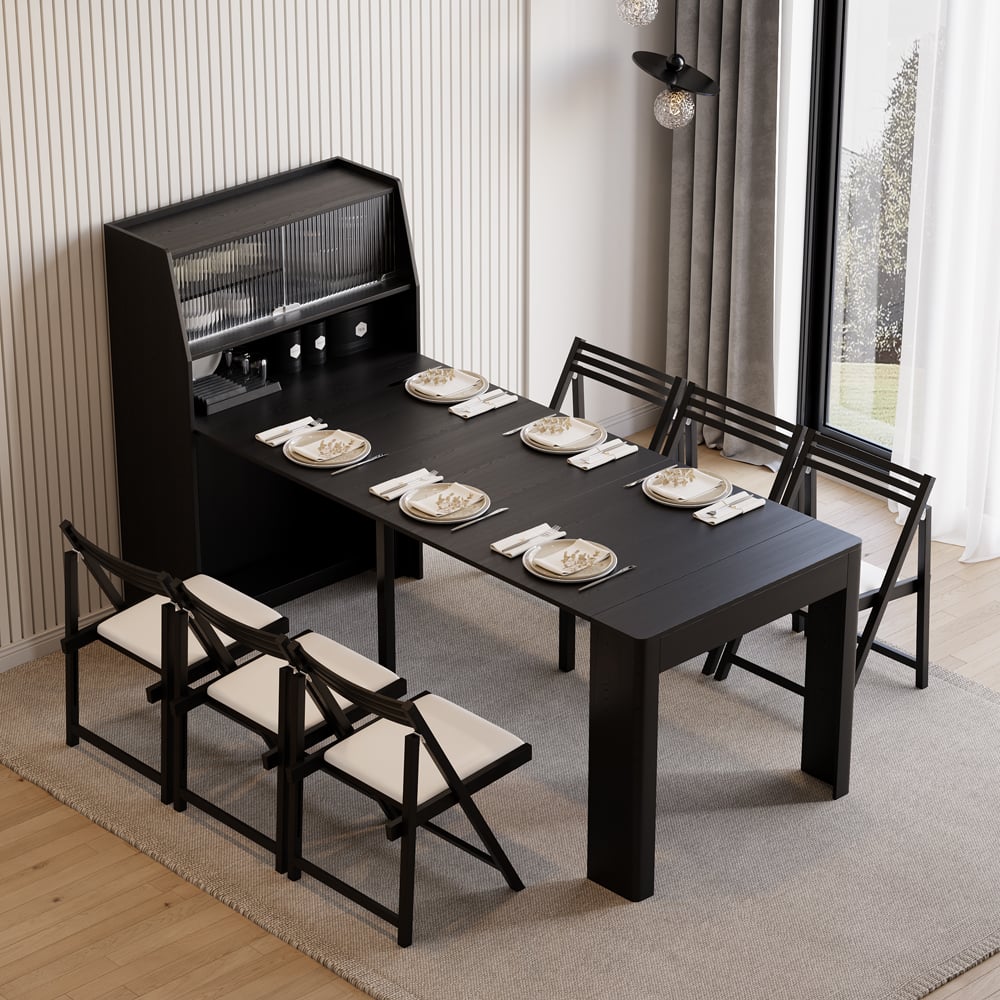
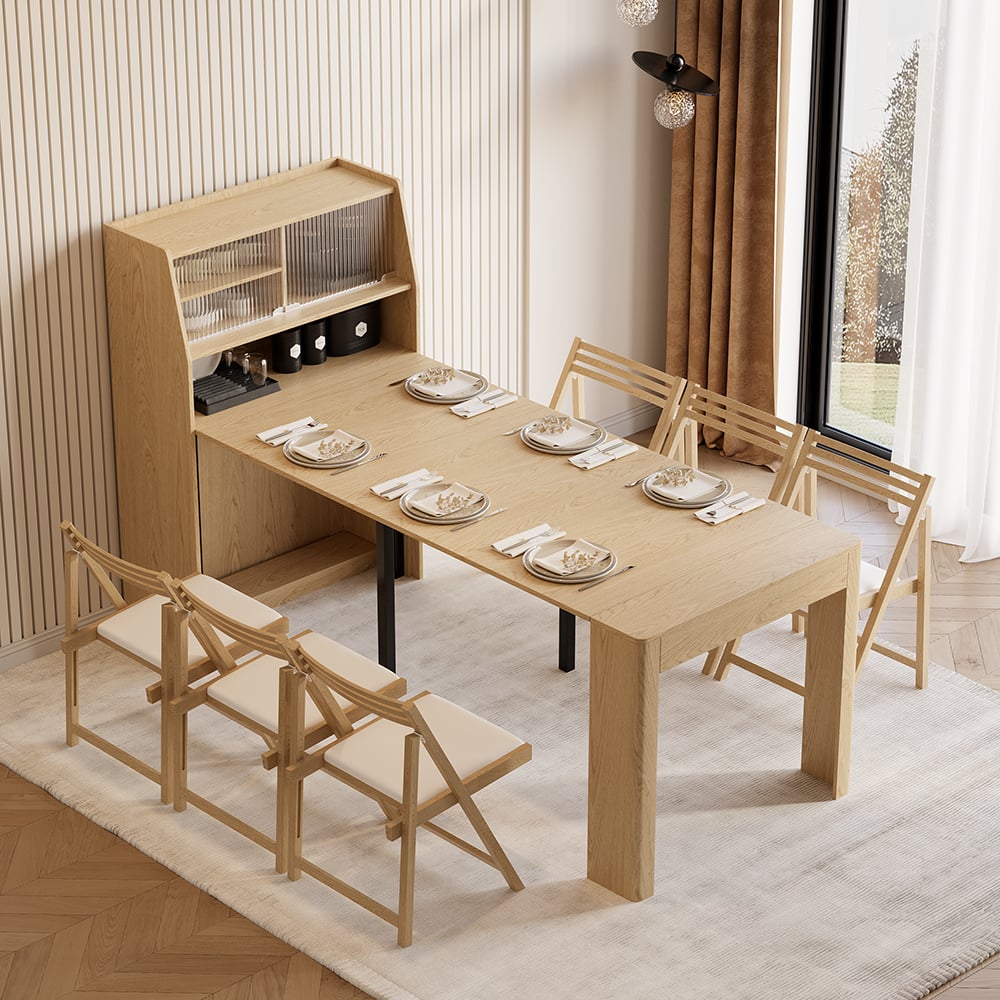
The 70.9” Farmhouse Extendable Dining Table with Storage Sideboard is built for smaller spaces that still host occasionally. It retracts down to a compact size for daily use, then expands to 70.9 inches to seat up to 8 people. It also includes a built-in sideboard with a glass door for dish storage, so you get dining and storage in one footprint. It’s made from MDF, tempered glass, and metal in a walnut and gray finish, currently priced at $549.99 (marked down from $749.99), with a 4.7-star rating across 78 reviews.
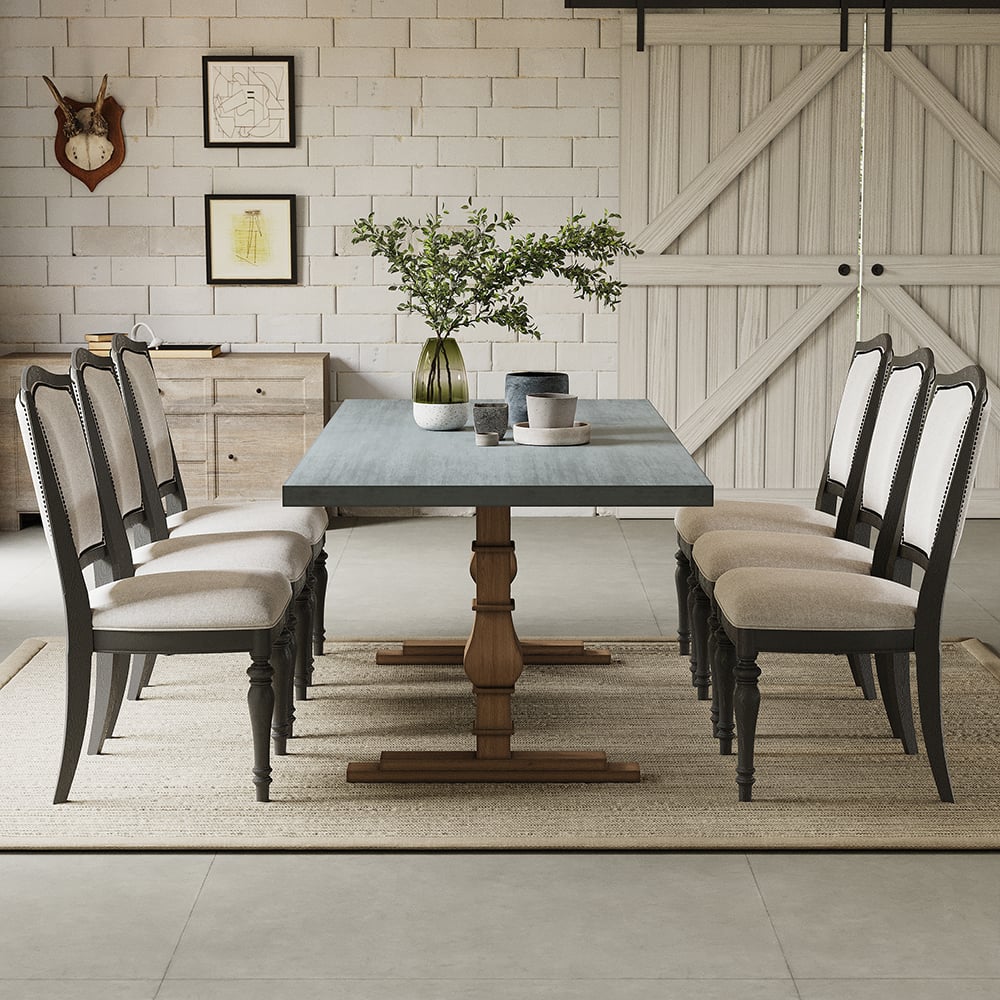
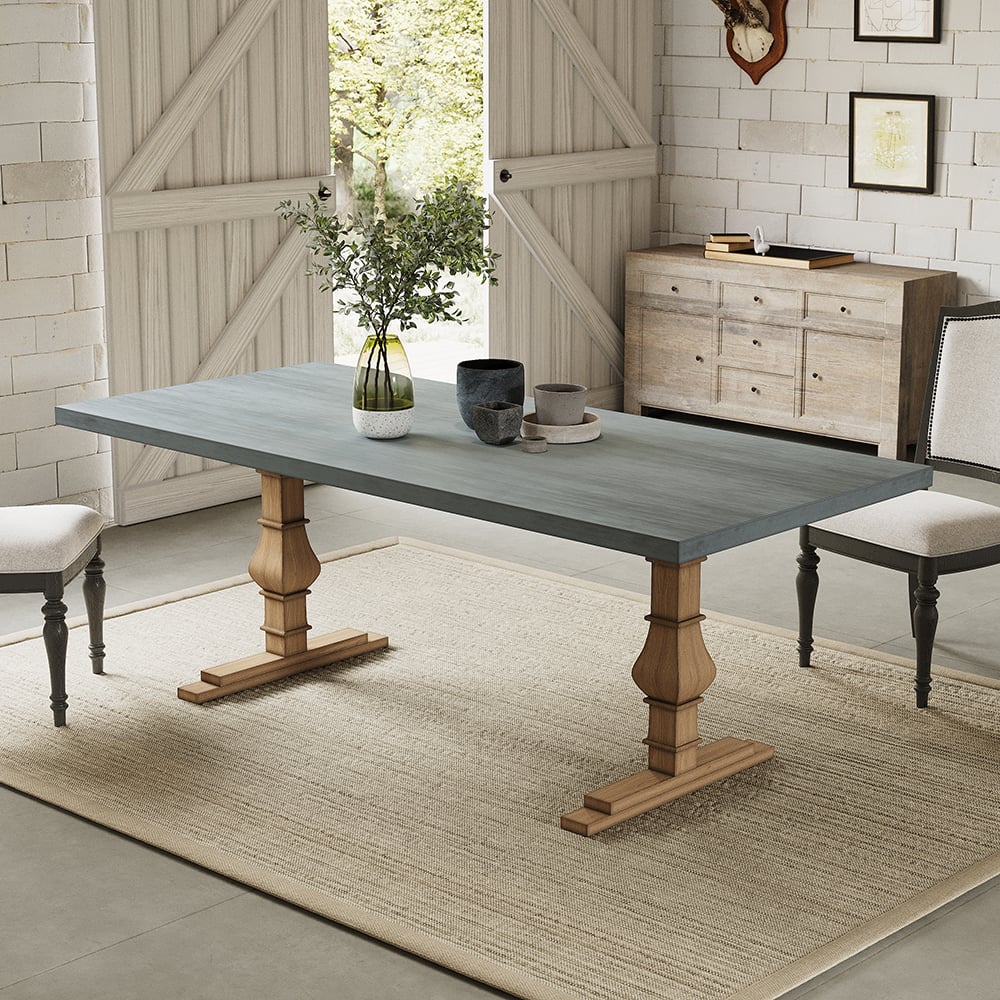
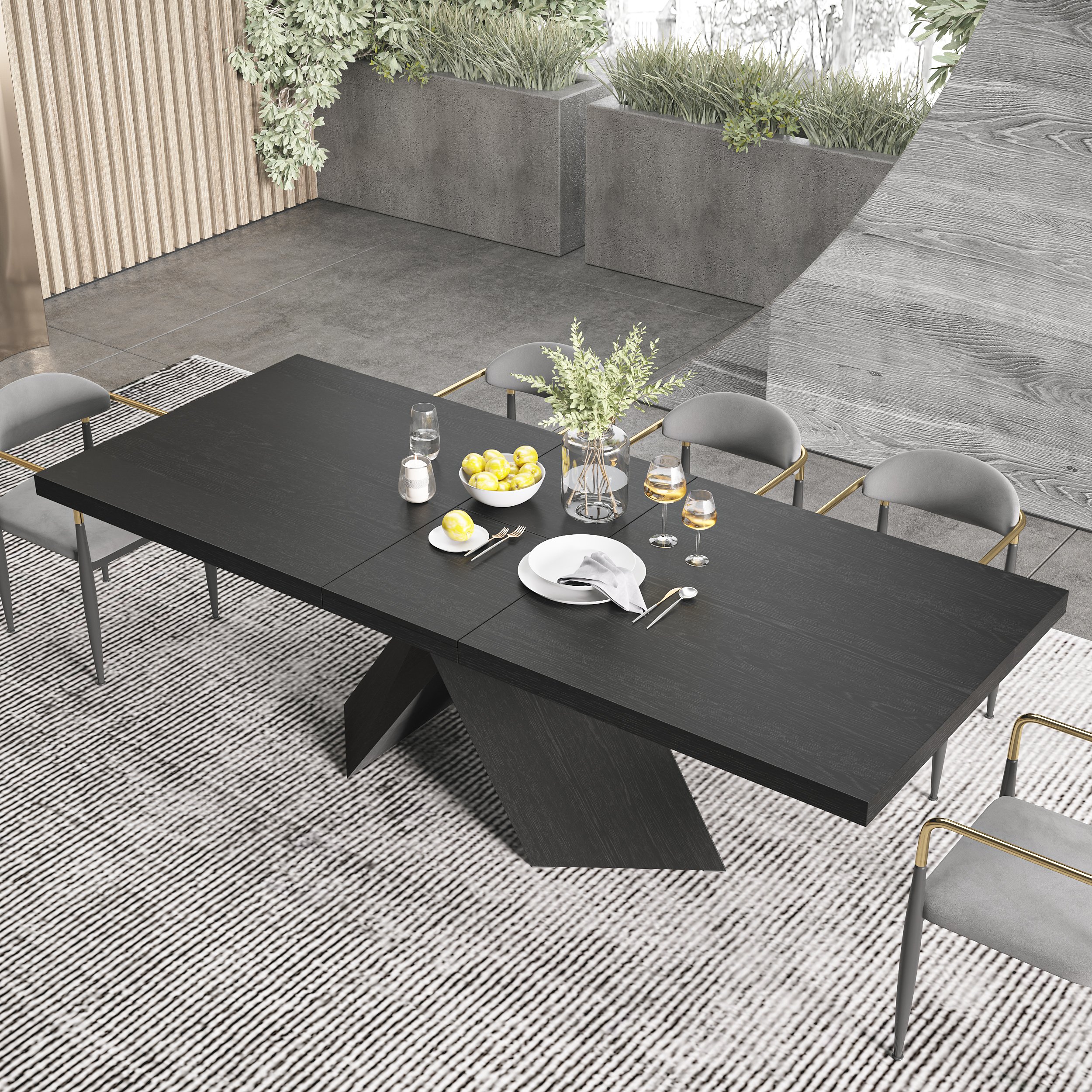
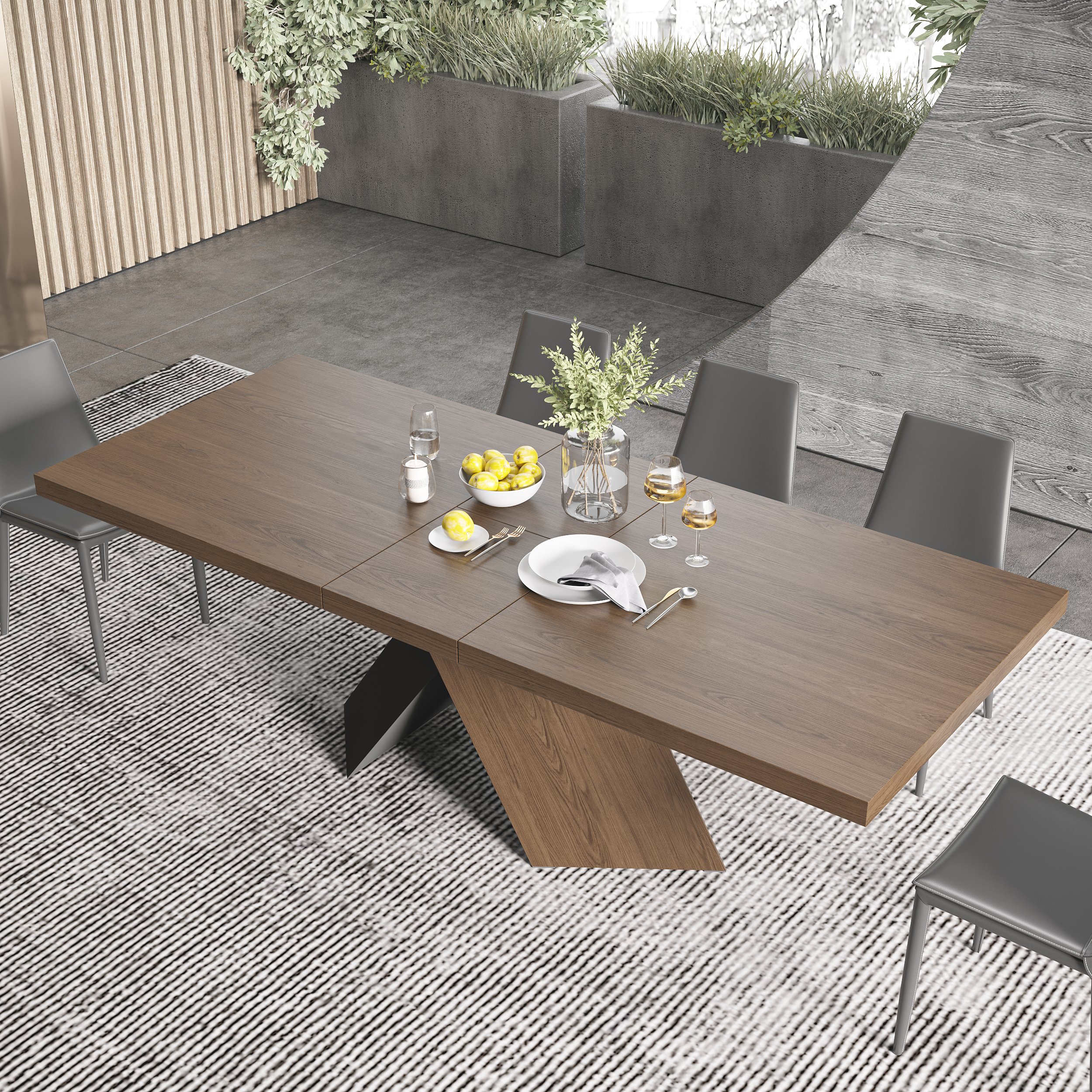
The Farmhouse 79”-94” Extendable Rectangular Walnut Dining Table is the bigger option, built for families who regularly host larger groups. It extends from 79 inches up to 94 inches and seats 6 to 8 people, with a wood-look top and a metal and engineered wood base for stability. It’s currently priced at $1,599.99, with a 4.8-star rating across 56 reviews. If your dining room needs to flex from a weeknight table for four up to a full holiday spread, this size range covers both ends.
Both tables use a leaf-based extension system, so you pull the top apart to reveal the extra surface rather than attaching a separate board from another room.
Key Takeaways
An extendable farmhouse dining table lets your dining room work for daily meals and occasional big gatherings without buying two separate tables. Leaf insert tables offer the most size flexibility, self-storing leaf tables save you from hunting for a spare panel, and drop-leaf tables suit the smallest kitchens. Before buying, check how easy the mechanism is to operate alone, where any removable leaf will be stored, and whether the table’s weight capacity matches how you actually plan to use it.
If you host a few times a year but don’t want a giant table taking up space the rest of the time, look for a model with a smooth mechanism and a size range that covers both your everyday household and your biggest guest list.
FAQ
What is the difference between a drop-leaf and an extendable dining table? A drop-leaf table has hinged sides that fold down when not in use and lift up when needed, while an extendable table typically pulls apart to add a separate leaf panel in the middle. Drop-leaf tables usually end up smaller overall, making them a better fit for tight kitchens.
How much bigger does an extendable table get with a leaf? Most single leaves add 12 to 20 inches of length, enough to seat 2 more people. Tables that support two or three leaves can add 24 to 60 inches total, depending on the model.
Can one person operate an extendable table alone? Yes, in most cases, especially with self-storing leaf or sliding rail designs. Heavier leaf insert tables can be done solo too, but it helps to have a second person for the largest or heaviest leaves.
Where do you store the extra leaf when it’s not being used? Self-storing leaf tables keep the panel tucked inside the table itself, so no separate storage is needed. With traditional leaf insert tables, most people store the leaf in a closet, under a bed, or in a garage between uses.
How much weight can an extendable dining table hold? This varies by model and material, but most farmhouse dining tables list a total weight capacity in the range of 200 to 400 pounds spread across the surface. Check the specific product listing, since capacity depends on the base design and materials used.
Is solid wood better than engineered wood for an extendable table? Solid wood tends to hold up longer under heavy daily use and resists dents better over time. Engineered wood or wood-look tops cost less and still perform well for typical family use, so the better choice depends on your budget and how hard the table will be used.
What size table do I need to seat 8 people? A rectangular table generally needs to be about 88 to 92 inches long to comfortably seat 8, allowing roughly 24 inches of space per person. An extendable table that reaches into the high 80s or low 90s when fully open can handle this without cramming guests together.
Do extendable tables wobble more than fixed tables? A well-built extendable table with a quality mechanism should not wobble more than a fixed table, since the leaf locks into place and the base still provides the same support. Cheaper mechanisms or worn slides can develop wobble over years of use, so check reviews for mentions of stability.
What base style works best for an extendable table? A trestle or pedestal base often works better than a four-leg base because it keeps the legs out of the way when you add extra chairs for a bigger group. Four-leg bases can crowd knees once more seats are pulled in around an extended table.
How do I know if a farmhouse table will match my existing chairs? Look at the tabletop finish and leg style first, since farmhouse tables usually pair a wood or wood-look top with metal or turned wood legs. Mixing finishes (like a walnut table with black metal chairs) is common in farmhouse design, so an exact match isn’t necessary, just a similar overall tone.