Most farmhouse dining room round-ups show you forty pretty photos and stop there. None of them tell you how high to hang that mirror above your buffet, or how wide your gallery wall should be relative to your table. That gap is exactly where most people get stuck: they buy the right pieces, then hang them wrong.
Farmhouse dining room wall decor works best when it mixes texture (wood, woven baskets, chipped paint) with a few practical rules for placement and scale. The most reliable options are gallery walls with mismatched vintage frames, open shelving styled with crates or dishware, an oversized mirror sized to the furniture below it, sconces flanking a sideboard, a reclaimed wood accent wall, and simple sign-style art with short sayings. Below is how to actually size and hang each one.
Start With the Wall, Not the Decor
Before picking anything, measure your main dining wall. A wall behind a buffet or sideboard needs decor sized to that furniture piece, not to the whole wall. A blank wall with just a table against it can support a bigger, bolder piece.
Most farmhouse dining rooms have one “hero” wall (behind the table or buffet) and one or two smaller walls for supporting decor like sconces or a shelf. Plan the hero wall first, then fill in from there.
Gallery Walls With Vintage-Style Frames
A gallery wall is the most flexible option because it works in almost any dining room shape. Mix frame finishes (black, aged brass, whitewashed wood) but keep the mat colors or frame widths consistent so the collection reads as one wall, not a pile of leftovers.
Practical sizing that most articles skip:
- Keep the whole arrangement between 60% and 75% of the width of the table or furniture below it.
- Leave 2 to 3 inches between frames for a tight gallery look, or 4 to 6 inches for a more relaxed spread.
- Center the visual middle of the grouping at 57 to 60 inches from the floor, the standard eye-level height used by galleries and framers.
Lay the frames out on the floor first, then use painter’s tape on the wall to mark the outline before you drill a single hole.
Open Shelving With Rustic Crates and Baskets
Open shelves in reclaimed wood or a wood-look laminate hold dishware, small plants, and woven baskets without closing in the room the way a full cabinet would. This works especially well on a narrow wall where a shelf unit would not fit.
Hang shelves 14 to 16 inches apart if you plan to display stacked plates or tall pitchers, and 10 to 12 inches apart for shorter items like mugs and small baskets. Leave the top shelf at least 6 inches below the ceiling line so it does not feel cramped.
Statement Mirrors Sized to the Furniture Below
A large mirror does two things at once: it fills wall space with real visual weight, and it bounces light around a room that often only gets natural light from one side. In a small or narrow dining room, a mirror positioned to reflect a window or light fixture can make the space read noticeably larger, which is one of the few decor moves that is both decorative and functional.
The sizing rules that most photo round-ups leave out:
| Furniture height below mirror | Recommended gap to mirror | Mirror width vs. furniture width |
|---|---|---|
| Under 35 inches | 10 to 18 inches | 65% to 75% of furniture width |
| 35 to 40 inches | 8 to 10 inches | 65% to 75% of furniture width |
| 40 inches and taller | 5 inches or less | 65% to 75% of furniture width |
A mirror wider than the buffet or sideboard beneath it tends to look top-heavy. If you are hanging a mirror on a bare wall with no furniture below it, center it so the bottom edge sits about 60 to 65 inches from the floor, roughly eye level for most adults standing in the room.
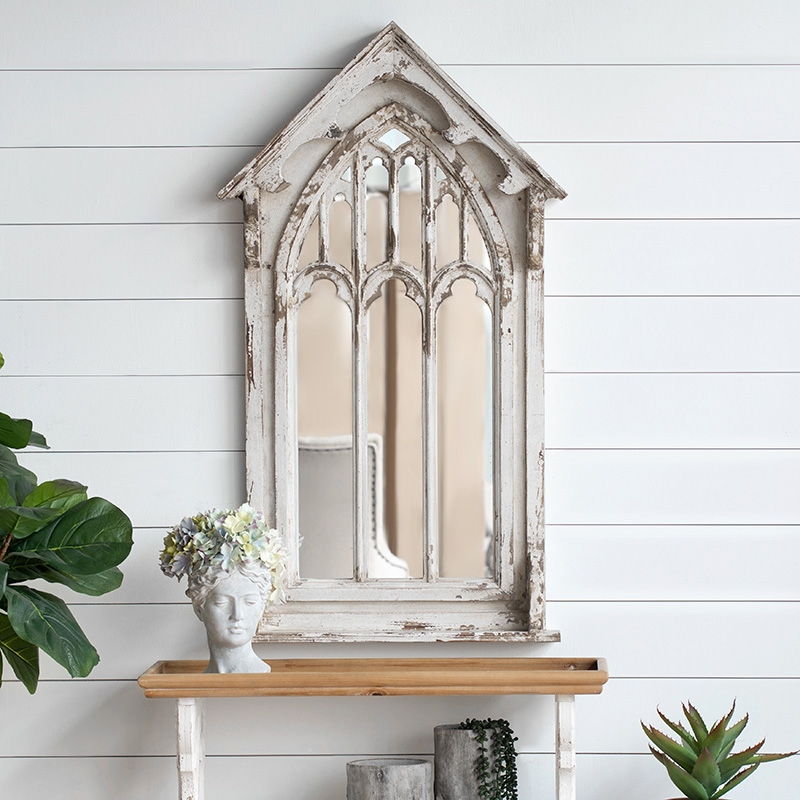
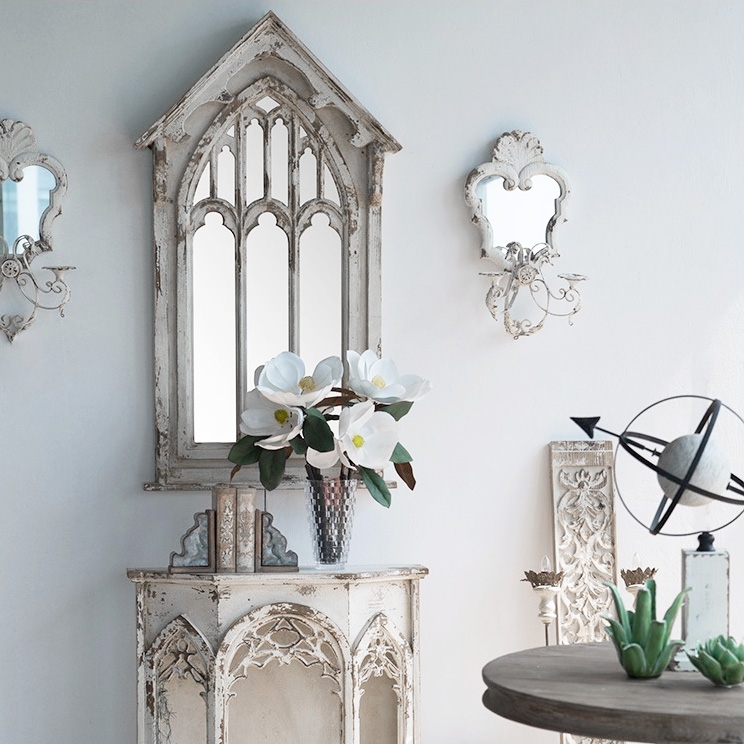
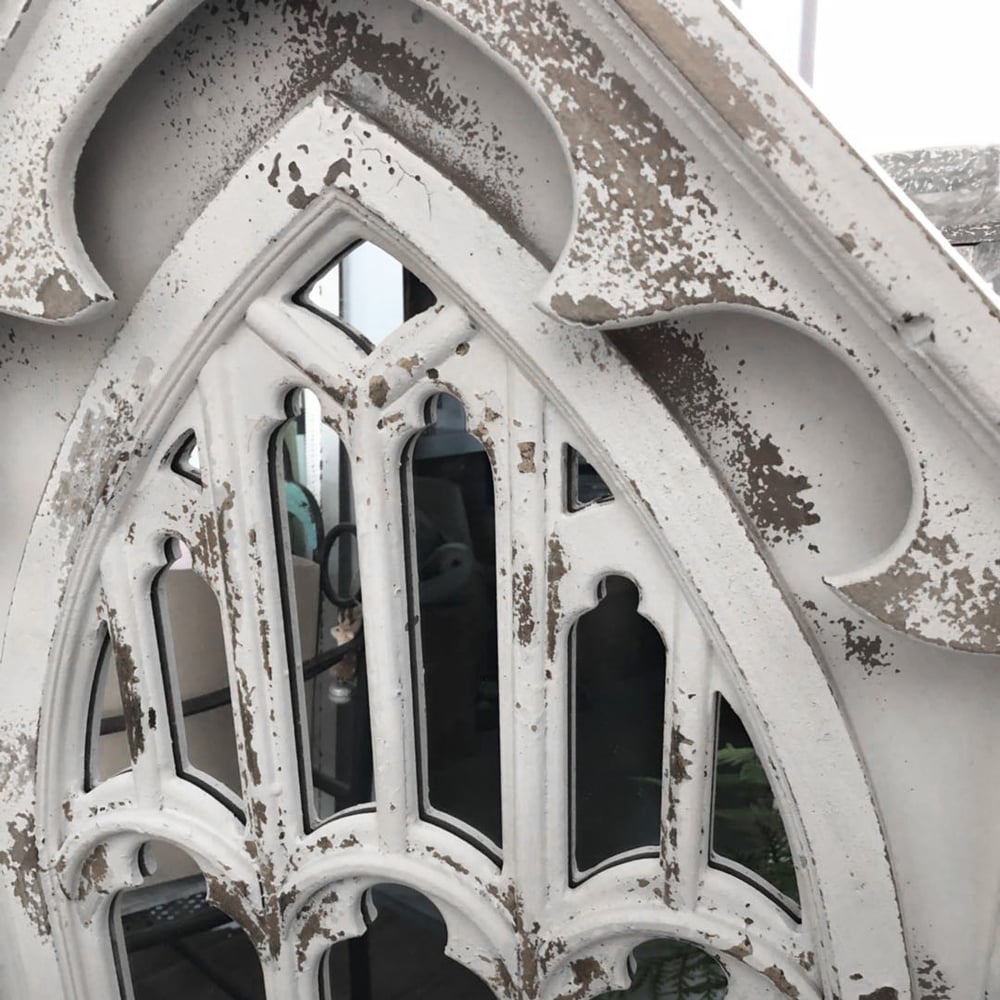
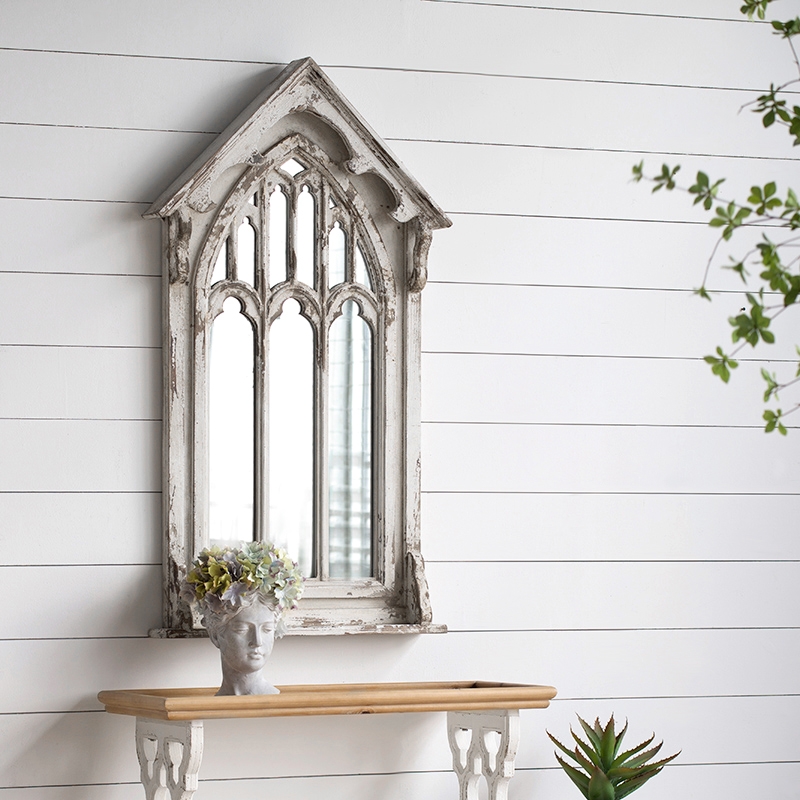
For a piece that already fits the farmhouse look, Homary’s 27” Farmhouse Style Vintage Wall Mounted French Distressed White Window Mirror is built with a triangle-top, window-pane frame in a distressed white finish, and measures 27.17 inches wide by 48.43 inches tall. That width works well over a buffet or console in the 36 to 42 inch range, right in the sweet spot from the table above.
Sconces Flanking a Buffet or Sideboard
Wall sconces add warm, low light without eating into buffet or table surface space, and they read as a farmhouse staple when paired with wire cages, seeded glass, or oil-rubbed bronze finishes.
Mount sconces 60 to 66 inches from the floor to the center of the fixture, and space them so each one sits above the outer third of the furniture piece below, not dead center on the wall corners. If you are hanging a mirror or art in the middle, the sconces should sit a few inches out from its edges so the light does not wash directly onto the glass or frame.
Reclaimed Wood Accent Walls
A reclaimed wood accent wall gives texture without adding clutter, and it works as a backdrop for other decor rather than competing with it. Horizontal boards read more casual and farmhouse; vertical shiplap reads slightly more traditional.
Stick to one accent wall in the dining room, usually the one behind the table rather than the one with windows or doorways. Mixing plank widths (some 4 inches, some 6 inches) gives a reclaimed look even with new lumber.
Sign-Style Wall Art With Simple Sayings
A single chalkboard or painted wood sign with a short phrase (a family name, “gather,” a harvest date) works as a quiet focal point on a wall that does not need a mirror or gallery. Keep the phrase short enough to read from across the room, three to five words at most, since long paragraphs of script are hard to read from a dining chair.
Size the sign to roughly half the width of the table for a balanced look, and hang it at the same 57 to 60 inch center height used for gallery walls.
Plate and Dish Display Walls
Hanging vintage plates directly on the wall is one of the oldest farmhouse dining room tricks, and it still works because it uses dishware you may already own instead of buying new art. Use plate hangers rated for the plate’s weight (spring-style hangers are more secure than adhesive hooks for anything heavier than a saucer).
Arrange plates in a loose circle or grid rather than a strict grid if you are mixing patterns, since uneven spacing hides size differences between plates better than a rigid layout does.
Quick Comparison: Which Option Fits Your Wall
| Decor idea | Best wall type | Approx. cost range | Upkeep |
|---|---|---|---|
| Gallery wall | Wide wall, no furniture below | $50 to $300 | Low |
| Open shelving | Narrow wall or awkward corner | $60 to $250 | Medium (dusting, restyling) |
| Statement mirror | Wall with buffet or sideboard | $150 to $500 | Low |
| Sconces | Flanking a buffet or artwork | $80 to $250 for a pair | Low |
| Reclaimed wood accent wall | Main wall behind table | $200 to $800 | Low |
| Sign-style art | Smaller secondary wall | $30 to $150 | Low |
| Plate display | Wall near a hutch or china cabinet | $40 to $200 (if buying plates) | Medium (dusting) |
Key Takeaways
A farmhouse dining room wall does not need every idea on this list, one or two done at the right size will look more finished than five done without a plan. Size decor to the furniture below it, not to the empty wall space around it. A mirror sized to about two-thirds the width of your buffet, hung with a 5 to 12 inch gap depending on furniture height, is one of the simplest upgrades that also makes a room feel bigger.
If you are shopping for a mirror to anchor the space, look for a frame finish and shape that echoes the farmhouse style already in your table and chairs, so the wall decor reads as part of the room rather than an add-on.
FAQ
What is the best wall decor for a farmhouse dining room? A large mirror or a gallery wall of mismatched vintage frames are the two most versatile choices because they work in almost any dining room size. Both add visual interest without requiring new furniture, and a mirror has the added benefit of reflecting light.
How high should you hang wall art in a dining room? Center the artwork so its middle point sits 57 to 60 inches from the floor, which matches typical eye level for someone standing. If the art hangs above furniture like a buffet, prioritize the gap from the furniture top over the fixed eye-level number.
How big should a mirror be over a dining room buffet? Aim for a mirror that is 65% to 75% of the buffet’s width, so it does not overpower the furniture below it. A mirror wider than the buffet tends to look unbalanced, even if the height looks fine.
How much space should there be between a mirror and a buffet? Leave 5 to 12 inches between the top of the buffet and the bottom of the mirror, with taller furniture (40 inches or more) needing a smaller gap and shorter furniture needing a larger one. A gap under 4 inches can look accidental, while a gap much larger than 12 inches makes the mirror feel disconnected from the furniture.
What should I put on an empty dining room wall? If the wall has furniture below it, a mirror or a small gallery grouping both work well. If the wall is fully open, a single large statement piece, like an oversized print or a wood accent panel, often looks more intentional than several small items scattered across it.
How do you style open shelves in a farmhouse dining room? Mix heights and textures, a stack of plates, a woven basket, and a small plant or pitcher, rather than lining up matching items. Leave some visible empty space on each shelf so the display does not look crowded.
Can a mirror really make a small dining room look bigger? Yes, a mirror placed to reflect a window or a light source adds a second source of visible light and depth to the room. It will not add physical square footage, but it changes how large the room reads visually, especially in rooms with only one window.
What is a good size for a gallery wall above a farmhouse dining table? Keep the full gallery arrangement between 60% and 75% of the table’s width, matching the same ratio used for mirrors over furniture. This keeps the display connected to the table below it instead of floating awkwardly on the wall.
How do you hang plates on a wall without them falling? Use spring-loaded plate hangers rated for the plate’s weight rather than adhesive strips, since most decorative plates are heavier than they look. Check the hanger’s weight rating against your plate’s weight before hanging anything above a table where people are sitting.
Do farmhouse dining rooms need a chalkboard or sign? No, a chalkboard or sign is one option among several, not a requirement. It works best on a smaller secondary wall where a mirror or gallery would feel too large, and it adds a personal touch without much cost.