My grandmother had a drop leaf table in her kitchen for over 30 years. Most days it sat folded down, barely wider than a shelf, pushed against the wall. On Sundays, both leaves came up, four legs unfolded from underneath, and it sat eight people for dinner. That table is the whole idea behind this style, and it is still one of the smartest small-space buys in farmhouse furniture.
A drop leaf farmhouse dining table is a table with hinged side panels, called leaves, that fold down against the legs or a center support when not in use and lift up when you need more surface area. Unlike an extendable table, which pulls apart to add a separate leaf panel, a drop leaf table’s leaves are permanently attached and simply swing up or down. This makes it one of the smallest-footprint options in farmhouse dining furniture.
How Drop Leaf Mechanisms Actually Work
A drop leaf table has a fixed center section, usually just wide enough for one or two people, flanked by one or two hinged panels. Metal or wood hinges connect each leaf to the tabletop, and a swing-out leg, a wooden bracket, or a metal support arm holds the leaf level once it is raised.
To raise a leaf, you swing the support leg or bracket out from under the table, then lift the leaf until it rests flat and locks against the support. Lowering it is the reverse: you release the leaf, let it fold down along the hinge, and tuck the support back underneath.
This is a different system from a slide-out extendable table. An extendable table’s two halves separate along a track or rail, and you insert or unfold a leaf into the gap that opens up. A drop leaf table never separates. The leaves are always attached at the hinge, whether they are up or down.
The practical difference: a drop leaf table shrinks smaller than most extendable tables when closed, since the leaves fold flush against the sides instead of just sliding together. But a drop leaf table’s expanded size is usually fixed at one or two set positions (leaf down, one leaf up, both leaves up), while some extendable tables can add multiple leaves for more size options.
Best Use Cases for a Drop Leaf Table
Small kitchens. A drop leaf table folded down can be as narrow as 18 to 24 inches, which fits against a wall in a galley kitchen where a fixed table never would.
Apartments. If you eat alone or with one other person most nights but want the option to host, a drop leaf table gives you a compact daily footprint without giving up seating for the occasional guest.
Occasional extra seating. Holidays, a friend staying over, a game night with more people than usual. A drop leaf table handles the once-in-a-while case without living as an oversized piece of furniture the rest of the year.
It is a poor fit for households that need full seating every single day. If you regularly sit 4 or more people at dinner, a correctly sized fixed table (or an extendable table built for that range) will hold up better over time than a drop leaf table run at full extension daily.
Pros and Cons of a Drop Leaf Farmhouse Table
| Pros | Cons |
|---|---|
| Folds down to a very small footprint, often smaller than an extendable table closed | Leaves take real effort to raise and lower, especially solid wood ones |
| Classic farmhouse look with turned legs, hinge hardware, and a simple silhouette | Hinges and swing-leg supports are moving parts that can loosen over years of use |
| Often lighter and less expensive than a full extendable table with a rail system | Cheaper hardware can make the table wobble more than a fixed table, especially with a raised leaf under weight |
| Good for daily solo or two-person use with backup seating for guests | Expanded size options are usually fixed (leaf up or down), with less flexibility than a multi-leaf extendable table |
The wobble issue is worth taking seriously. A raised leaf is only as sturdy as the swing-out leg or bracket holding it up, and on lower-cost tables that support can flex under a full plate and a set of elbows. If you plan to use the table with both leaves up regularly, look for reviews that specifically mention stability at full extension, not just the closed size.
Drop Leaf vs. This Site’s Other Space-Saving Options
We’ve covered two other approaches to small-space farmhouse dining on this site, and it helps to know where drop leaf tables fit next to them.
Our small farmhouse dining table guide covers fixed-size tables built under 48 to 60 inches, the kind of table that never changes size at all. That’s the right call if your household is consistently 2 to 4 people and you rarely host. A fixed table skips the hinges and moving parts entirely, so there’s nothing to wobble or wear out.
Our extendable farmhouse dining table guide covers the leaf-insert and self-storing leaf tables that pull apart along a track to add length. Those tables usually offer more size flexibility (some support 2 to 3 leaves for a wider size range) and tend to close down to a moderate size, not the smallest possible footprint.
A drop leaf table sits between those two. It closes smaller than most extendables, but it typically offers fewer size steps and asks more physical effort to operate, since you’re lifting a hinged panel rather than sliding a top apart.
| Style | Closed Size | Expanded Options | Effort to Operate | Best For |
|---|---|---|---|---|
| Fixed small table | Smallest, never changes | None | None | Consistent 2 to 4 person households |
| Drop leaf table | Very small, leaves fold flush | Usually 1 to 2 fixed positions | Moderate to high (lifting leaves, locking supports) | Small kitchens with occasional guests |
| Extendable table | Small to moderate | Often 2 to 3 leaf positions | Low to moderate (sliding or pulling apart) | Households that host a few times a year, want more size range |
A Note on Finding a Real Drop Leaf Table
We checked Homary’s current furniture catalog specifically for a true hinged drop leaf farmhouse table to recommend here. As of this writing, Homary’s farmhouse dining lineup is built around fixed-size tables and slide-apart extendable tables (the kind covered in our extendable farmhouse table guide), not tables with hinged, fold-down leaves.
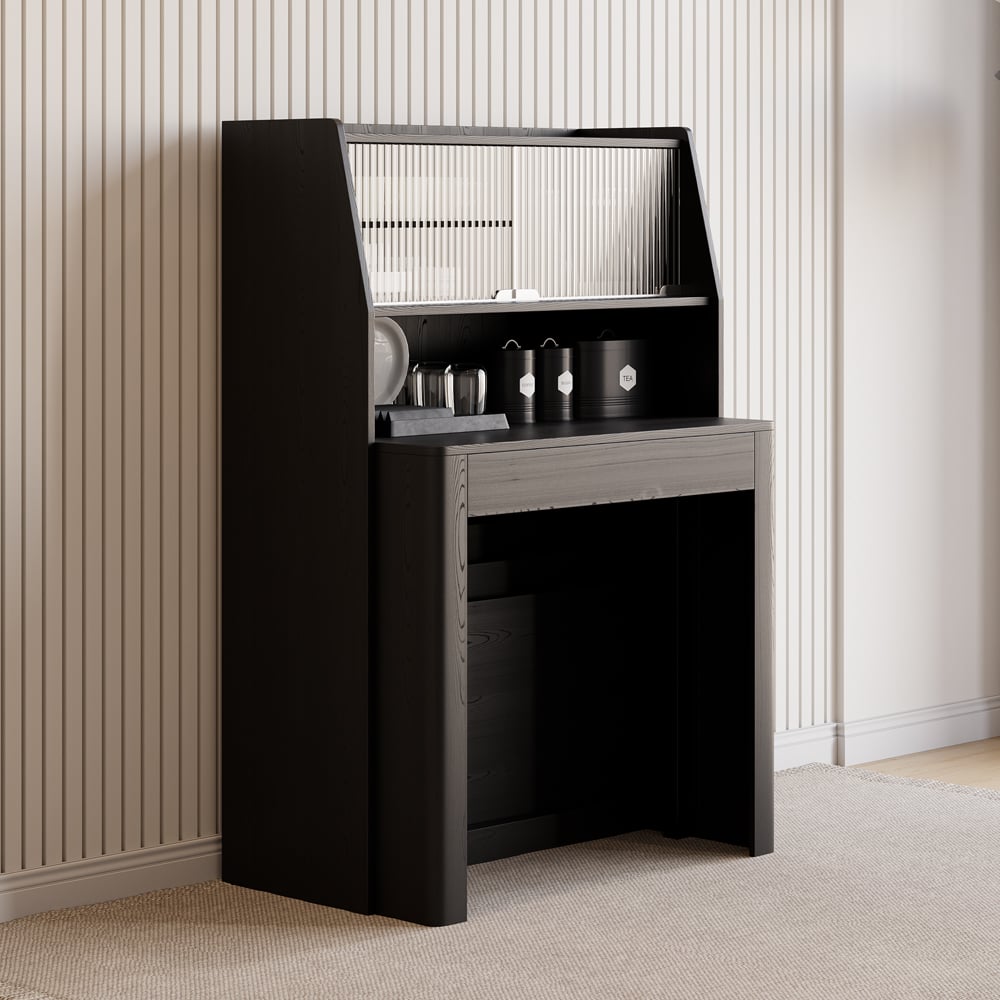
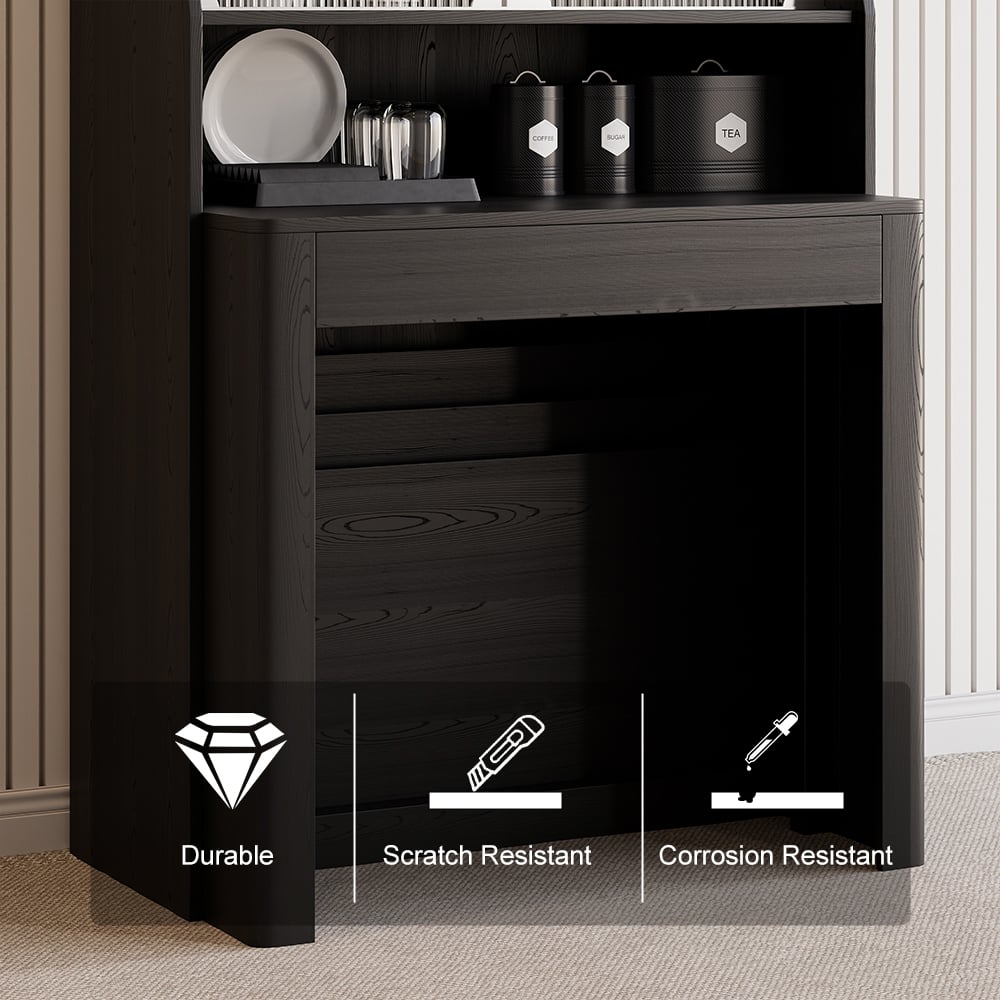
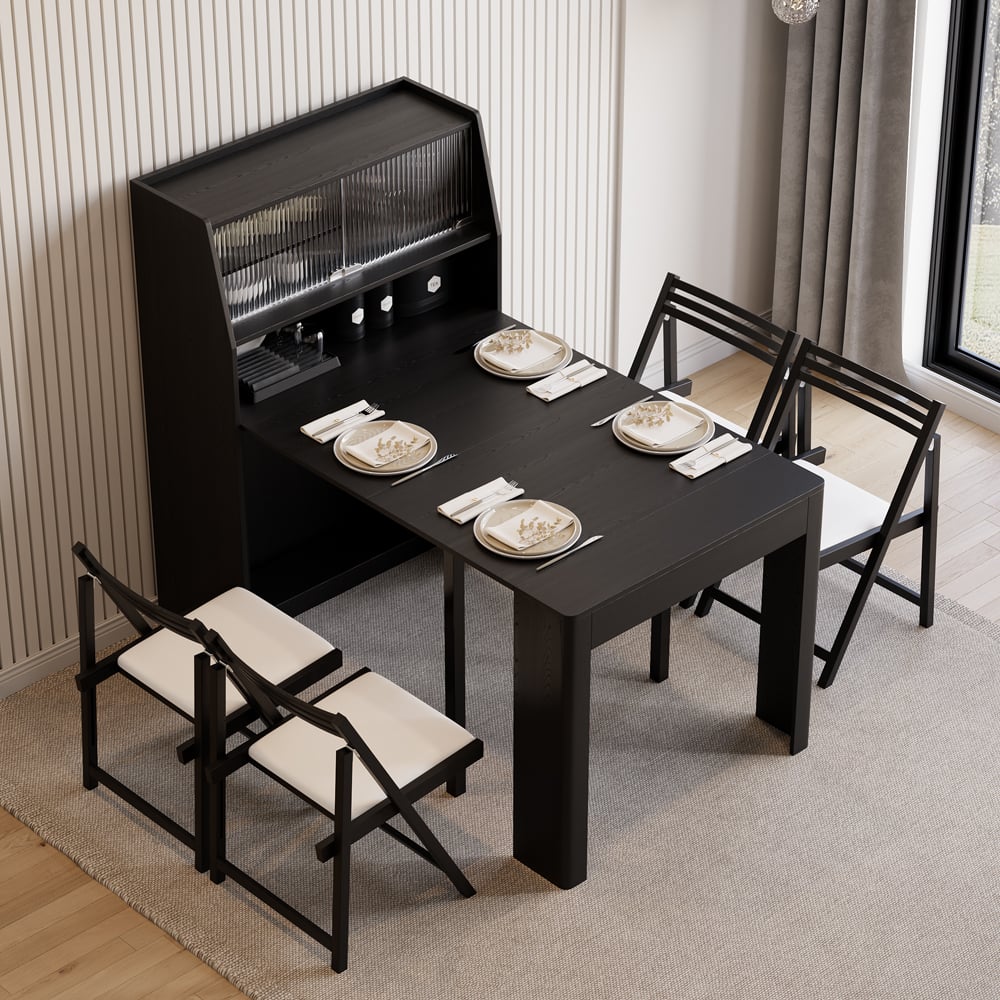
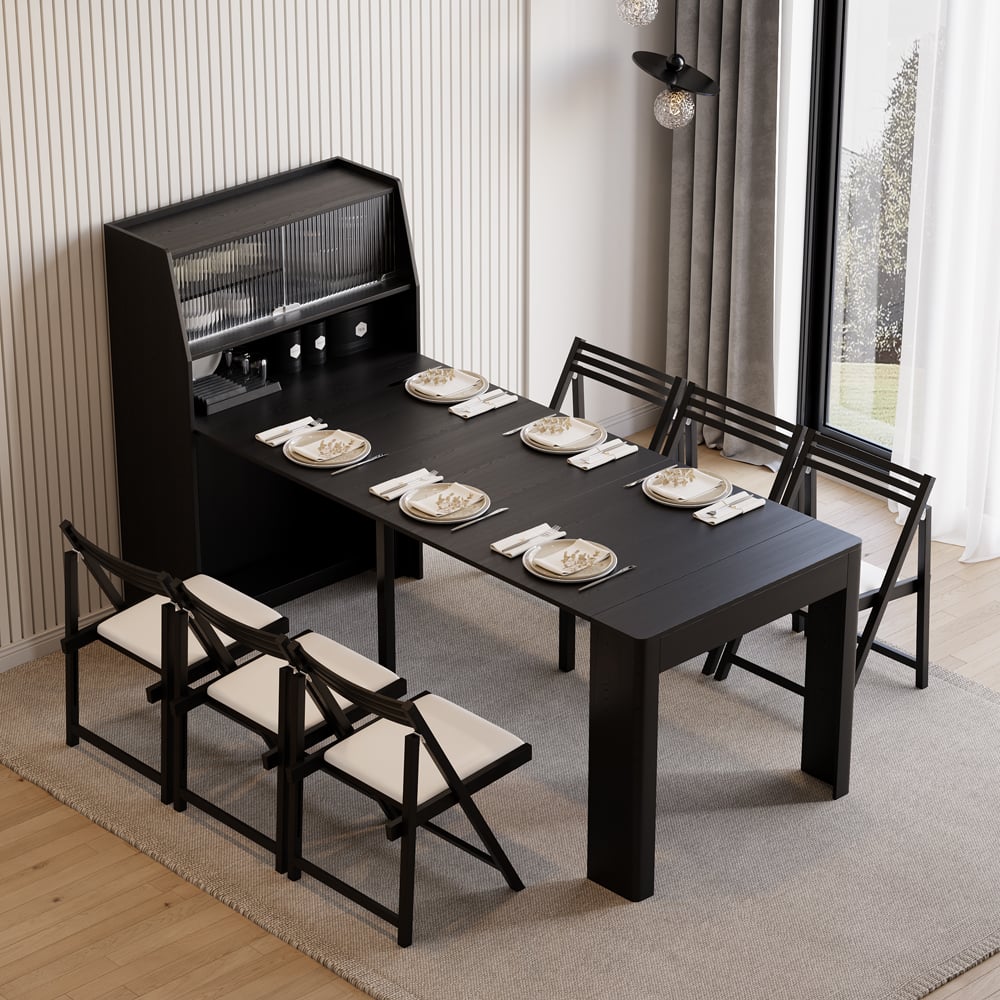
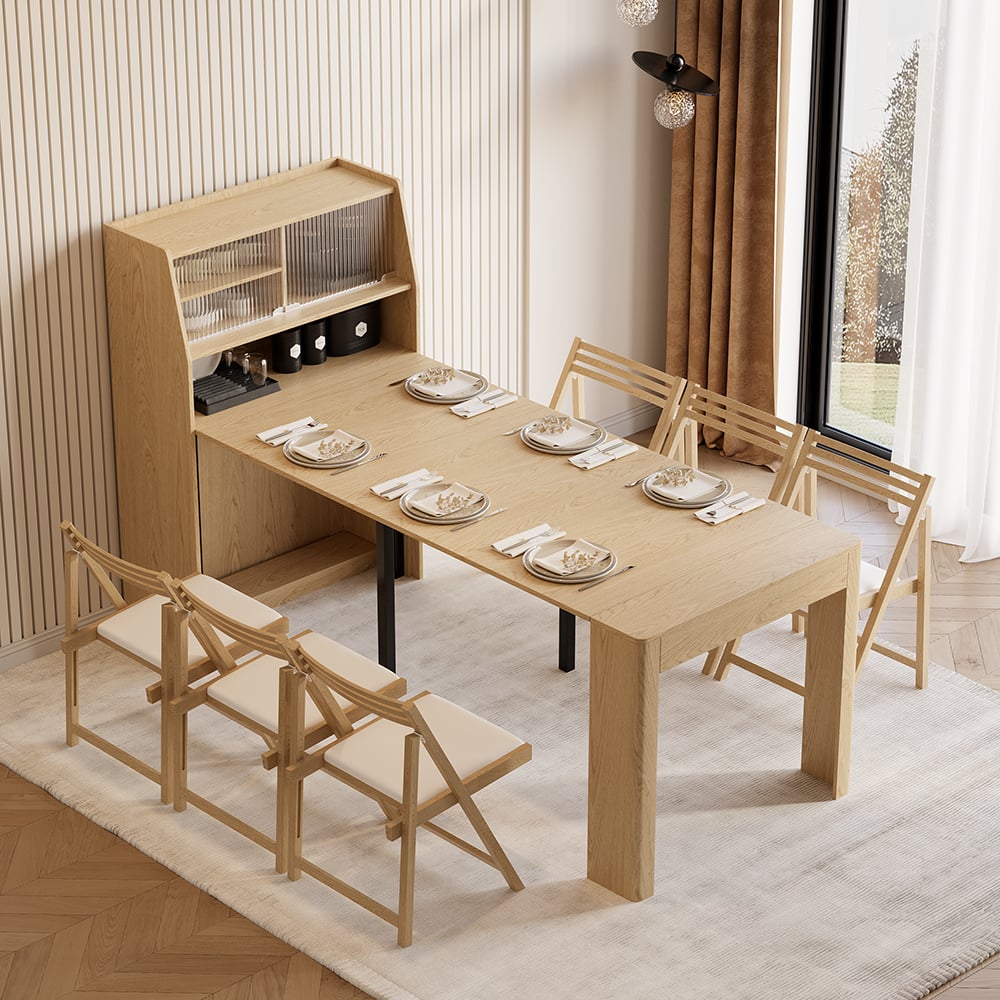
That’s an important distinction to make clearly rather than gloss over. An extendable table that pulls apart to insert a leaf is not the same mechanism as a drop leaf table, even though both fall under the general “space-saving” umbrella and get lumped together in casual conversation. If your priority is specifically the smallest possible closed footprint that a true drop leaf design offers, look at retailers that specialize in Amish or solid-wood dining furniture, where hinged drop leaf construction is more common. If you’re open to a slide-apart extendable table instead, which offers similar space-saving benefits with a different mechanism, our extendable farmhouse dining table guide covers two verified Homary options, including the 70.9” Farmhouse Extendable Dining Table with Storage Sideboard, priced at $549.99 with a 4.7-star rating across 78 reviews, which closes down small enough for many apartment dining spaces.
What to Check Before Buying a Drop Leaf Table
Support type. A swing-out wooden leg tends to feel sturdier than a thin metal bracket, but it also takes up more floor space when extended. Check which type the table uses and picture it in your room.
Hinge quality. Look for reviews that mention the hinges after months of use, not just out of the box. Cheap hinges are the first part to loosen or squeak.
Leaf weight. Solid wood leaves are heavier to lift than engineered wood or veneer leaves. If you have limited strength or mobility, this matters more than the table’s overall style.
Closed width against your wall space. Measure where the table will sit folded down, including a few inches of clearance so it doesn’t scrape the wall every time you push it back.
Key Takeaways
A drop leaf farmhouse dining table uses hinged leaves that fold down for daily use and lift up for guests, which is mechanically different from a slide-apart extendable table. It fits best in small kitchens, apartments, and households that host occasionally but eat alone or as a couple most days. The tradeoff for its small closed footprint is real physical effort to raise the leaves and a higher chance of wobble if the hinges or support legs are low quality. If your local options are limited, an extendable table offers similar space-saving benefits with an easier day-to-day mechanism, and it’s worth comparing both before you decide.
FAQ
What is a drop leaf dining table? A drop leaf dining table has hinged side panels, called leaves, that fold down when not needed and lift up to add surface area for more guests. The leaves stay attached to the table at all times, unlike a separate leaf that gets inserted into an extendable table.
How does a drop leaf table work? Each leaf hinges at the edge of the fixed center section, with a swing-out leg or bracket underneath that supports it once raised. To use it, you swing the support out, lift the leaf until it locks level, and reverse the process to fold it back down.
Is a drop leaf table sturdy? A well-built drop leaf table with solid hinges and a sturdy support leg holds up fine under normal use. Cheaper models with thin brackets or loose hinges can wobble, especially when both leaves are raised and loaded with plates and food.
What is the difference between a drop leaf and an extendable table? A drop leaf table has permanently attached hinged sides that fold down or lift up, while an extendable table separates into two halves that pull apart to fit a removable leaf. Drop leaf tables usually close down smaller, but extendable tables often offer more size options.
Can one person lift a drop leaf table’s leaf alone? Yes, in most cases, especially with lighter engineered wood leaves and a well-designed swing-out support. Solid wood leaves on larger tables can be heavier and slower to raise, so check the material before assuming it will be easy.
How small does a drop leaf table get when folded down? Many drop leaf tables fold down to 18 to 24 inches wide, narrow enough to sit against a kitchen wall like a console table. The exact size depends on how wide the fixed center section is.
Do drop leaf tables work well in small kitchens? Yes, they are one of the better options for small kitchens specifically because the closed footprint is often smaller than a fixed small table or a closed extendable table. The tradeoff is the effort of raising the leaves whenever you need the extra space.
What wood is best for a drop leaf farmhouse table? Solid oak, maple, or cherry are common choices because they hold up to repeated folding and unfolding over years of use without the hinge area weakening. Engineered wood costs less and works fine for lighter, less frequent use.
Are drop leaf tables out of style? No, drop leaf tables have stayed a steady option in farmhouse and traditional furniture because the space-saving mechanism solves a real, ongoing problem for small kitchens and apartments. They aren’t as heavily marketed as extendable tables right now, but the design itself remains practical.
Where can I buy a true drop leaf farmhouse dining table? Specialty retailers that focus on solid wood or Amish-made furniture tend to carry more genuine hinged drop leaf designs than mass-market furniture sites, which lean toward slide-apart extendable tables instead. Check the product description carefully, since “drop leaf” and “extendable” are sometimes used loosely to describe different mechanisms.