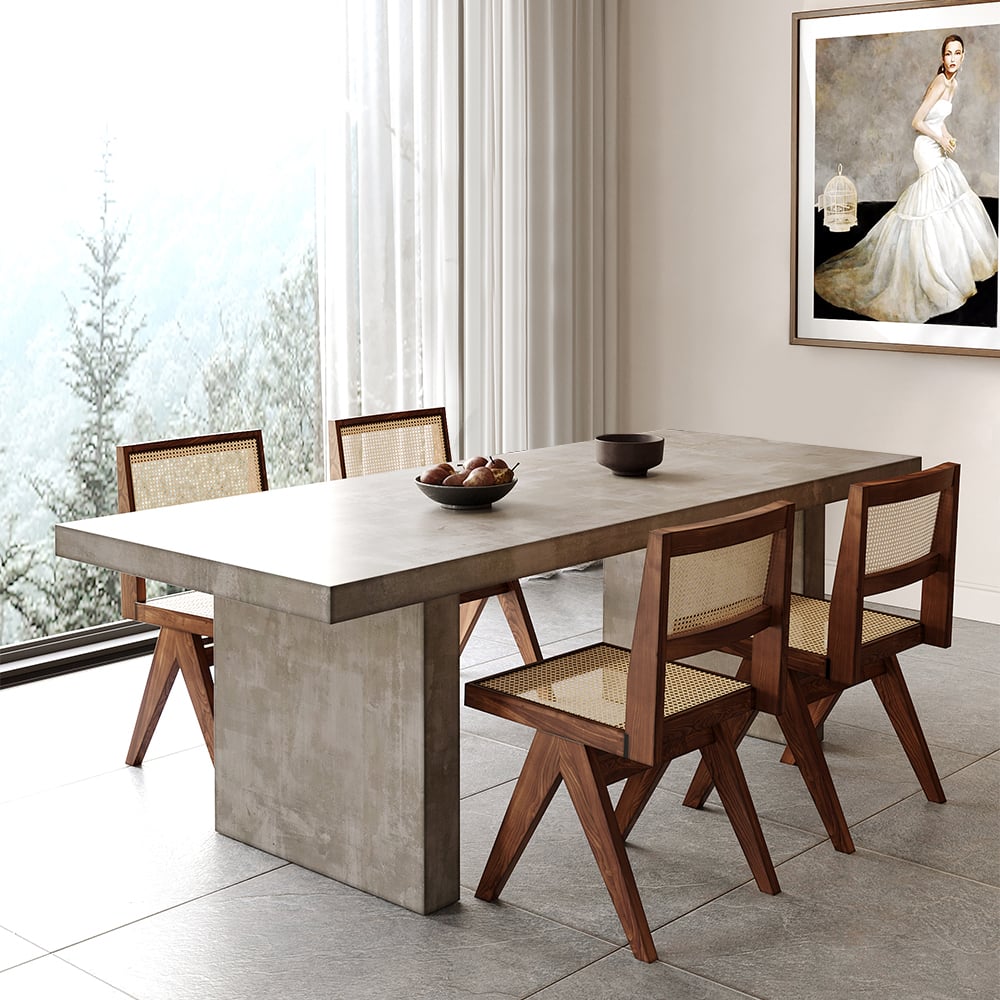
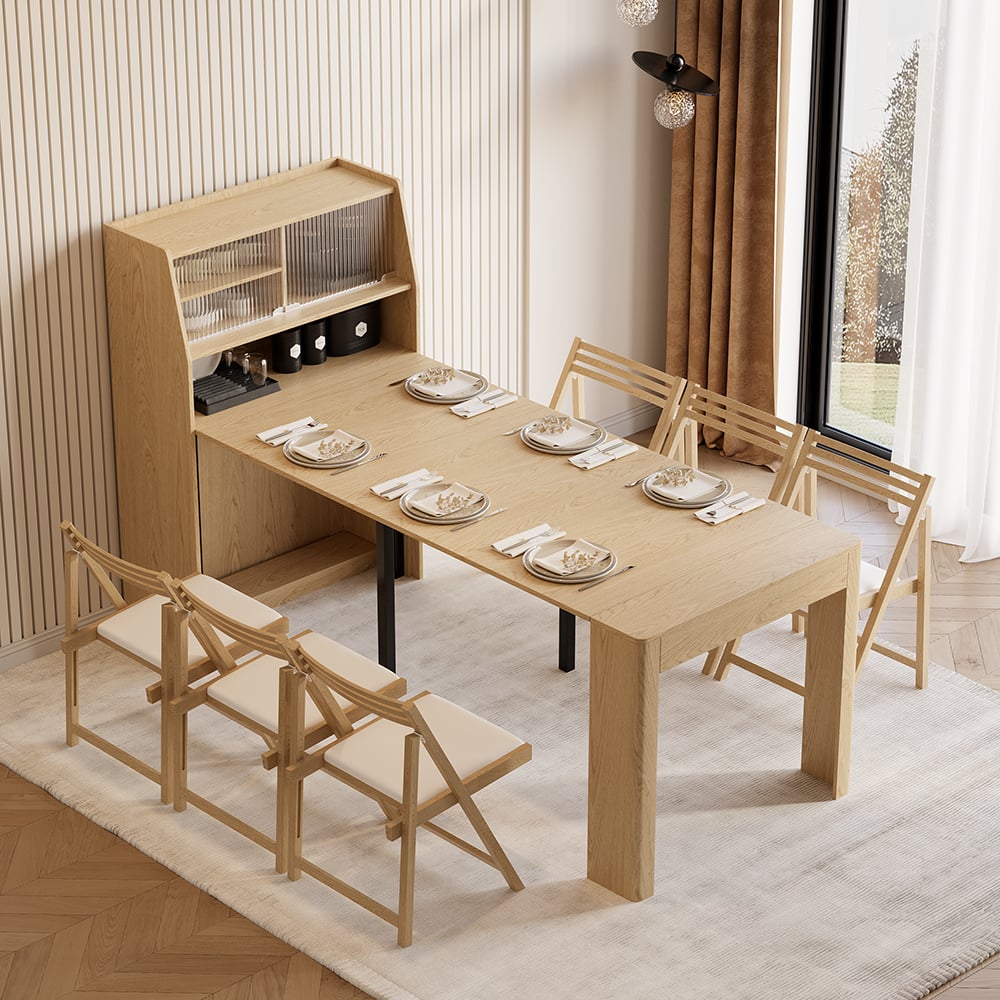
Search “farmhouse dining table” and you get a wall of chunky rectangular tables in gray or honey wood, mostly variations on the same American look. Search “French farmhouse dining table” and the pictures change: softer whites, curvier legs, a little more polish. Most articles never explain why. This one does.
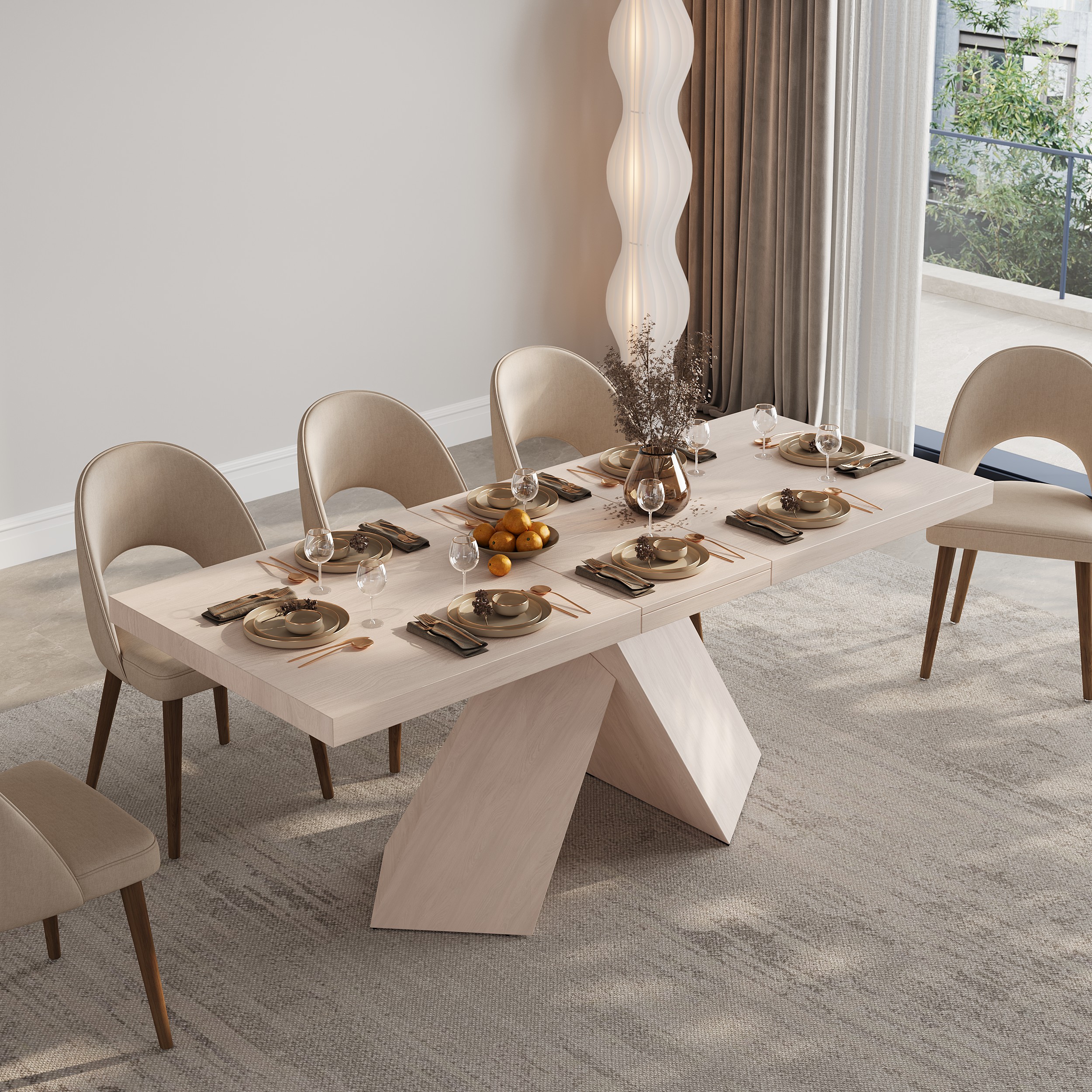


A French farmhouse dining table is a rustic wood table styled after French country (provincial) homes, marked by curved or turned legs, a distressed or painted white/cream finish, and a slightly more formal silhouette than American farmhouse pieces. It borrows from 18th and 19th century French country furniture rather than the plain, boxy trestle tables associated with American barns and homesteads.
That single sentence is the answer. The rest of this guide covers what actually separates French farmhouse from American farmhouse and modern farmhouse, plus real tables worth looking at if you want the look without guessing.
Where the “French” in French Farmhouse Comes From
French country furniture grew out of rural provinces like Provence, Normandy, and the Loire Valley, where local craftsmen built pieces for working households but still leaned on techniques borrowed from Parisian court furniture. That mix of practical and refined is the whole story.
A French farmhouse table was still built to survive a working kitchen. But its legs were often turned on a lathe or gently curved (cabriole-adjacent, without going full Louis XV), and its finish tended toward whitewash, cream, or a soft gray-blue rather than raw or dark wood. Carved details on the apron or legs showed up more than they would on a strictly utilitarian American piece.
American farmhouse furniture, by contrast, traces back to Shaker and early homestead furniture: straight legs, minimal ornament, functional joinery, and finishes left natural or lightly stained. It is simpler because it had to be. Frontier households did not import carving techniques from French court cabinetmakers.
French Farmhouse vs. American Farmhouse vs. Modern Farmhouse
These three get lumped together constantly, and the confusion is fair since they overlap. Here is where they actually split.
| Feature | French Farmhouse | American Farmhouse | Modern Farmhouse |
|---|---|---|---|
| Table legs | Turned, curved, sometimes tapered with detail | Straight, thick, plain | Straight or trestle, often black metal |
| Finish | Cream, antique white, soft gray-blue, distressed | Natural wood, honey oak, dark walnut | White oak, gray-washed, matte black accents |
| Wood texture | Some distressing, softened edges | Raw grain, visible knots | Clean grain, minimal distressing |
| Formality | Slightly formal, “cottage elegant” | Rustic, working-farm practical | Streamlined, catalog-clean |
| Design roots | French provincial furniture, 18th to 19th century | Shaker and homestead furniture | 2010s HGTV-era interior trend |
| Best paired with | Upholstered or cane-back chairs, linen textiles | Mismatched wood chairs, stoneware | Black metal chairs, matte black fixtures |
If you already own American farmhouse chairs with turned spindles and a natural wood tone, a French farmhouse table with cream paint and curved legs will clash more than it complements. Matching the leg style and finish family matters more than matching the word “farmhouse” on a product label.
How to Spot a Genuine French Farmhouse Table While Shopping
Retailers slap “French farmhouse” on a lot of tables that do not really fit. Four things to check before buying.
Leg shape. Look for turned or tapered legs with some curve or detail, not a plain square post. This is the single biggest tell.
Finish color. Cream, antique white, ivory, or a soft weathered gray-blue reads French. Honey oak or dark walnut reads American farmhouse.
Distressing, if present. French pieces often show light distressing on edges and corners, like the paint has worn down naturally over decades. Heavy, deliberate “barnwood” texturing usually signals American rustic instead.
Apron and skirting details. A shaped or slightly scalloped table apron (the wood strip under the tabletop) is a French country signature. A flat, plain apron is more generic farmhouse.
Real Tables Worth Looking At
Here is the honest part. Homary’s current dining table catalog does not carry a table explicitly marketed as “French farmhouse,” and this guide will not invent one that does not exist. What it does carry are pieces that borrow individual French farmhouse elements, and it is worth knowing which ones and why.
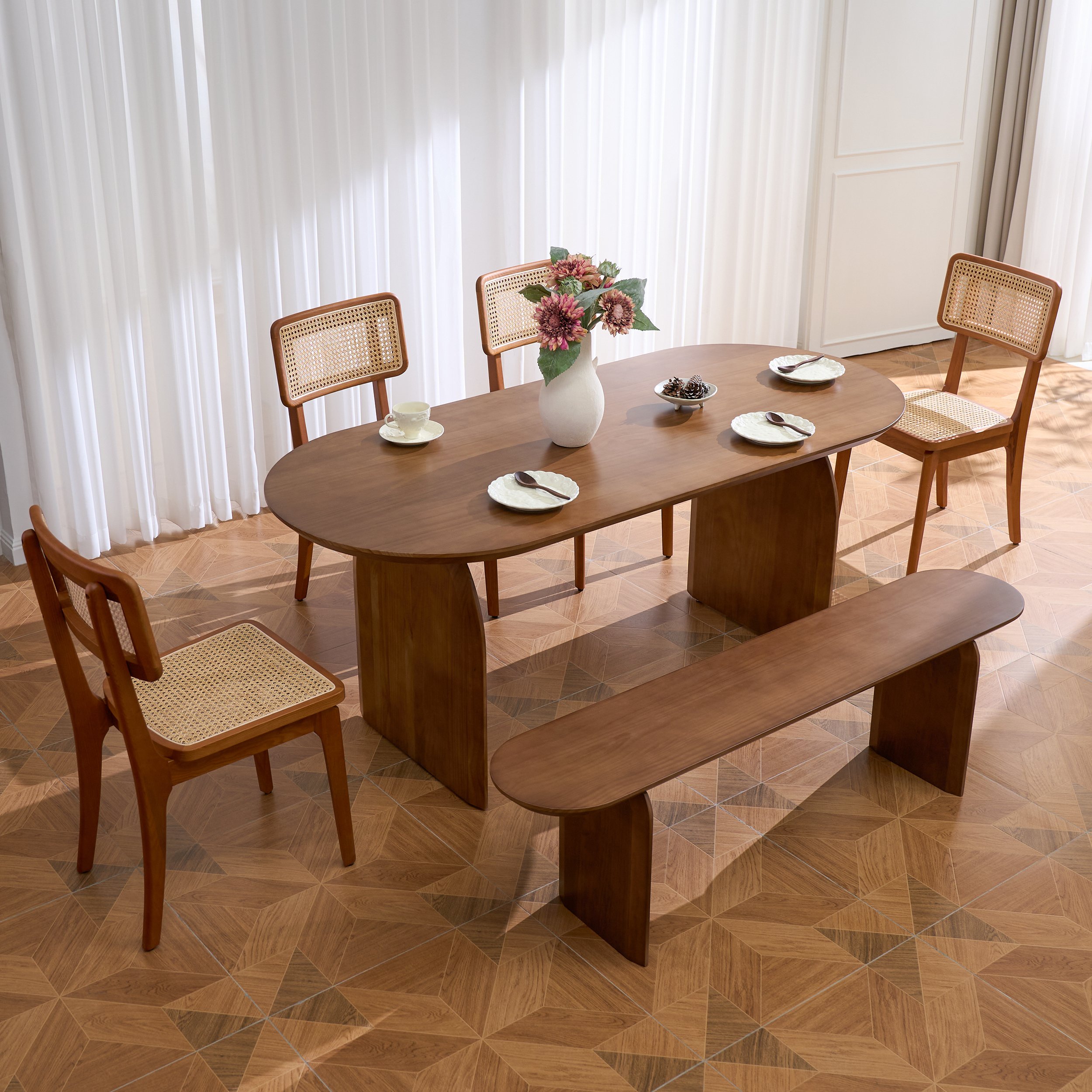
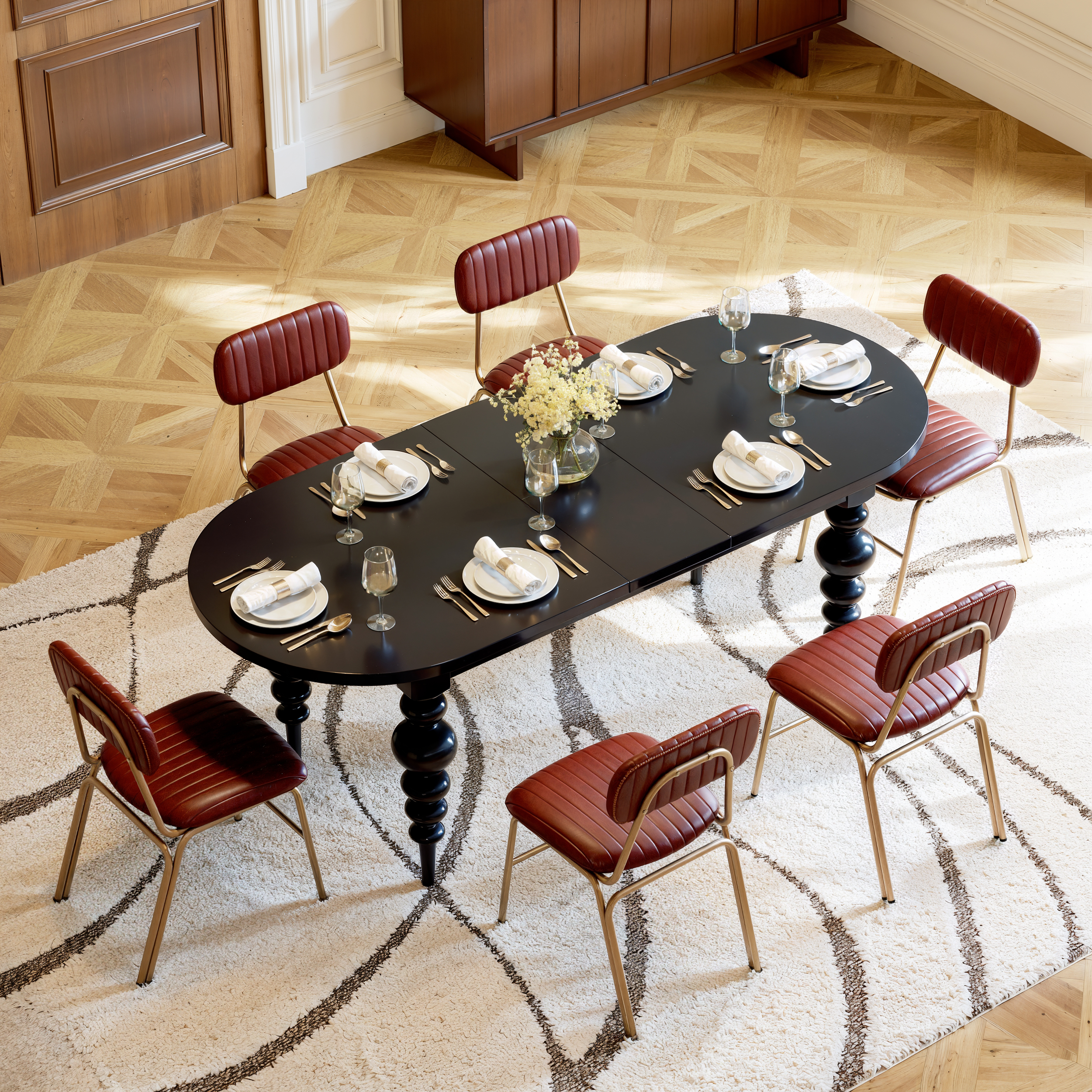
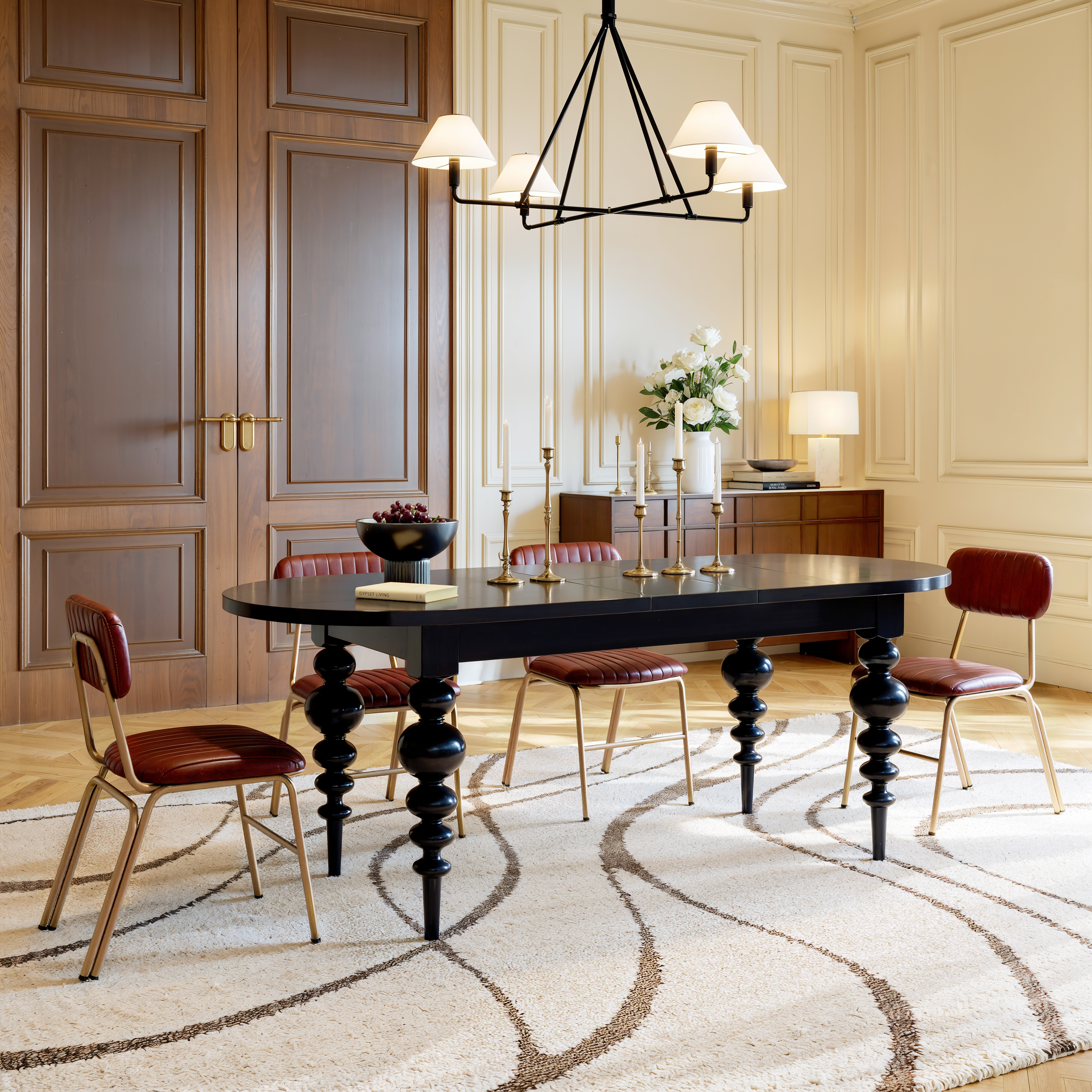
The clearest example is the Mid-Century Modern 67” to 79” Extendable Oval Dining Table. Homary’s own product copy calls out “turned legs” directly, and the oval shape with a soft, rounded silhouette echoes French provincial tables. The catch: it comes in a black antique finish, not the cream or antique white that reads as French farmhouse. If you love the leg shape and shape of this table but want the French farmhouse color story, this is a case where you would need to look elsewhere for the exact cream finish, or accept that the black version leans more toward a French bistro or mid-century hybrid look.
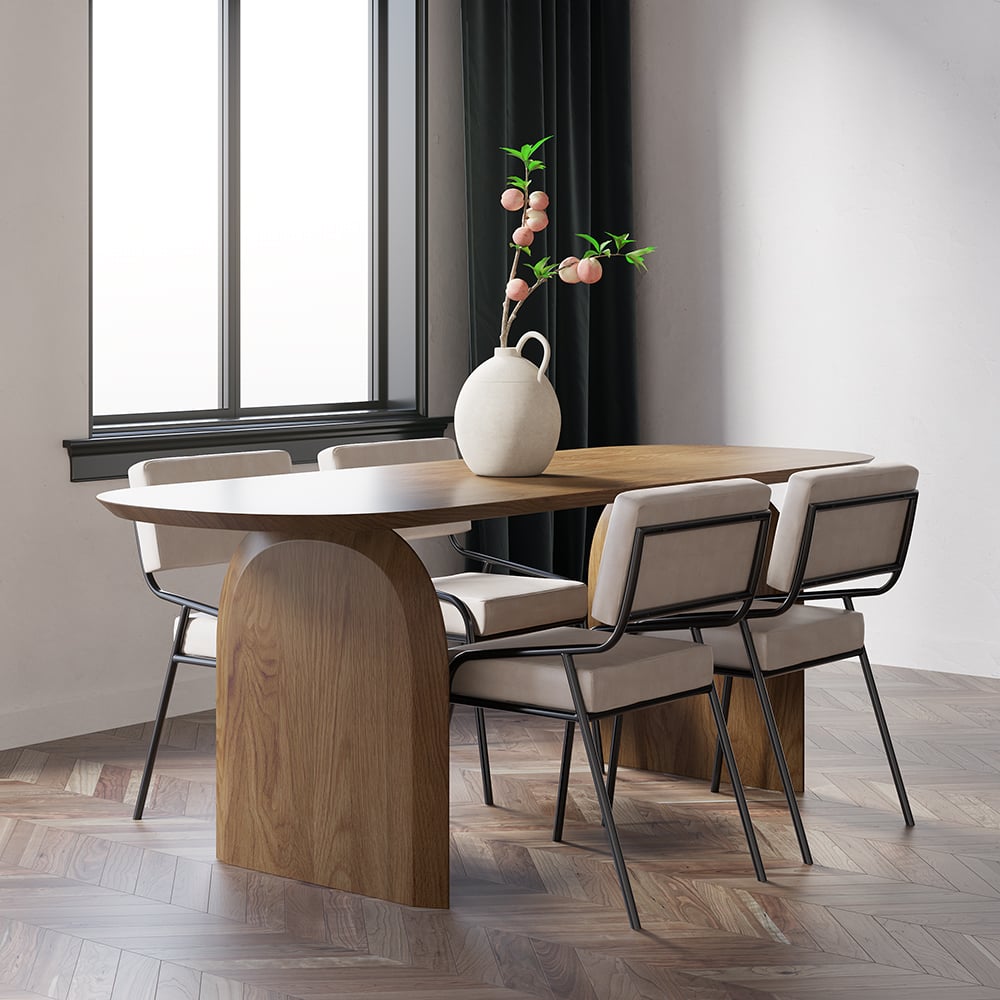
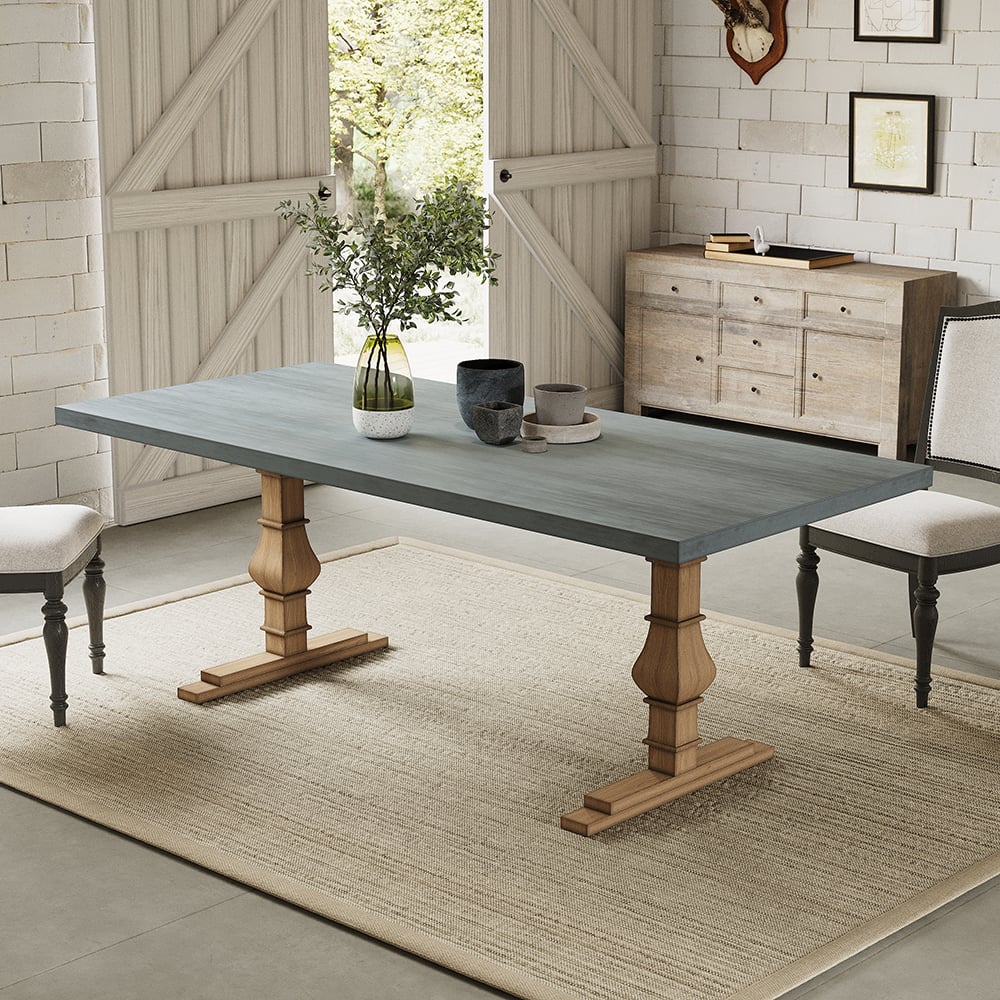
Two other Homary pieces carry the “farmhouse” name directly but skew Japandi rather than French. The 71” Japandi Oval Farmhouse Wood Dining Table has a gray finish and a double-pedestal base, which is a farmhouse silhouette without the turned legs or cream color that would make it read French. The Japandi 39” Round Natural Wood Dining Table is similar: natural wood, pedestal base, no curved legs, no whitewash.
If your heart is set on a true cream-finish, turned-leg French farmhouse table, the honest move is to treat this as a smaller, more specialized search than “farmhouse dining table” generally. Search specifically within a retailer’s French country or provincial furniture collection, filter by “antique white” or “cream” finish, and confirm turned legs from the product photos before buying, since written descriptions are inconsistent about calling this out.
What to Pair With a French Farmhouse Table
The table sets the tone, but chairs and styling finish the room.
- Chairs: cane-back, ladder-back with a curved top rail, or upholstered chairs in linen or a soft check pattern
- Lighting: a wrought-iron or aged-brass chandelier rather than a modern black linear fixture
- Tabletop styling: linen runners, ceramic or stoneware dishes, fresh flowers in a simple vase
- Wall colors: soft whites, warm grays, or muted sage rather than stark white or deep charcoal
Mismatched chairs are fine and even expected in French country rooms, as long as they share a similar wood tone or paint finish so the room does not look accidental.
Key Takeaways
A French farmhouse dining table is defined by three things: turned or curved legs, a cream or antique white finish, and design roots in French provincial furniture rather than American homestead pieces. It sits a notch more formal than American farmhouse and a notch more textured than modern farmhouse.
Check the legs and the finish color before trusting a “French farmhouse” label, since the term gets applied loosely by retailers. If you cannot find an exact match, a table with genuine turned legs (even in a different finish) is a more honest starting point than a plain-leg table with the right paint color, since legs are harder to visually fake than a paint job.
FAQ
What makes a dining table “French farmhouse” style? A French farmhouse dining table combines a rustic, functional build with details borrowed from French provincial furniture, mainly turned or curved legs and a cream, antique white, or soft gray-blue finish. It is more refined-looking than a plain American farmhouse table while still being sturdy enough for daily use.
Is French farmhouse the same as French country? They are closely related and often used interchangeably. French country tends to describe the broader interior design style (fabrics, colors, decor), while French farmhouse usually refers specifically to furniture, especially tables, with that rustic-but-refined build.
What is the difference between French farmhouse and American farmhouse tables? French farmhouse tables have turned or curved legs and lighter, often painted finishes. American farmhouse tables have straight, thick legs and natural or stained wood finishes with visible grain. The American style is simpler and more utilitarian by design.
What wood is best for a French farmhouse table? Oak, pine, and beech are common choices historically, since all three were available in rural France and take a painted or distressed finish well. Pine is the most budget-friendly option today and is commonly used in reproduction French farmhouse tables.
What color should a French farmhouse dining table be? Cream, antique white, and soft weathered gray-blue are the most typical finishes. These colors distinguish French farmhouse tables from the honey oak or dark walnut tones common in American farmhouse furniture.
Can a French farmhouse table work in a small dining room? Yes, particularly round or oval French farmhouse tables, which soften corners and take up less visual space than a long rectangular version. A 39 to 48 inch round table is a common size for smaller rooms.
What chairs go with a French farmhouse table? Cane-back chairs, ladder-back chairs with a curved top rail, or upholstered chairs in linen or a soft checked fabric all pair well. Mismatched chairs are acceptable in this style as long as the wood tone or paint finish stays consistent.
Are French farmhouse tables more expensive than American farmhouse tables? Not necessarily by material cost, but the turned-leg construction and any hand-distressing or hand-painting can add labor cost compared to a simple straight-leg table. Mass-produced versions of both styles land in similar price ranges.
How do I tell if a table labeled “French farmhouse” is actually styled that way? Check the legs first (turned or curved, not a plain post), then the finish color (cream or antique white rather than honey or dark wood), and finally any apron or skirt detailing under the tabletop. If none of those show up in the photos, the label is likely being used loosely for search purposes.
Does French farmhouse work with modern kitchens? It can, especially in a “modern French country” hybrid where the table brings the curved legs and soft color while everything else in the kitchen stays clean-lined and current. The contrast between an ornate table leg and simple modern cabinetry is a common and effective pairing.