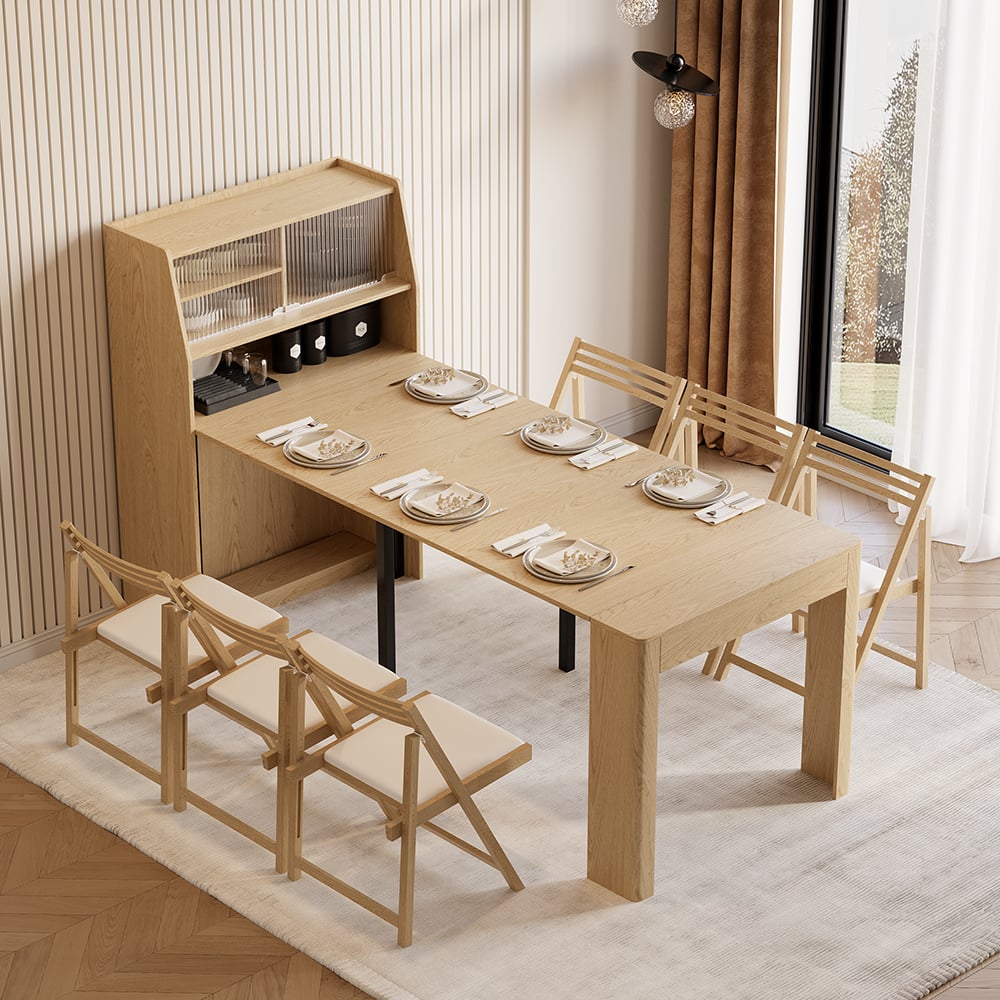
Measure your dining room before you fall in love with a table. That one step solves most of the shape debate before you even open a catalog.
People search “round farmhouse dining table” about 1,300 times a month, more than the other three shapes combined. That tells you something: a lot of homes have small or square dining spots, and round tables are the shape that handles those rooms best.
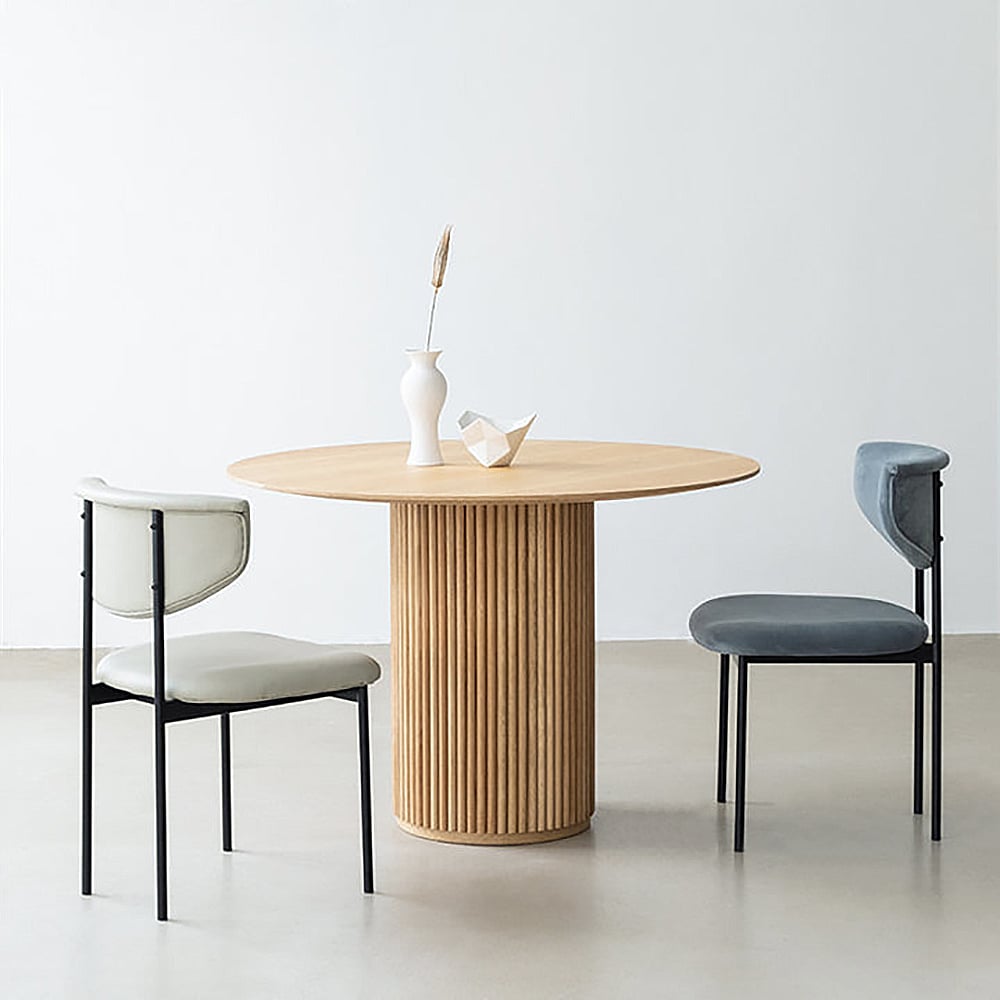
The short answer: round farmhouse dining tables work best in small or square rooms because they have no corners to bump into or block traffic. Rectangle tables fit long, narrow rooms and seat the most people. Oval tables split the difference, giving you round-table flow with rectangle-table capacity. Square tables suit small, perfectly square rooms and work well for 4-person households.
Here’s how to match the shape to your actual room, not just your Pinterest board.
Start With Your Room’s Shape, Not the Table’s
A table doesn’t sit in isolation. It shares the room with a hutch, a doorway, maybe a path to the kitchen. The shape that “looks nice” in a photo can still make your room feel cramped if it fights the room’s own geometry.
Before picking a shape, walk your dining space and note three things: the room’s length versus width, where people walk through it, and how many chairs you actually need on a normal Tuesday versus Thanksgiving.
Round Farmhouse Dining Tables: Best for Small or Square Rooms
Round tables have no corners. That single fact does most of the work. Nobody clips a hip on a corner while carrying a plate, and a round table visually reads as smaller than a rectangle with the same seating capacity, even when the footprint is close in square feet.
In a small or squarish room, a round table also lets you push chairs in tight without losing walking space around the edges. That is why round tables are the top choice for apartments, breakfast nooks, and any room where the walls are close to equal length.
The tradeoff: round tables top out fast. Past 5 feet across, a round table gets awkward to build and hard to fit through doorways, so most round farmhouse tables seat 4 to 6 people at most.
Rectangle Farmhouse Dining Tables: Best for Long, Narrow Rooms
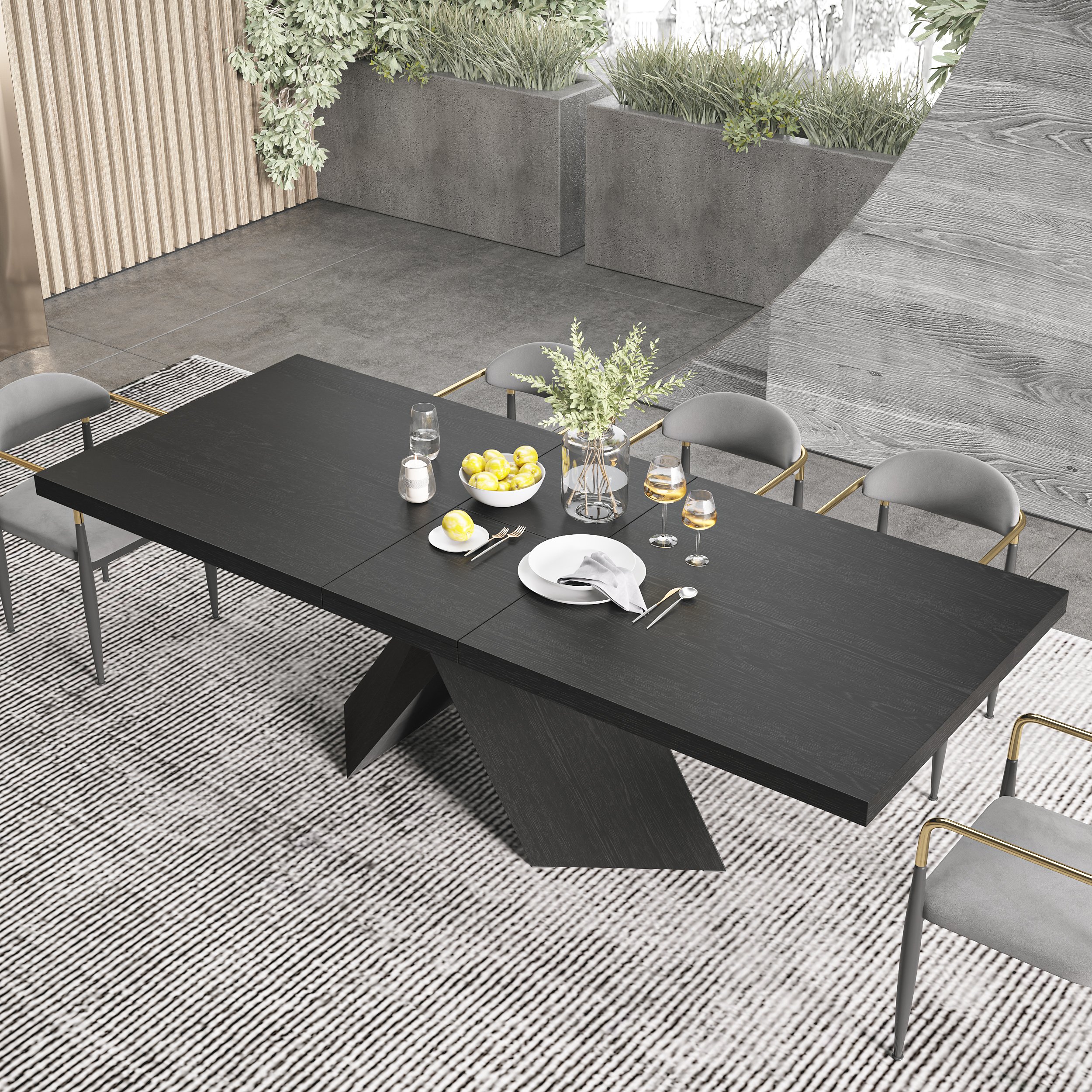
Rectangle tables are the shape most people picture when they hear “farmhouse dining table,” and the search data backs that up as a common, well-established category. A long rectangle uses wall-to-wall space in a narrow room in a way a round table simply cannot.
Push a rectangle table against a long wall or center it in a galley-shaped dining room, and you get the most seats per square foot of any shape. That is also why rectangle tables are the default pick for families that regularly seat 6, 8, or more.
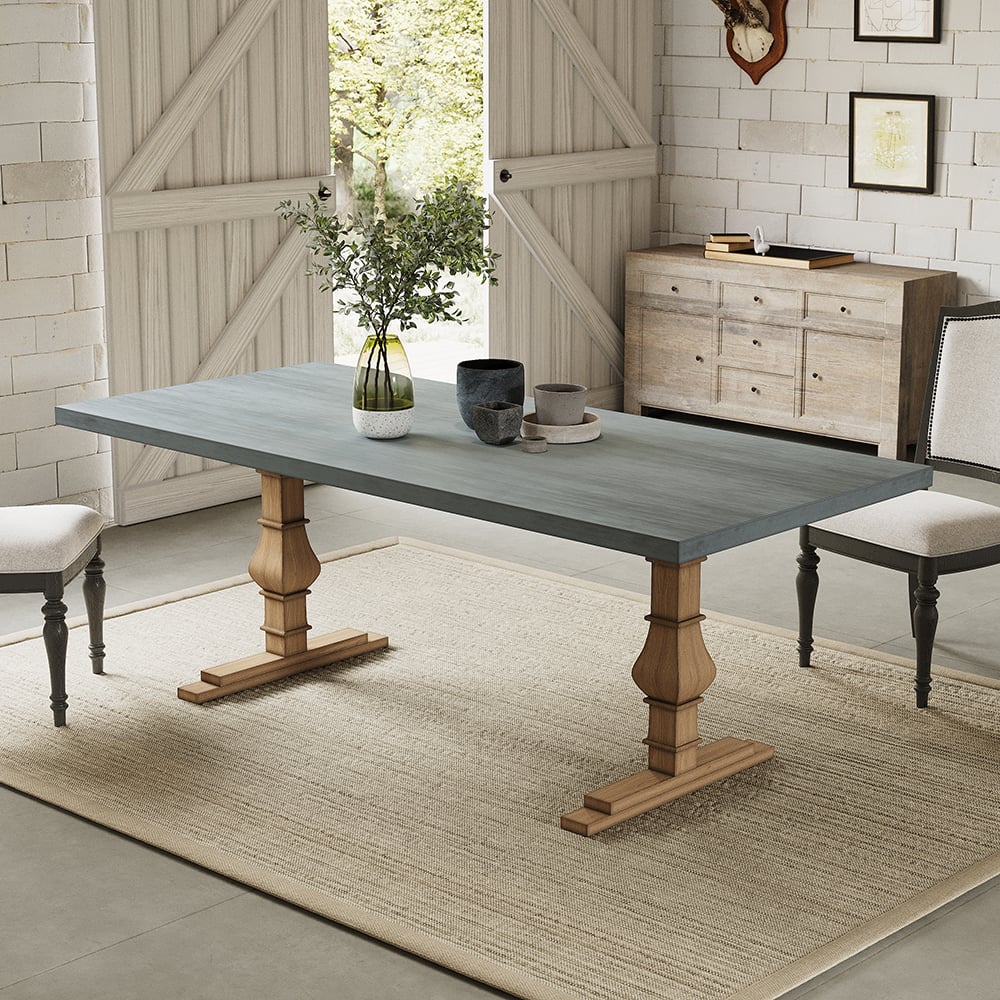
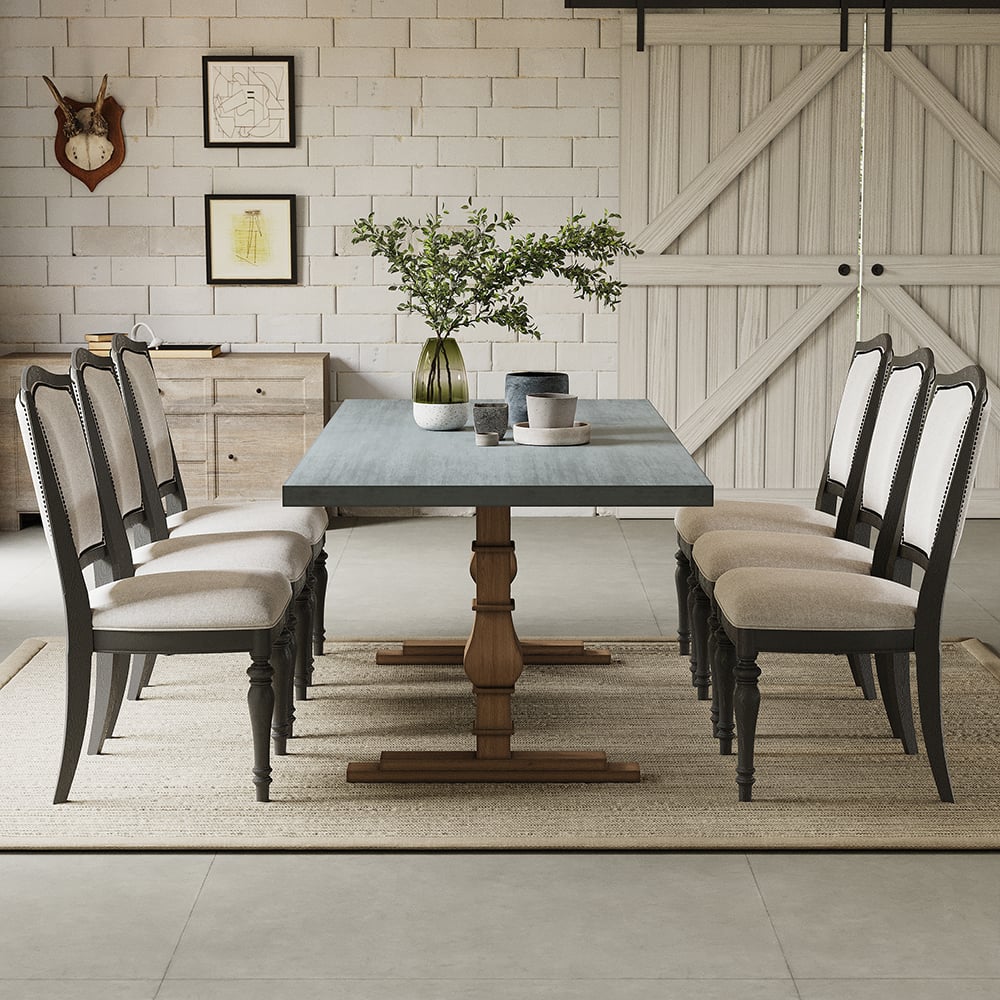
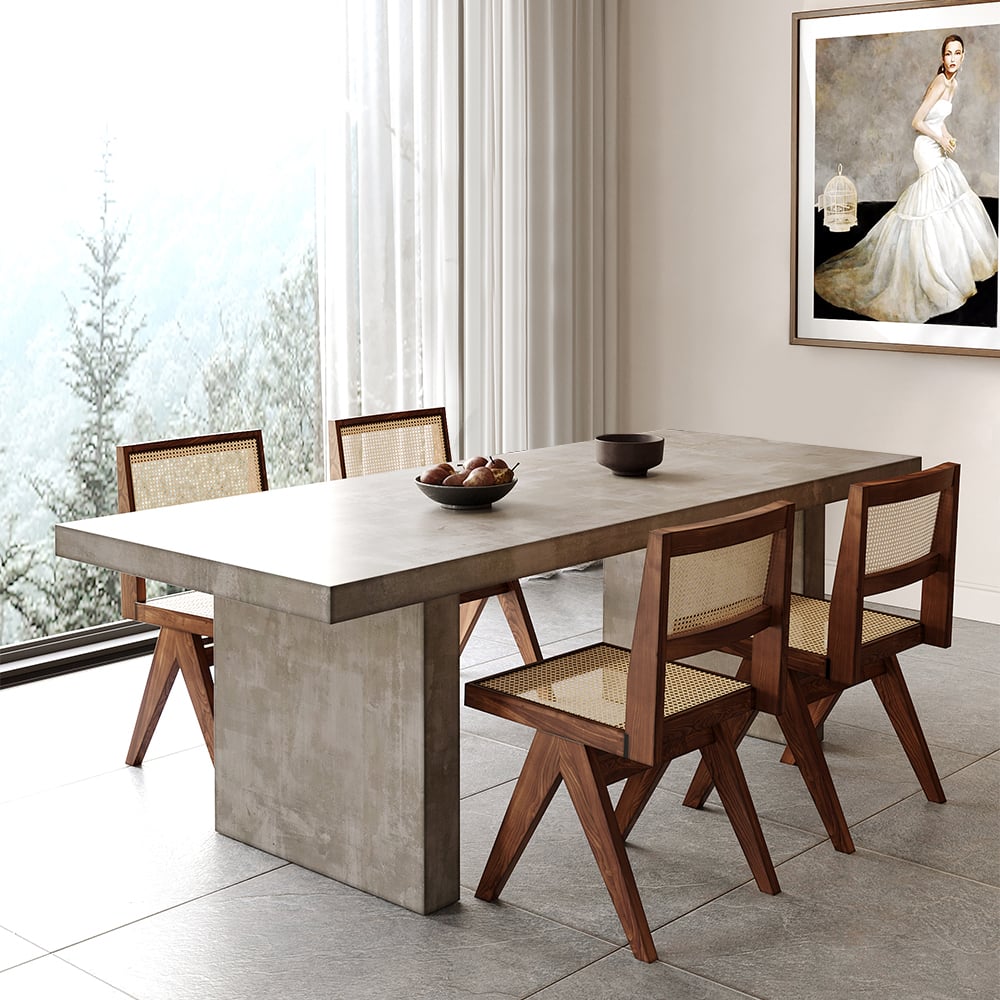
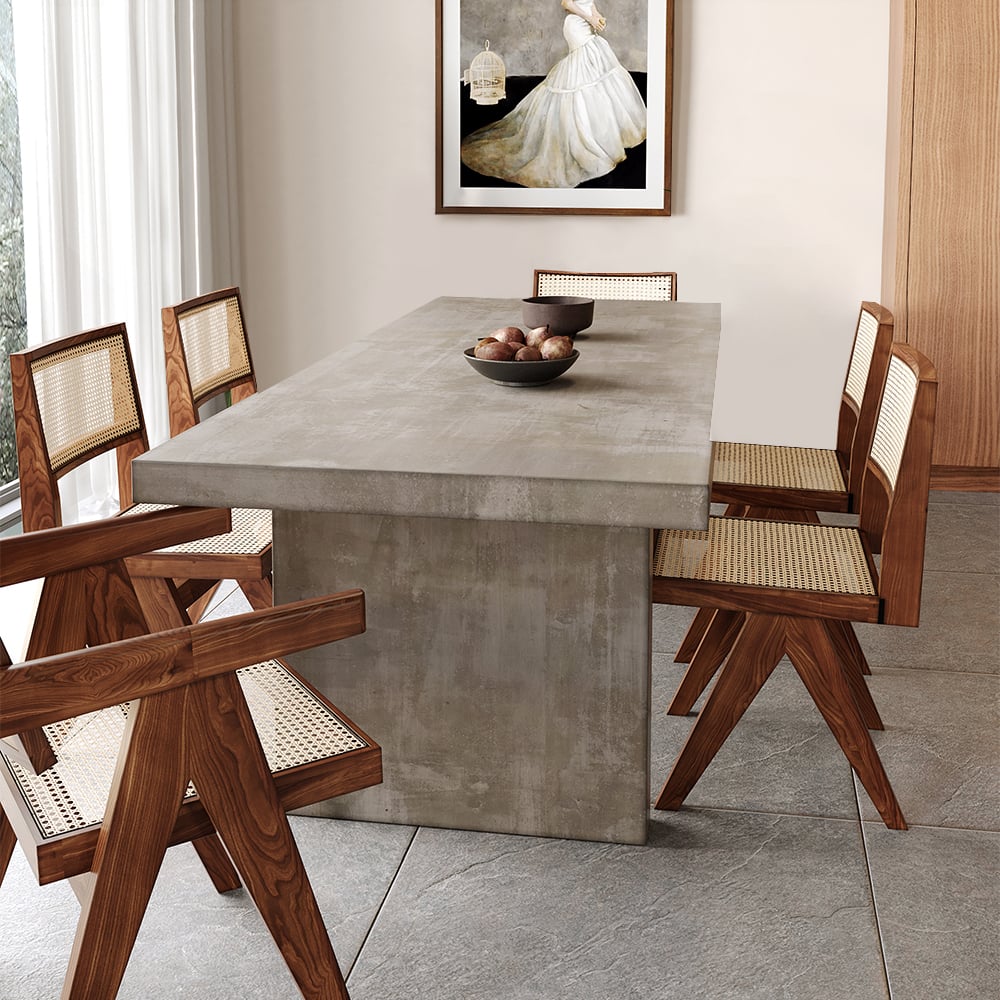
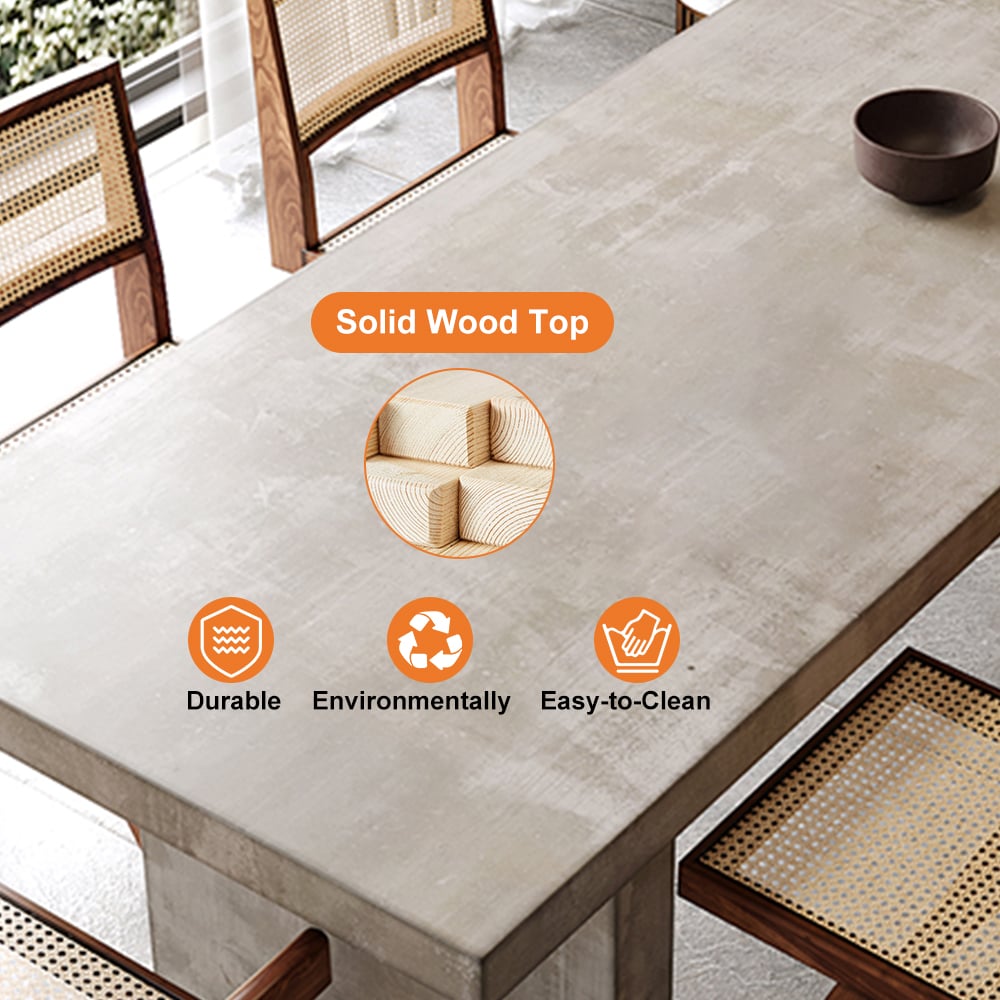
The Upoak Series 70.9” Farmhouse Rectangle Wood Dining Table is a solid example of this shape done right. It’s built from solid wood with a gray finish and a double pedestal base, seats 4 to 6 people, and holds a 4.9 star rating across 36 reviews at $1,159.99. The double pedestal base is worth noting on any rectangle table, since it clears out the center leg room that a four-leg design would block.
Oval Farmhouse Dining Tables: Best of Both, With a Catch
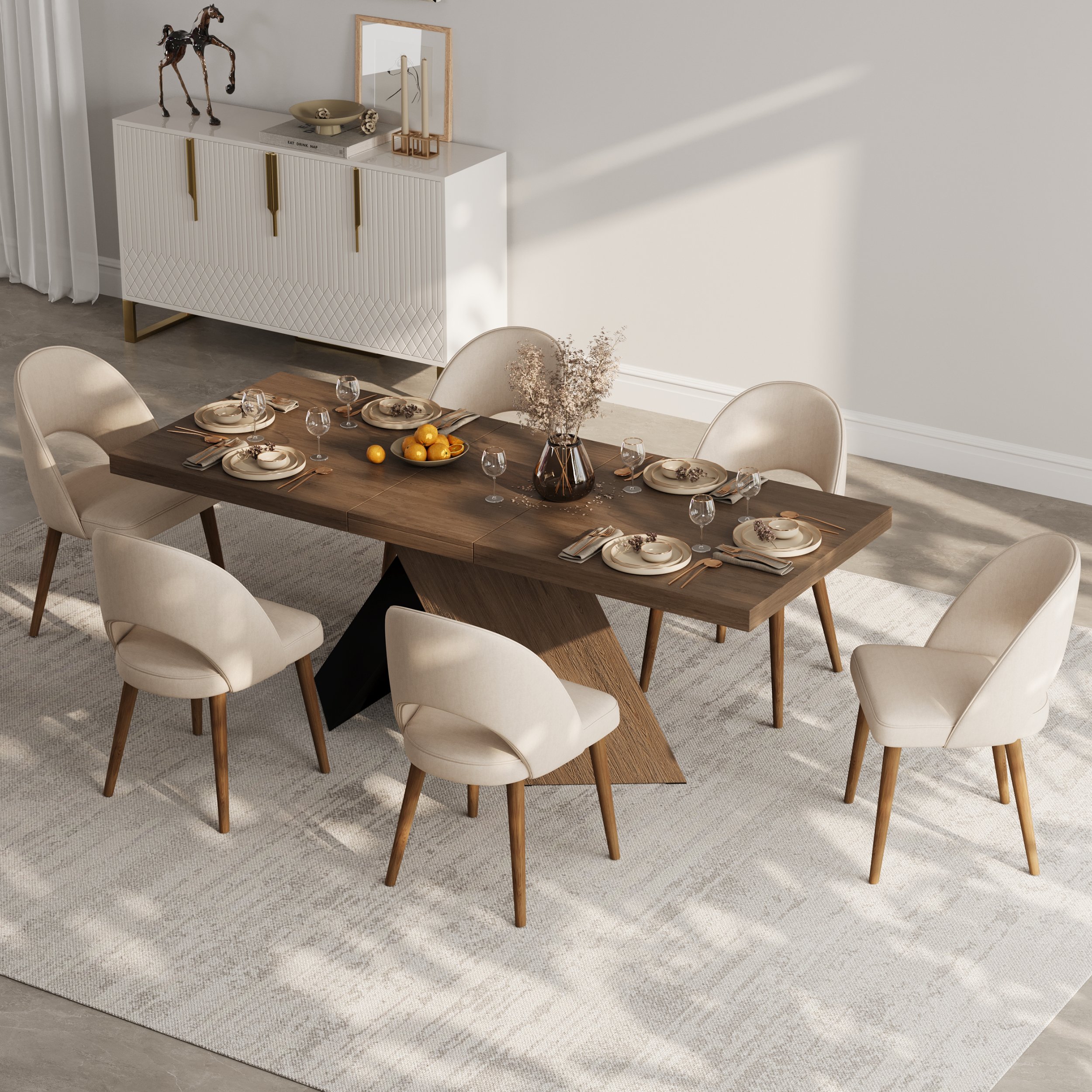
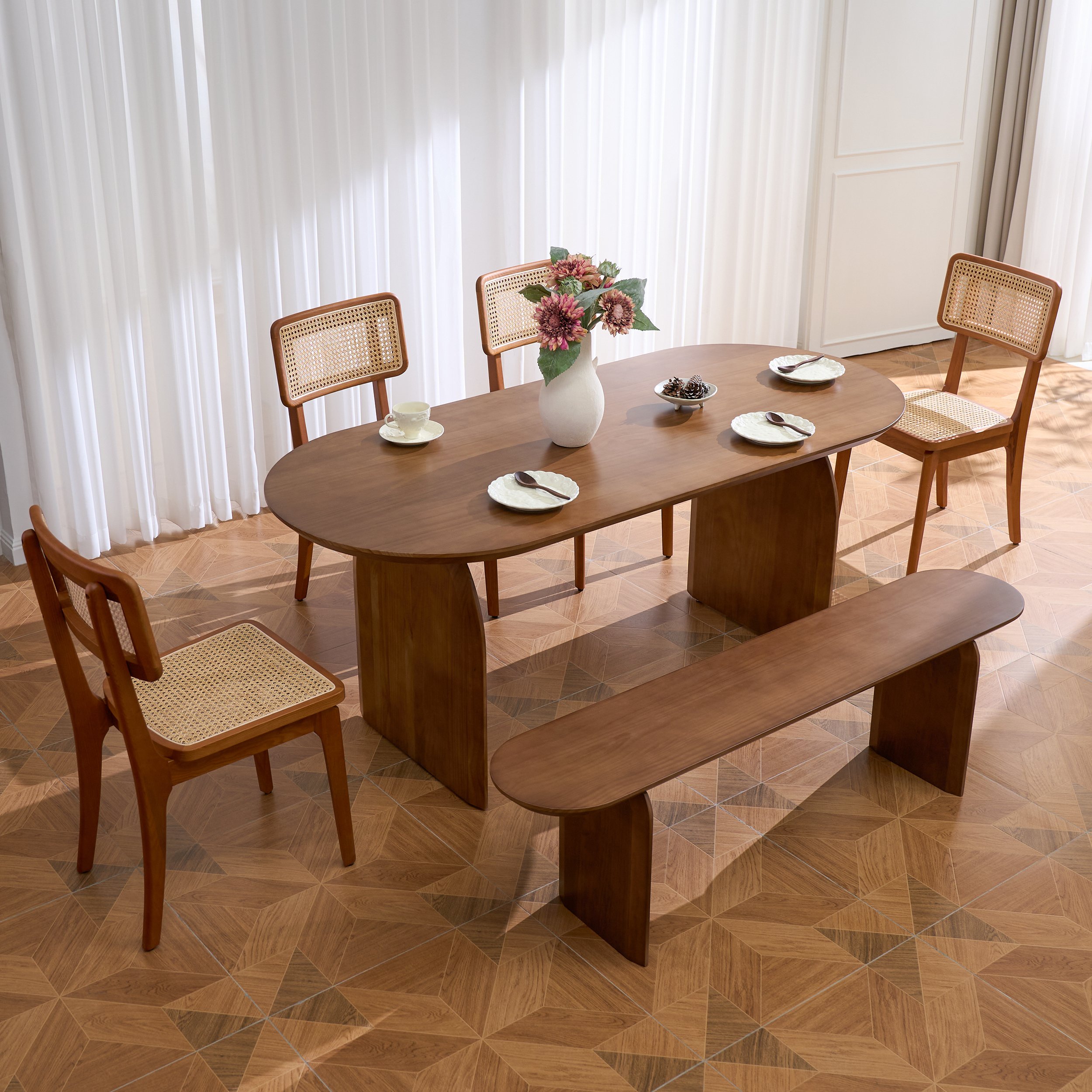
An oval table is a rectangle with the corners rounded off. That gives it two real advantages: it seats close to what a rectangle seats, and it moves through a room the way a round table does, without corners catching hips or blocking a walkway.
Oval tables shine in rooms that are rectangular but tight, like a dining area next to a kitchen island where people need to squeeze past the table edge. They also soften a room visually, which matters if your space already has a lot of hard angles from cabinets or a fireplace.
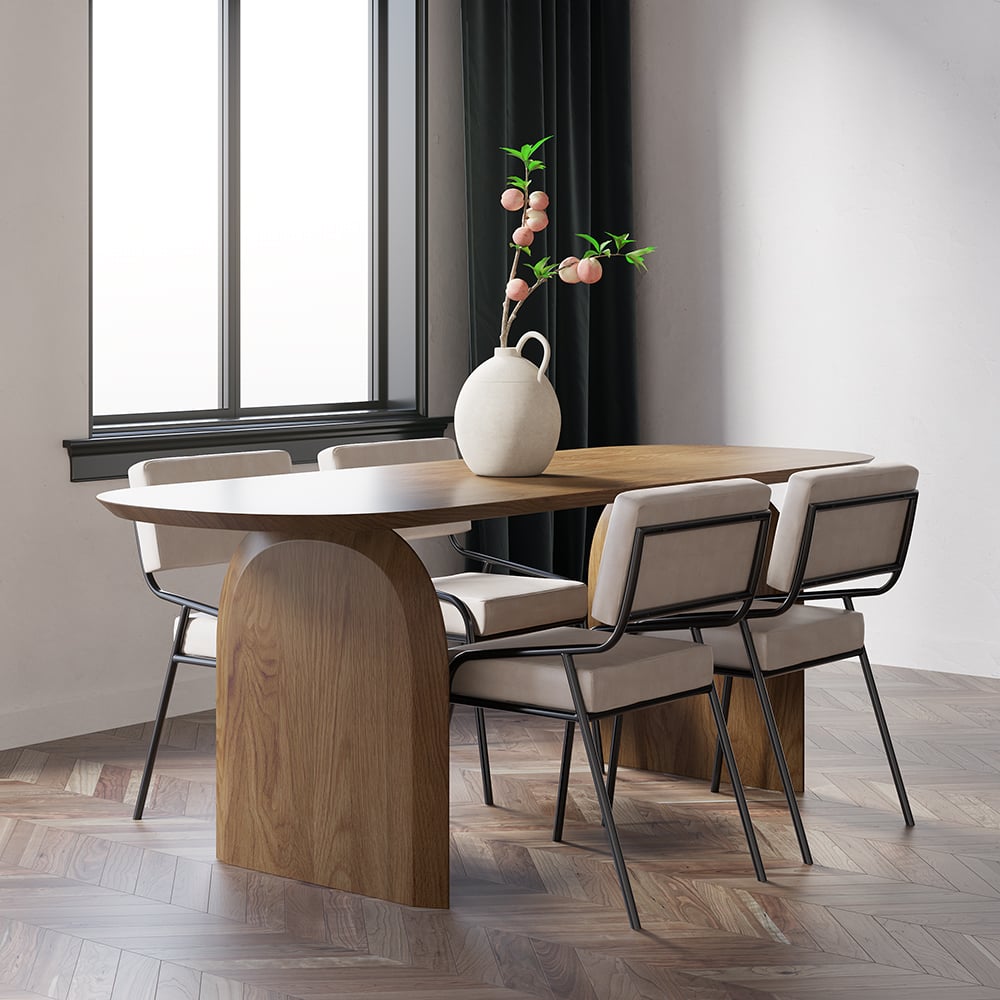
The Tintica Series 70.9” Japandi Style Oval Wood Dining Table shows this balance clearly. It seats 4 to 6 people on a solid wood top with a double pedestal base, currently rated 4.8 stars from 132 reviews at $759.99. Reviewers consistently point to the oval shape making it easier to pass dishes and talk across the table without anyone sitting at a hard corner.
Square Farmhouse Dining Tables: Best for Small, Truly Square Rooms
Square tables are the niche pick, and the search volume reflects that (170 monthly searches versus 1,300 for round). But for the right room, a square table is the most space-efficient option available.
If your dining nook is close to a perfect square, a square table matches that geometry and leaves even, usable space on all four sides. Square tables typically seat 4, which makes them a strong fit for couples, small families, or a secondary dining spot like a breakfast nook.
We looked for a genuine farmhouse square dining table on Homary’s current catalog and could not verify one in stock at the time of writing. If a square shape is your priority, check Homary’s dining table category page directly, since inventory shifts and a matching option may be listed by the time you’re shopping.
Seating Capacity by Shape
| Shape | Typical Size Range | Seats Comfortably | Best Room Shape |
|---|---|---|---|
| Round | 36 to 60 inches diameter | 4 to 6 | Small or square |
| Oval | 60 to 84 inches long | 4 to 6 | Rectangular but tight |
| Rectangle | 60 to 96+ inches long | 6 to 10 | Long, narrow |
| Square | 36 to 48 inches per side | 4 | Small, perfectly square |
Traffic Flow and Conversation: The Part Most Guides Skip
Shape doesn’t just affect how many people fit. It changes how a meal feels.
Round and oval tables put everyone at a similar distance from each other, so conversation flows across the whole table instead of splitting into two separate chats at each end. That matters more than most buying guides mention, especially for smaller households that eat together every night and want the meal to feel like one conversation, not two.
Long rectangle tables are the opposite. Past 6 people, someone at one end can’t easily talk to someone at the other end, and the table naturally splits into smaller conversation groups. That’s fine for big family gatherings but can feel isolating for a table set for 3 or 4 people most nights.
Traffic flow follows the same logic. A round or oval table lets someone walk past a seated guest without asking them to scoot in. A rectangle table with chairs pushed close to a wall on one side avoids that problem too, but only if you have the wall space to do it.
Quick Decision Guide
- Room is small and roughly square: round table.
- Room is long and narrow: rectangle table.
- Room is rectangular but tight on one side, or you want round-table flow with more seats: oval table.
- Room is small and perfectly square, and you seat 4 people most nights: square table.
- You regularly host 8 or more: rectangle table, no contest.
Key Takeaways
Round tables win in small or square rooms because they remove corners and improve how people move around the table. Rectangle tables win on raw seating capacity and fit long, narrow rooms best. Oval tables split the difference, offering round-table flow with more seats than a round table can manage. Square tables are the niche pick for genuinely square, smaller rooms and 4-person households.
Measure your room, count your regular dinner guests, and match the shape to both numbers before you shop by style alone.
FAQ
Is a round or rectangle table better for a small dining room? A round table is usually better for a small dining room because it has no corners to block walking paths and it visually takes up less space than a rectangle with the same seating count.
What size room do you need for a rectangle farmhouse dining table? A rectangle table generally needs a room at least 3 feet wider than the table itself on all sides to allow chairs to pull out and people to walk around comfortably, so a 70 inch table usually needs a room around 11 to 12 feet in one direction.
Do oval tables seat as many people as rectangle tables? Oval tables seat slightly fewer people than a rectangle table of the same length, since the tapered ends reduce usable edge space, but the difference is usually just one seat per side at most.
Are square dining tables a good choice for small families? Square dining tables work well for small families of 3 or 4 people, especially in a perfectly square room, since the table shape matches the room and leaves even space on all sides.
What is the best table shape for conversation during meals? Round and oval tables are generally best for conversation because everyone sits a similar distance from each other, keeping the whole table in one conversation instead of splitting into separate groups at each end.
Can a round table fit more people than expected? A round table can often seat one or two more people than its listed capacity in a pinch, since guests can sit closer together without a corner forcing extra spacing, but comfort drops once you go past the table’s design capacity.
Is an oval or rectangle table better for a narrow dining room? A rectangle table is usually better for a truly narrow room since it uses wall-to-wall length most efficiently, while an oval table works better if the narrow room also has a tight walkway on one side.
How much clearance do you need around a farmhouse dining table? Most designers recommend at least 36 inches of clearance between the table edge and the nearest wall or furniture piece so chairs can pull out fully and people can walk behind seated guests.
Do farmhouse dining tables come in extendable versions for each shape? Yes, extendable versions exist for oval and rectangle farmhouse tables most commonly, letting the table expand for guests and then shrink back down for everyday use, though extendable round and square options are less common.
Which table shape is easiest to match with a small kitchen island? Oval tables tend to pair best with a small kitchen island layout since the tapered ends avoid blocking the island’s walkway the way a rectangle table’s straight side can.