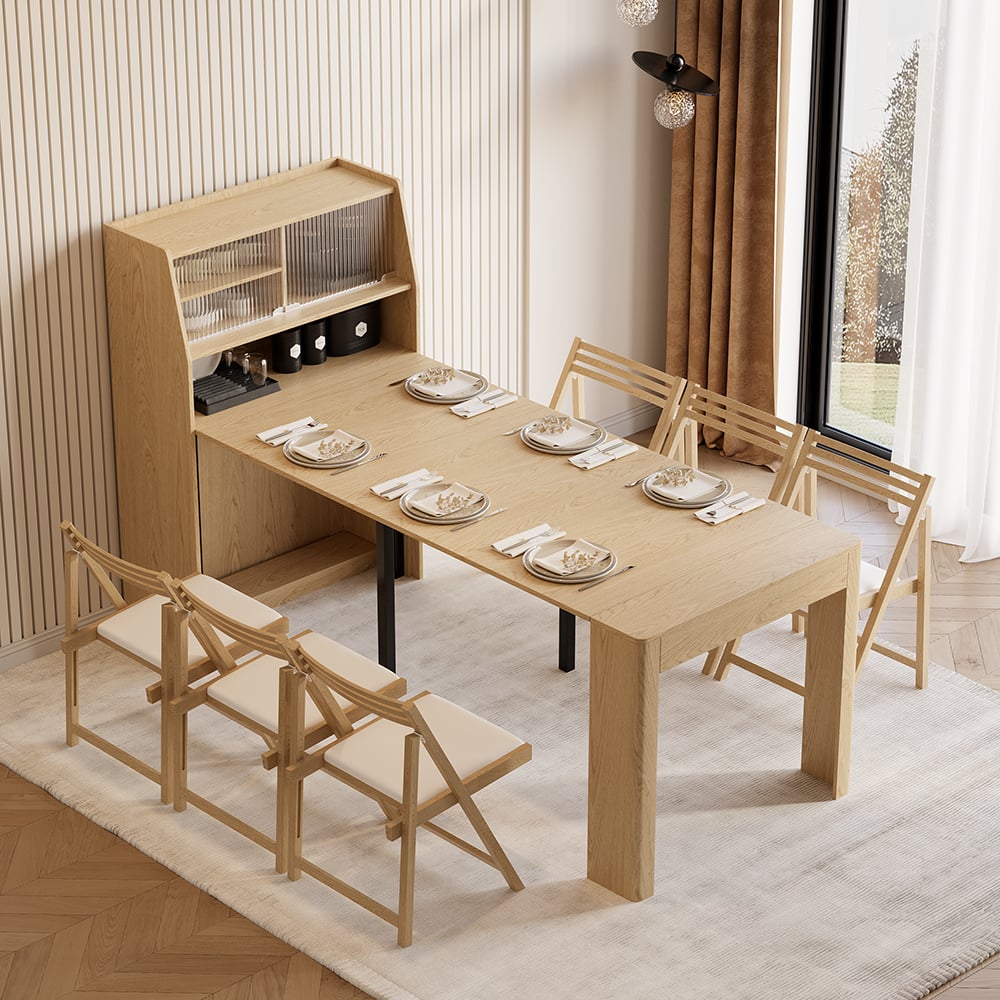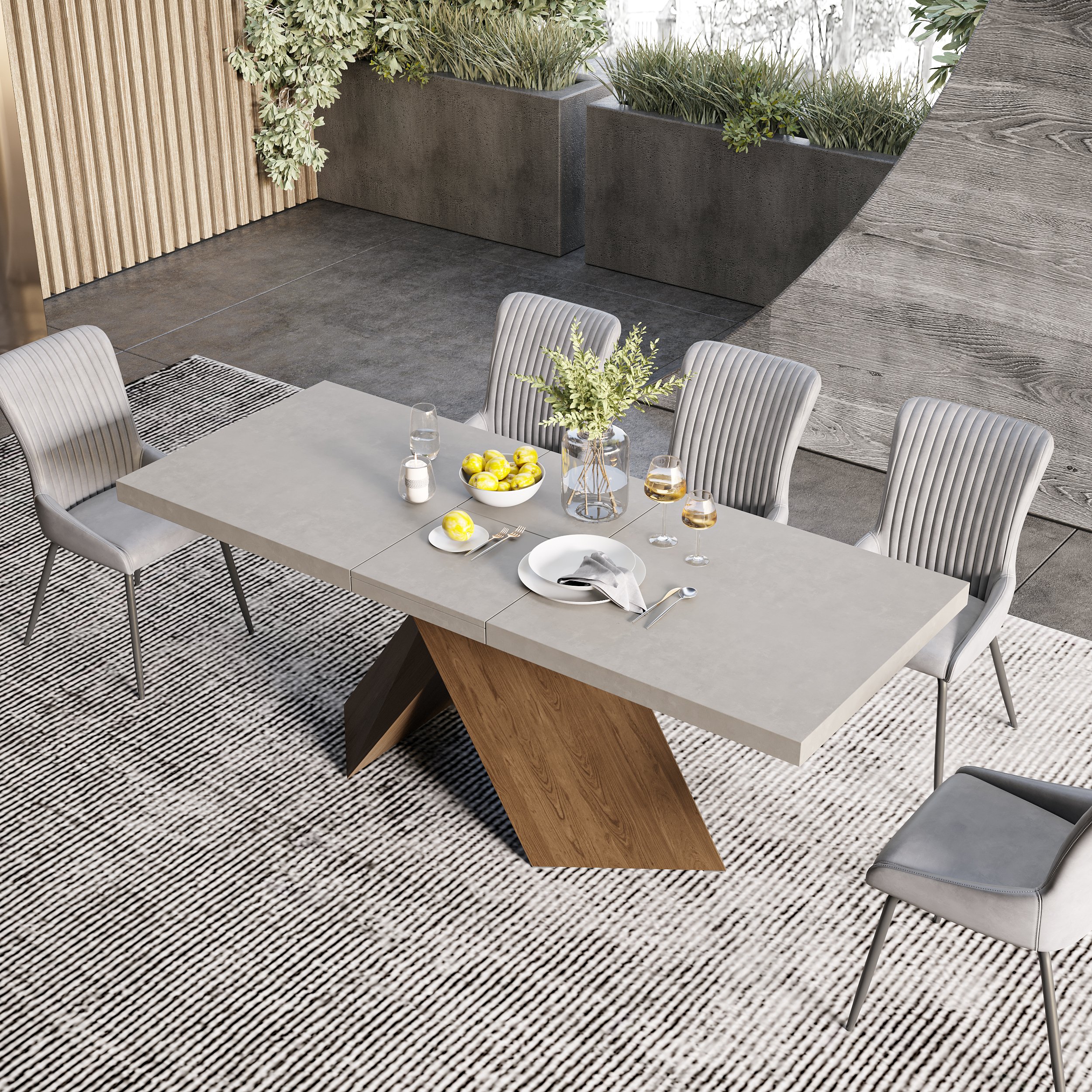
A rug that looks perfect in the store can turn into a tripping hazard the moment someone pushes their chair back after dinner. That’s the most common rug mistake in dining rooms: buying a size that fits the table but not the chairs around it.
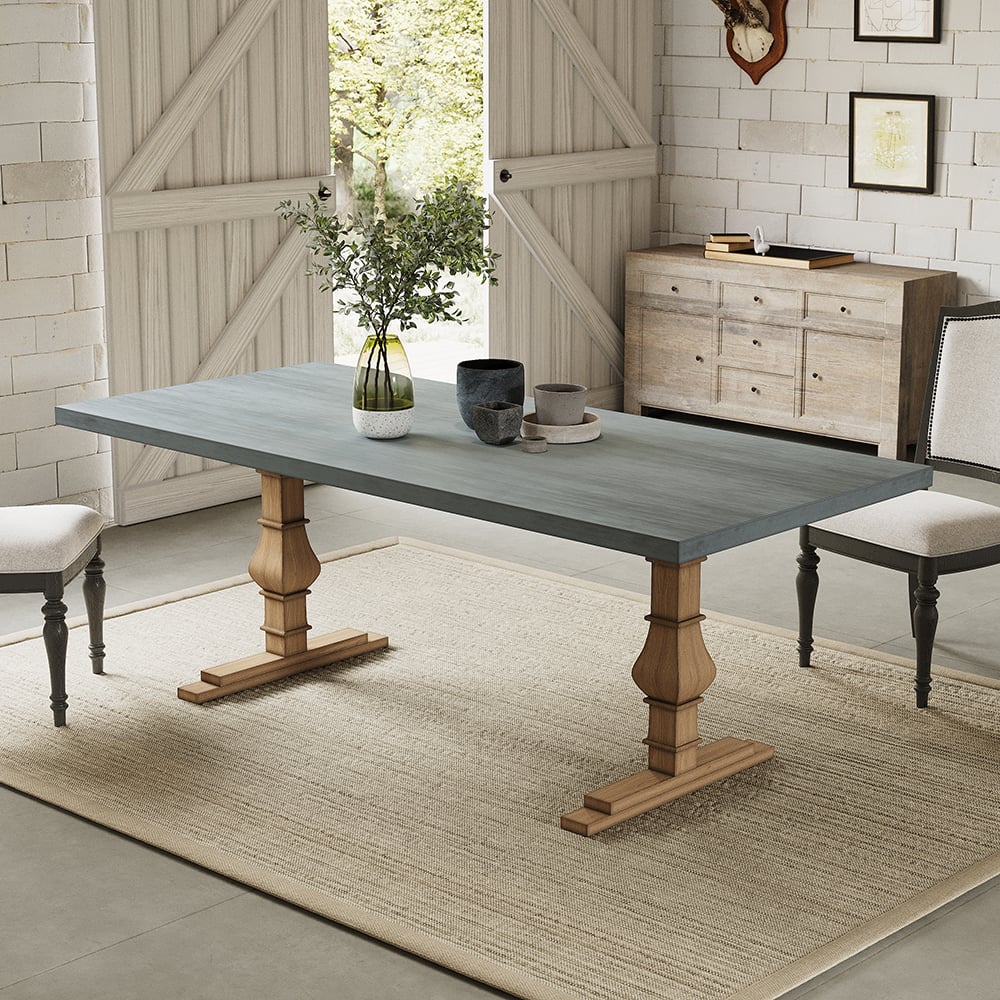
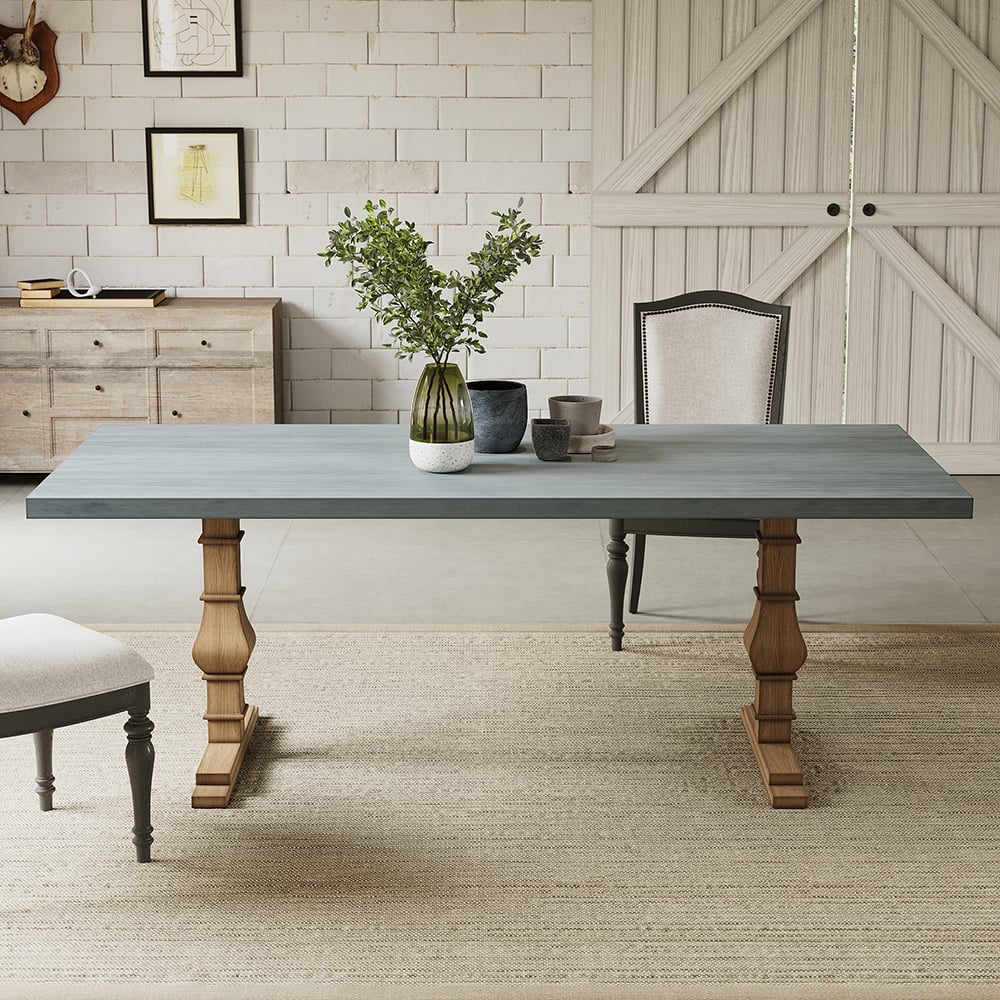
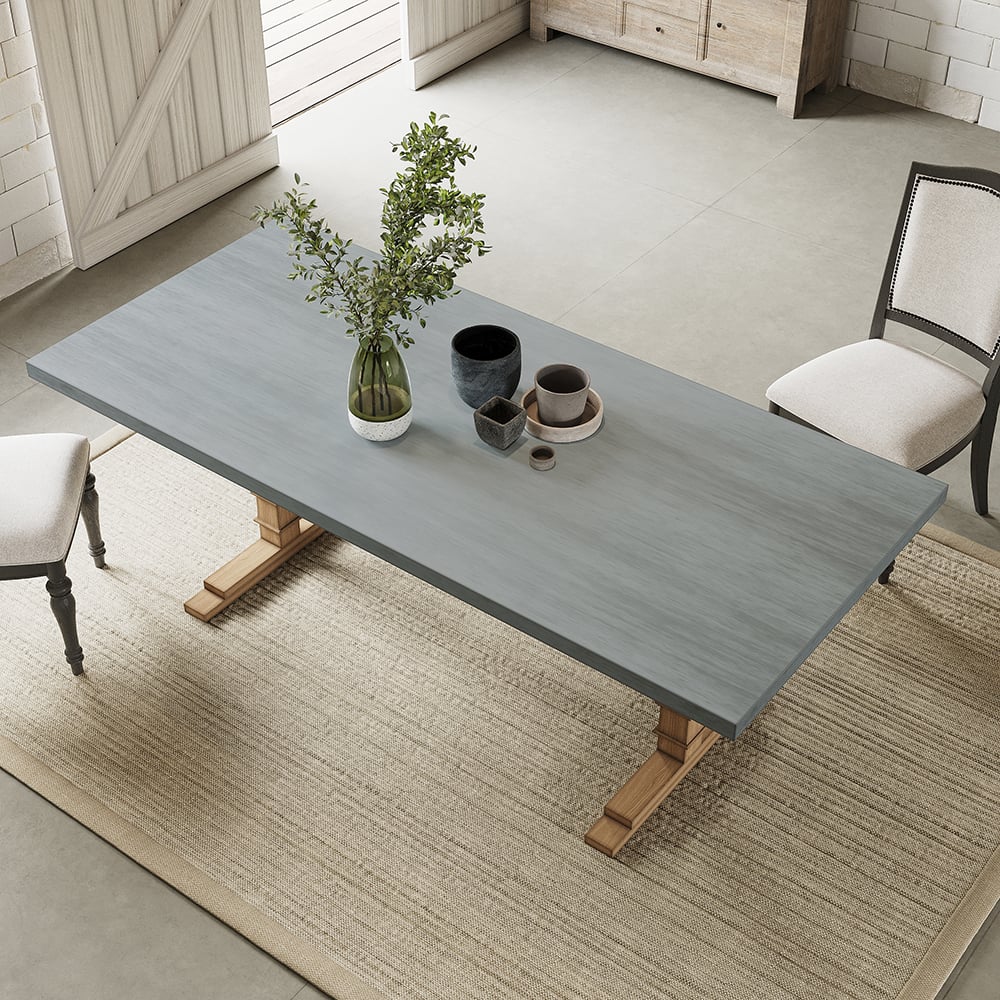
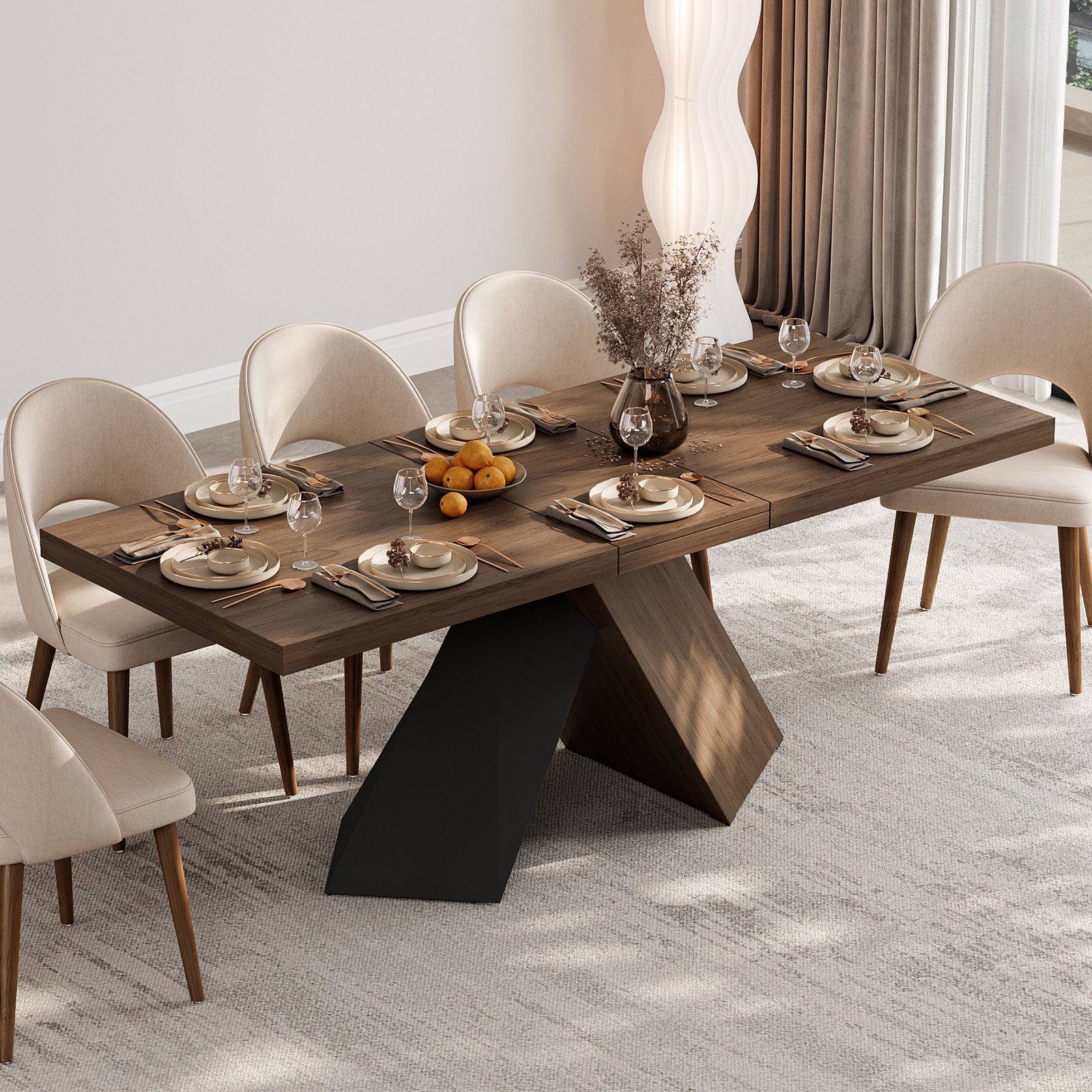
The short answer: the right rug for a farmhouse dining table extends 24 to 36 inches beyond the table’s edge on all sides, so every chair leg stays on the rug even when pulled out. Match the rug’s shape to the table’s shape (round rug under a round table, rectangular or oval rug under a rectangle table), and pick a flatweave, wool, or jute material that can handle spills and daily wear.
Here’s how to get the size, shape, and material right without guessing.
The 24 to 36 Inch Overhang Rule
The core rule for any dining rug is simple: measure your table, then add extra rug on every side so chairs never slide off the edge.
Rugs Direct calls this the “24-inch rule,” and it’s become the baseline standard across the rug industry: your rug should extend at least 24 inches past the table on all sides. That distance covers the space a chair takes up when someone pulls it out to sit down or stand up.
For a more comfortable margin, especially with bigger farmhouse-style chairs or bench seating, aim for 30 to 36 inches of overhang instead. Ruggable’s dining room sizing guide backs up the wider range, noting that deeper or upholstered chairs need more clearance so the back legs don’t catch the rug’s edge when someone leans back.
Here’s why this matters more in a dining room than almost anywhere else in the house: chairs move constantly during a meal. A rug that only just covers the table looks fine when everyone is seated, then becomes a hazard the second someone stands up with a chair leg half on, half off the rug.
How to Measure Before You Buy
Grab a tape measure and do this in three steps.
- Measure your table’s length and width (or diameter, if it’s round).
- Add 48 to 72 inches to both the length and the width. That’s double the 24 to 36 inch overhang, since it applies to both sides.
- Check the resulting rug size against your room’s total floor space, leaving at least 12 to 18 inches of bare floor between the rug’s edge and the wall or nearest piece of furniture.
If the math lands between two standard rug sizes, round up. A rug that’s slightly too big is a minor style choice. A rug that’s too small is a daily annoyance every time someone pulls out a chair.
Match the Rug Shape to Your Table Shape
Shape mismatches are the second most common mistake after wrong sizing. A round rug under a rectangle table leaves the corner chairs completely off the rug, no matter how big the rug is.
Round table, round rug. A round rug mirrors a round table’s shape and keeps the overhang even on all sides. This pairing is the most forgiving to size correctly since there are no corners to account for.
Rectangle table, rectangular or oval rug. A rectangular rug matches a rectangle table’s proportions and gives every chair, including the ones at the ends, equal footing. An oval rug works too and softens the room’s lines, which fits a farmhouse look that leans toward relaxed rather than sharp-edged.
Square table, square rug. Less common, but the same logic applies. A round rug can work under a small square table if the room itself is tight on space, since it visually reads as smaller.
Oval table, oval or rectangular rug. Oval tables pair most naturally with an oval rug, though a rectangular rug slightly larger than the table’s overall length also works, since the corners just add a bit of extra floor coverage instead of leaving gaps.
Best Rug Materials for a Farmhouse Dining Room
A dining room rug takes more abuse than almost any other rug in the house. Spilled sauce, dropped forks, dragged chairs, and foot traffic all happen in the same six-foot patch of floor. Material matters as much as size.
Jute. Jute rugs bring the natural, woven texture that defines a lot of farmhouse style, and they hold up well underfoot. The tradeoff is that jute isn’t the easiest fiber to spot-clean, so it’s a better fit for dining rooms with lighter, more careful use, or paired with a washable mat under the table itself.
Wool. Wool is naturally stain-resistant and holds up to years of chair-dragging without flattening or fraying. It costs more than synthetic options, but for a dining room, which gets more day-to-day wear than almost any other rug placement in the house, the durability pays off.
Flatweave. Flatweave rugs (wool or cotton, woven flat with no pile) are the practical pick for a table that sees regular spills. There’s no plush pile to trap crumbs or soak up liquid, and most flatweaves can be spot-cleaned or even hosed off outdoors if they’re small enough.
Vintage-look distressed rugs. A faded, distressed pattern hides wear, stains, and the general chaos of daily meals far better than a solid, light-colored rug. This look has become a farmhouse and modern farmhouse staple for exactly that reason: it looks intentionally worn from day one, so new wear doesn’t stand out.
Wool and flatweave both perform well in real durability comparisons for high-traffic rooms, and dining rooms consistently rank as one of the toughest environments for a rug in the whole house, right alongside entryways.
Rug Sizing Table by Table Size
Use this as a starting point, then adjust based on your chair style and room size.
| Table Seats | Typical Table Size | Recommended Rug Size (24” overhang) | Recommended Rug Size (36” overhang) |
|---|---|---|---|
| 4-seat | 36” x 60” (round or rectangle) | 6’ x 8’ | 7’ x 9’ |
| 6-seat | 40” x 72” to 78” | 8’ x 10’ | 9’ x 12’ |
| 8-seat | 42” x 84” to 96” | 9’ x 12’ | 10’ x 14’ |
For round tables, the same logic applies to diameter. A 48-inch round table (seats 4) needs roughly an 8-foot round rug at the 24-inch overhang, or larger if the room allows.
Colors and Patterns That Work With Farmhouse Style
Farmhouse dining rooms tend to lean toward neutral, textured, or subtly patterned rugs rather than bold color. Cream, oatmeal, faded indigo, and warm gray tones show up most often because they pair with the wood tones common in farmhouse tables and chairs.
A busy pattern can help hide stains between cleanings, which matters under a table where food and drink spills are routine. A solid, pale rug looks great in photos and shows every crumb within a day.
A Few Things to Double Check Before You Order
Rug returns are a hassle, especially with large area rugs that cost real money to ship back. A few minutes of measuring now saves that headache later.
Check your chair’s fully-pulled-out position, not just its pushed-in position under the table. Measure from the table’s edge to where the chair legs land when someone sits down, since that distance can be more than the chair itself suggests.
Check the room for doorways, vents, or built-ins that might sit right where the rug’s edge would land. A rug that’s the right size on paper can still look wrong if it awkwardly meets a floor vent or door swing.
Key Takeaways
A dining rug needs 24 to 36 inches of overhang beyond the table on every side, so chairs stay on the rug even fully pulled out. Match the rug’s shape to the table’s shape first, since a shape mismatch causes more problems than a size that’s slightly off. For farmhouse style specifically, wool, flatweave, and vintage-look distressed rugs handle daily spills and chair traffic better than a plush pile rug, while jute adds the woven texture the style is known for. When in doubt on sizing, round up to the next standard rug size rather than down.
If you’re still finalizing your table choice alongside the rug, measure the table first. The rug size follows the table, not the other way around.
FAQ
How far should a rug extend past a dining table? A dining rug should extend at least 24 inches past the table on every side, with 30 to 36 inches recommended for a more comfortable margin. This keeps chair legs on the rug even when pulled all the way out from the table.
What size rug do I need for a 6-person farmhouse dining table? Most 6-person tables measure around 40 by 72 to 78 inches, which calls for an 8 by 10 foot rug at minimum. A 9 by 12 foot rug gives extra breathing room if your dining chairs are larger or your room has the space.
Can I use a round rug under a rectangle table? A round rug under a rectangle table usually leaves the end chairs partly off the rug, since the table’s corners extend past the rug’s curved edge. A rectangular or oval rug is the better match for a rectangle table’s shape.
What is the best rug material for under a dining table? Wool and flatweave rugs handle dining room wear the best, since they resist stains and hold up to chairs dragging across them daily. Jute adds farmhouse texture but is harder to spot-clean, so it suits lighter-use dining rooms better.
Should the rug be the same shape as the table? Yes, matching the rug’s shape to the table’s shape keeps the overhang even on all sides and avoids leaving any chair off the rug. Round tables pair with round rugs, rectangle and oval tables pair with rectangular or oval rugs.
How big should a rug be for an 8-person dining table? An 8-person table typically runs 42 by 84 to 96 inches, which calls for a 9 by 12 foot rug at a 24-inch overhang, or 10 by 14 feet for a more generous 36-inch margin. Always confirm your exact table dimensions before ordering, since 8-seat tables vary more in size than smaller tables.
Do jute rugs work well in a dining room? Jute rugs bring farmhouse-style texture and hold up structurally to foot traffic, but they aren’t the easiest to clean after a wine or sauce spill. Many farmhouse dining rooms use jute in lighter-use spaces or layer it with a smaller, easier-to-clean rug closer to the table.
What happens if my rug is too small for the table? Chair legs will slide partly or fully off the rug’s edge whenever someone pulls out a chair to sit down or stand up. This creates a tripping hazard and causes uneven wear where the chair legs constantly cross on and off the rug’s edge.
How much space should be between the rug and the wall? Most design guides recommend leaving 12 to 18 inches of bare floor between the rug’s outer edge and the wall or nearest furniture piece. This keeps the rug from looking like it’s swallowing the room and gives the space a finished, intentional look.
Are patterned rugs better than solid rugs for a dining room? Patterned or textured rugs tend to hide stains and daily wear better than a solid, pale rug, which shows crumbs and spills quickly. For a farmhouse look, a faded or vintage-style pattern in neutral tones tends to hold up visually the longest between cleanings.