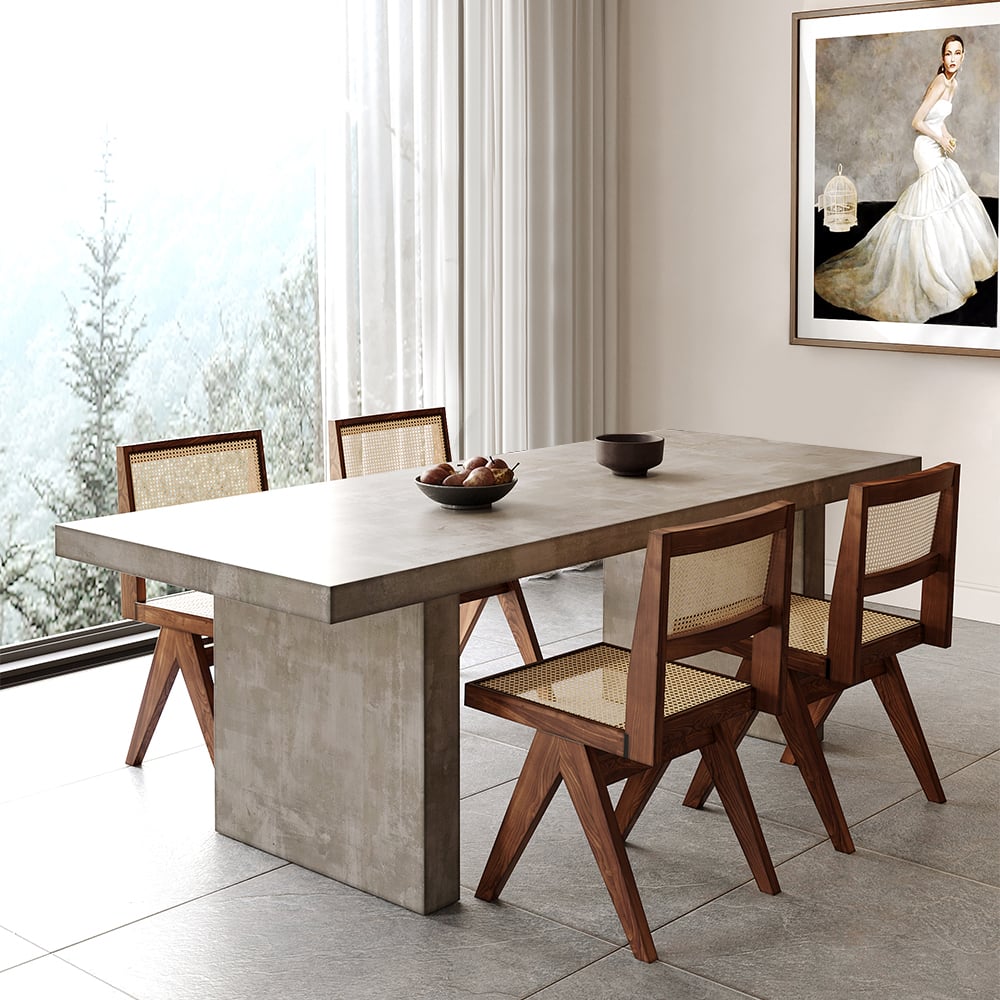
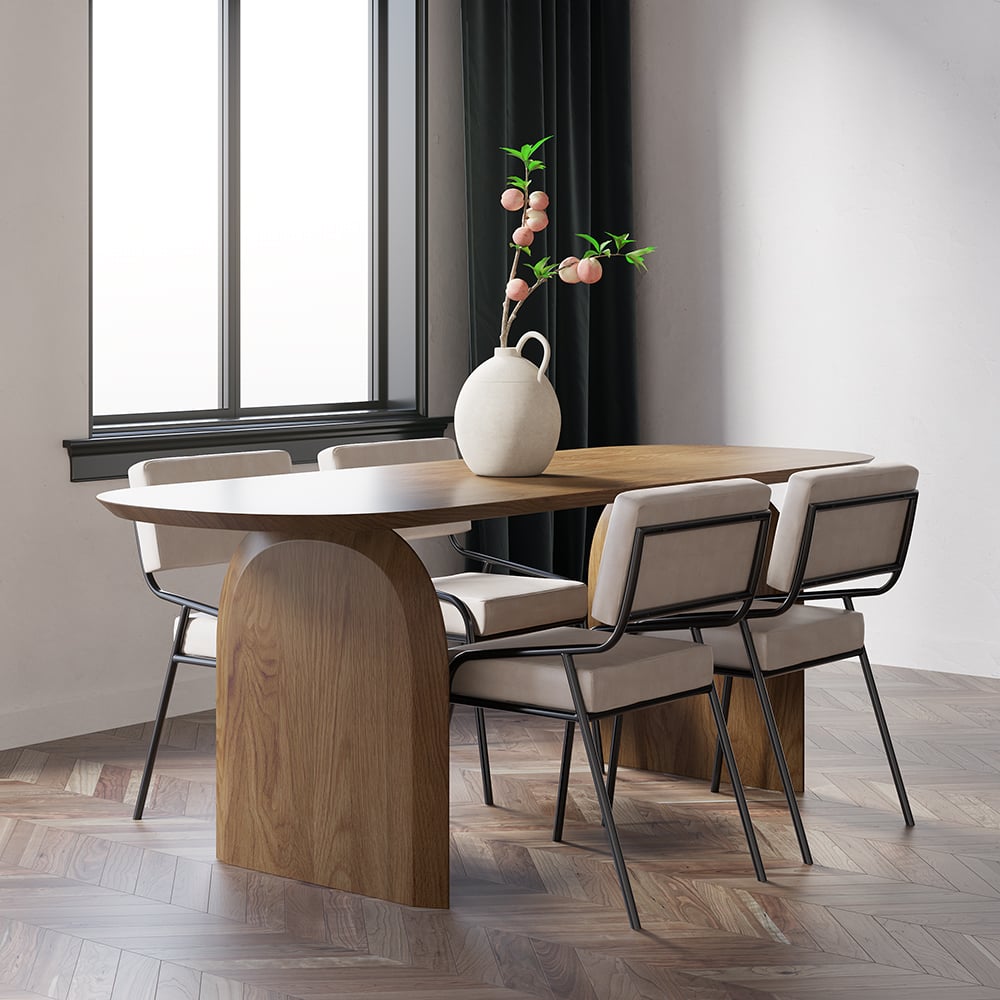
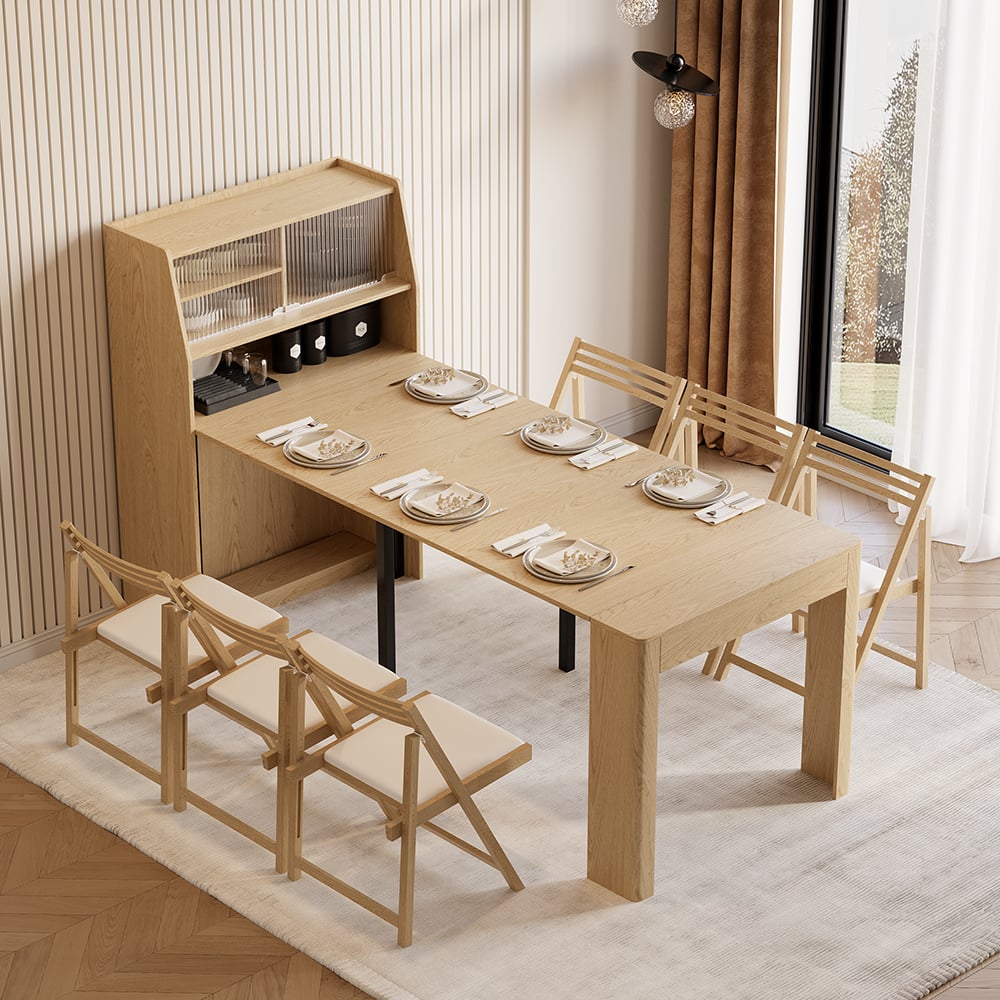
A friend of mine gutted her dining room last year and kept saying she wanted it to feel “calm but not cold, rustic but not cluttered.” She didn’t know there was a name for that. There is: Japandi farmhouse.
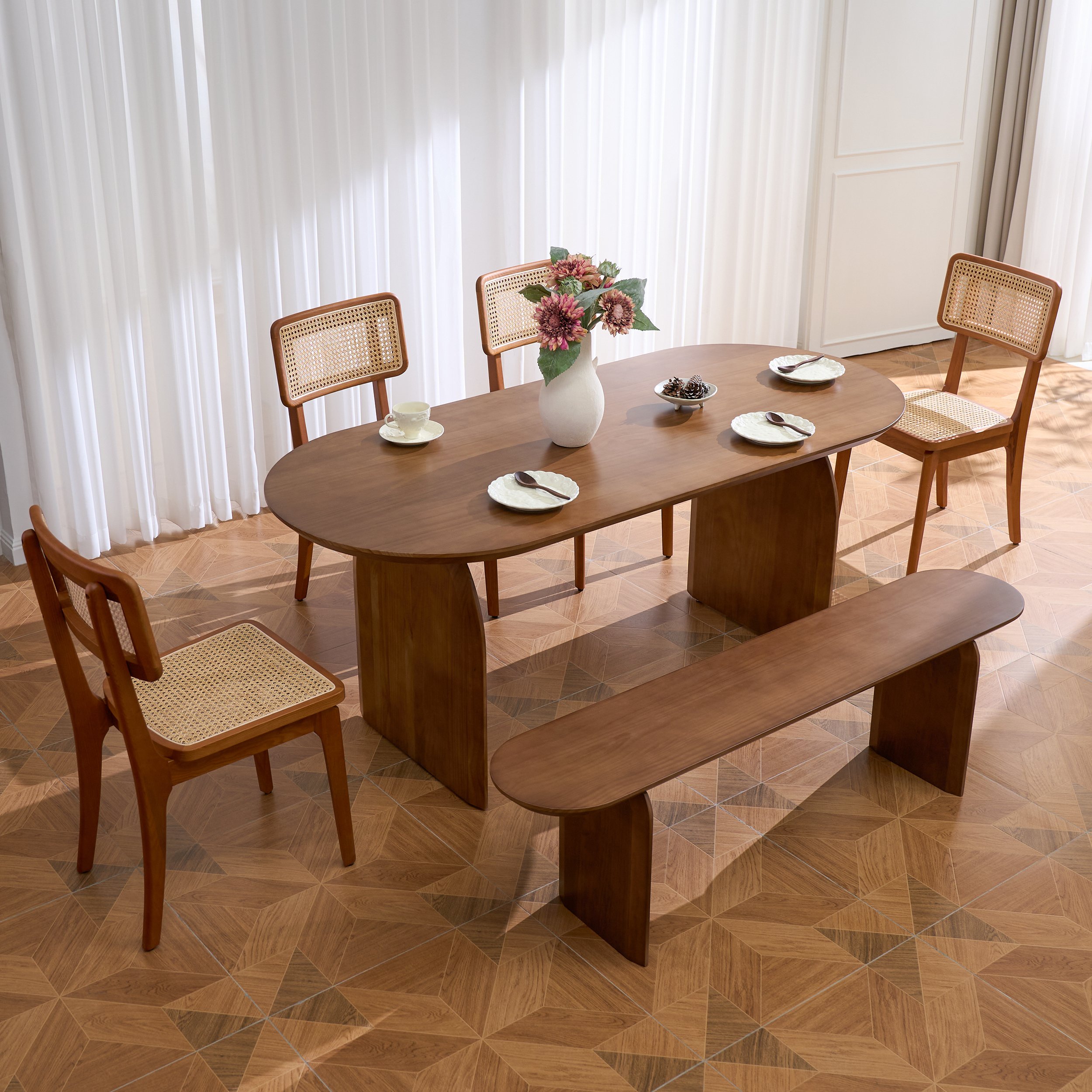
What Is a Japandi Farmhouse Dining Table?
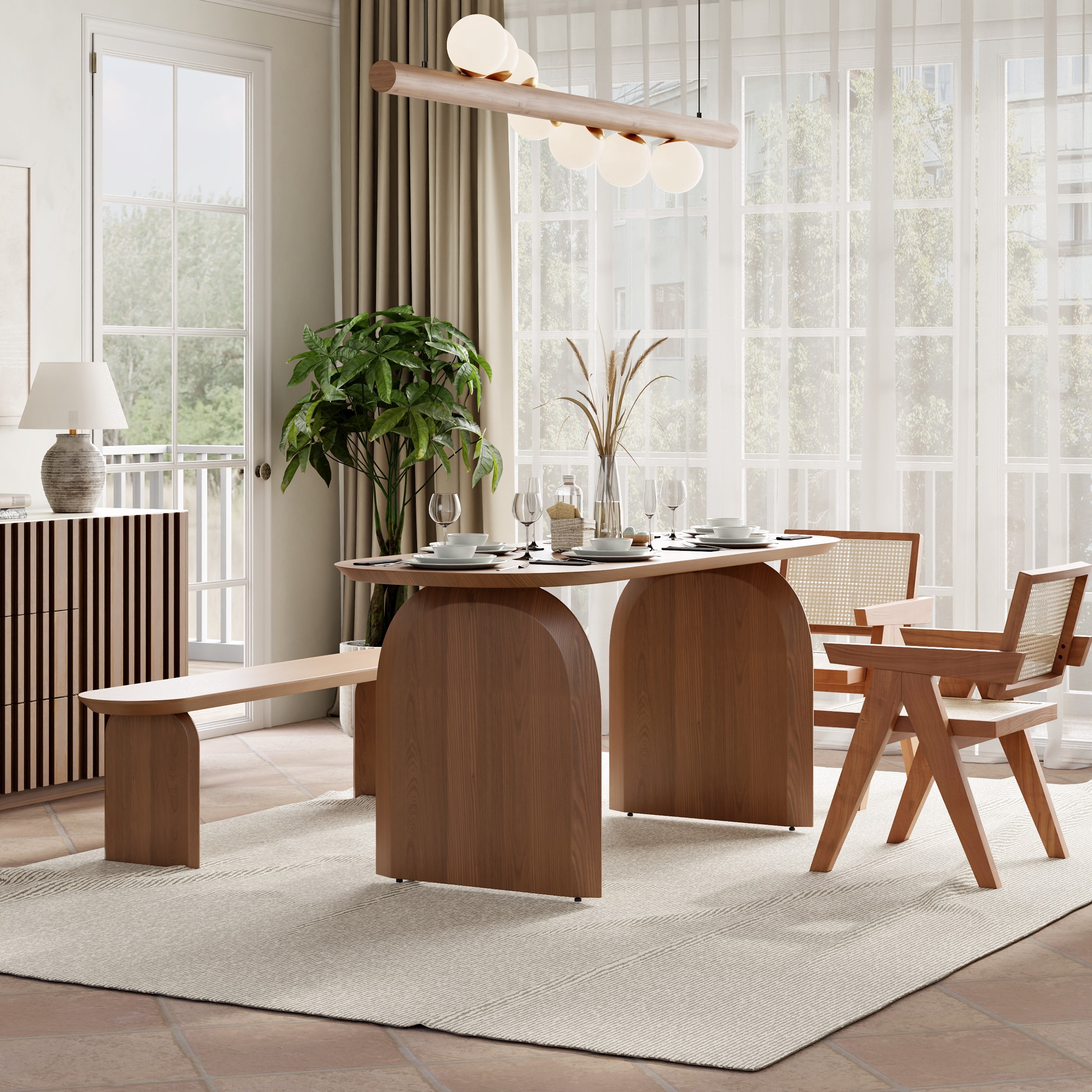
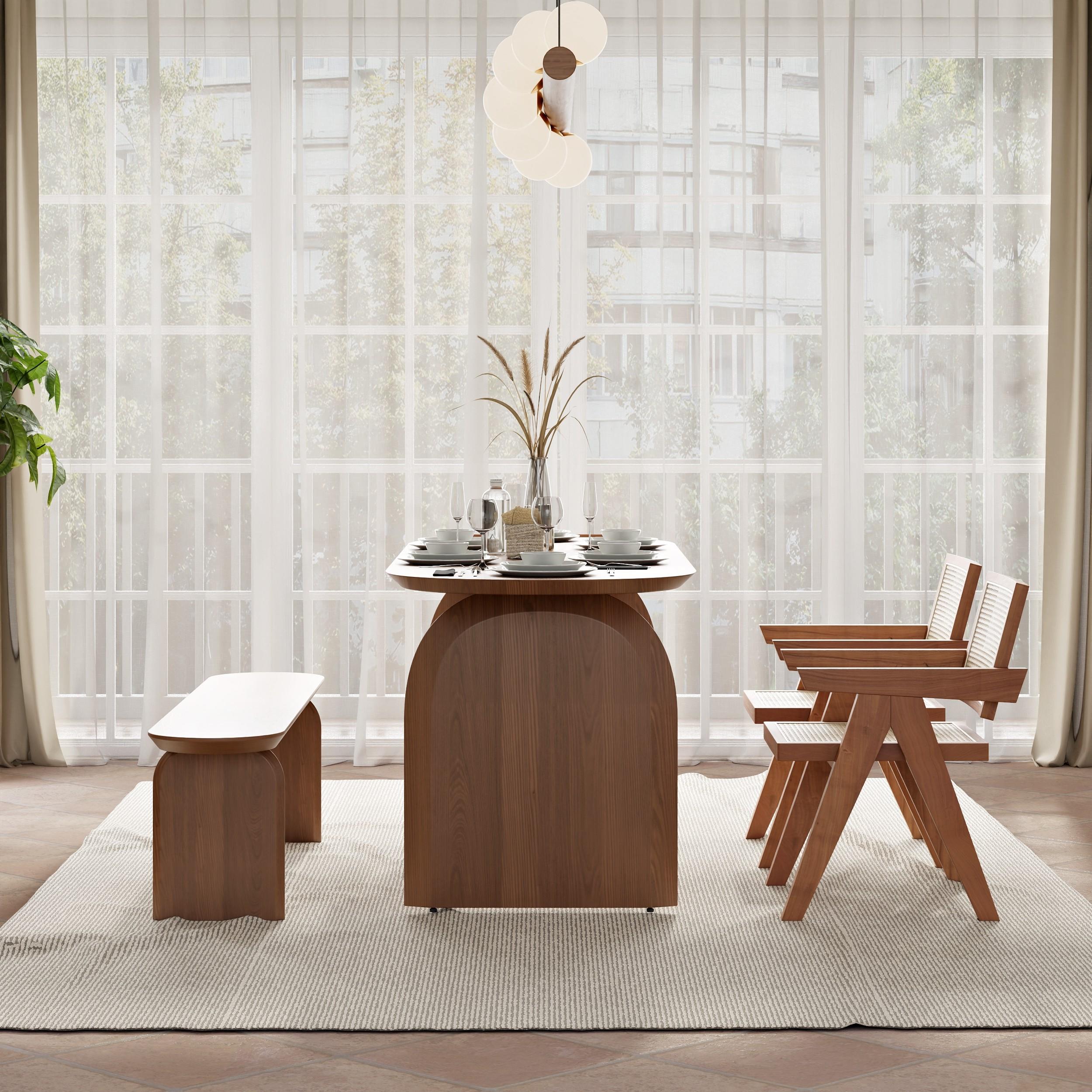
A Japandi farmhouse dining table blends Japanese minimalism with Scandinavian coziness, then adds the natural wood texture and simple joinery of farmhouse furniture. It usually means solid wood construction, a muted or natural finish, clean uncluttered lines, and a shape (often oval or round) that keeps the room feeling open and calm.
That’s the short version. Here’s where each half of the term comes from and why they pair so well.
Japandi Is a Real Design Term (Here’s What It Means)
Japandi isn’t a marketing buzzword invented last week. It’s a genuine, established interior design style, a portmanteau of “Japan” and “Scandi,” that emerged around 2016 and has stuck around because the two traditions share more common ground than most people expect.
The style pulls from two ideas:
- Wabi-sabi (Japanese): finding beauty in imperfection, natural texture, and simplicity. A hand-planed edge or a visible wood knot isn’t a flaw, it’s the point.
- Hygge (Scandinavian/Danish): coziness, comfort, and everyday well-being. This is the part that keeps Japandi from feeling like a sterile art gallery.
Put those together and you get furniture that’s pared back and quiet, but still warm enough to sit around for a three-hour dinner. Common Japandi features include low-profile silhouettes, natural materials like wood, stone, and bamboo, and a restrained color palette of warm neutrals, soft grays, and muted earth tones.
How Japandi Crosses Over With Farmhouse Style
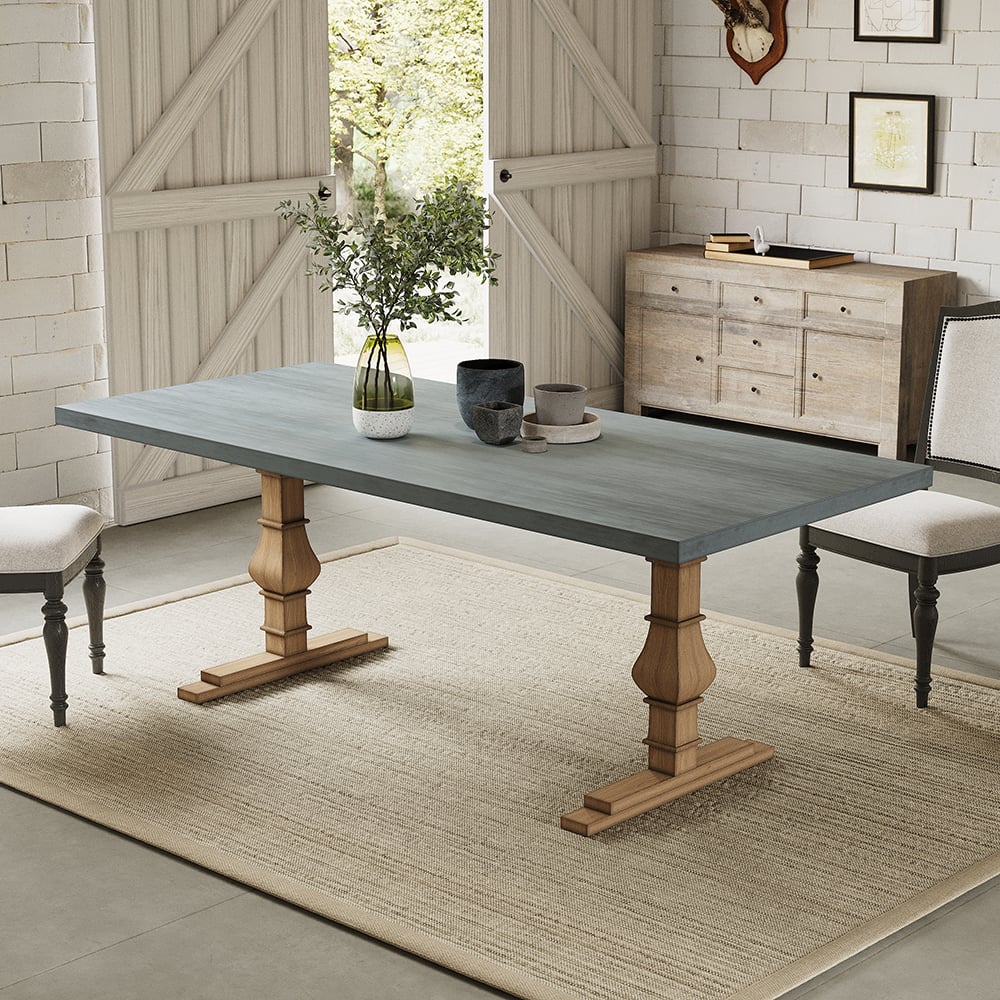
Farmhouse style already leans on a lot of what Japandi asks for. Both styles value natural wood grain over painted or lacquered surfaces. Both avoid ornate carving in favor of simple, honest joinery, think a straight trestle base or a pedestal leg rather than scrollwork.
Where classic American farmhouse tends to run rustic and chunky (thick planked tops, distressed white paint, farmhouse benches), Japandi trims that down. A Japandi farmhouse table keeps the natural wood warmth but sheds the heavy distressing. Lines get straighter, shapes get softer (oval and round tops are common), and the color story stays neutral instead of leaning into shabby-chic white or barn red.
Here’s a side-by-side to make the overlap clear:
| Feature | Classic Farmhouse | Japandi Farmhouse |
|---|---|---|
| Wood finish | Distressed, whitewashed, or painted | Natural, walnut, or light gray-wash |
| Shape | Rectangular, chunky legs | Oval or round, slimmer pedestal base |
| Color palette | Cream, white, barn red accents | Warm neutrals, walnut, soft gray |
| Detailing | Turned legs, plank tops, visible hardware | Clean lines, minimal hardware, smooth joinery |
| Mood | Cozy, rustic, lived-in | Calm, uncluttered, quietly warm |
Who This Style Suits
A Japandi farmhouse table works well if:
- You want warmth in a room without visual noise. Solid wood tones do the work instead of patterns or heavy trim.
- Your space is on the smaller side. Round and oval Japandi tables are common precisely because curved edges make small dining rooms feel less boxed in.
- You’ve been drawn to both farmhouse Pinterest boards and minimalist ones and couldn’t figure out why neither felt quite right on its own.
- You want a table that will still look right in five years, since neither wabi-sabi nor hygge chase trend cycles.
It’s a poor fit if you want bold color, glossy modern surfaces, or a heavily carved traditional look. Japandi farmhouse is quiet by design.
Real Japandi Farmhouse Dining Tables You Can Actually Buy
Two current Homary listings show this crossover in action rather than just in theory.
Tintica 70.9” Japandi Oval Wood Dining Table (Walnut, Seats 4 to 6) This table is built on solid pine with a double pedestal base and an oval top, a shape Homary’s own product copy describes as blending “the timeless beauty of both Japanese and Scandinavian styles.” The oval top keeps sightlines open around the table, and the double pedestal base frees up legroom that a center post would block. It’s rated 4.8 stars across 132 reviews, and it’s currently marked down to $759.99 from $1,119.99. View the Tintica Japandi oval dining table on Homary
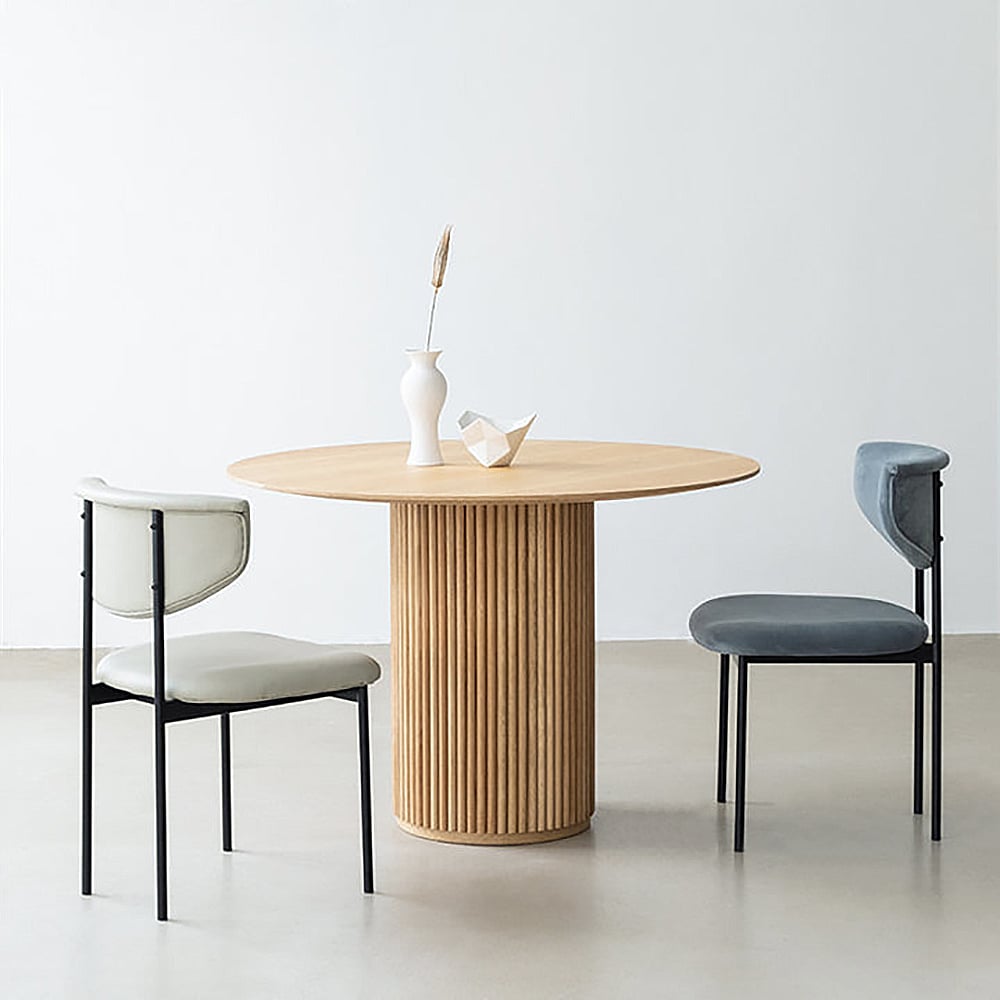
Japandi 39” Round Natural Wood Dining Table (Seats 2 to 4) For smaller dining rooms or apartments, this round table trades the oval’s length for a compact 39 inch natural wood top. Same pedestal-base logic (better legroom, no obstruction for chairs), just scaled down. It carries a 5.0 star rating across 63 reviews and is priced at $749.99. View the Japandi round dining table on Homary
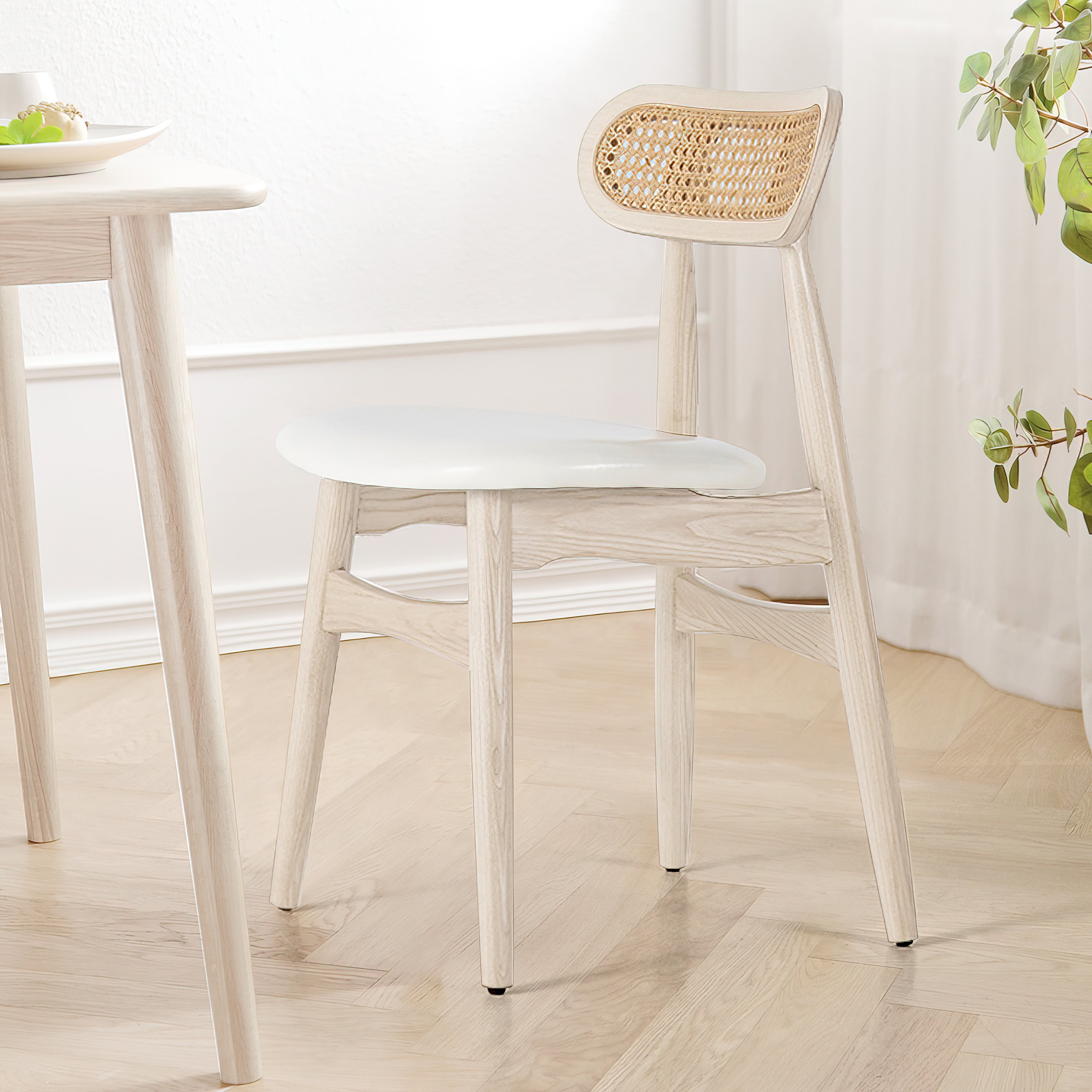
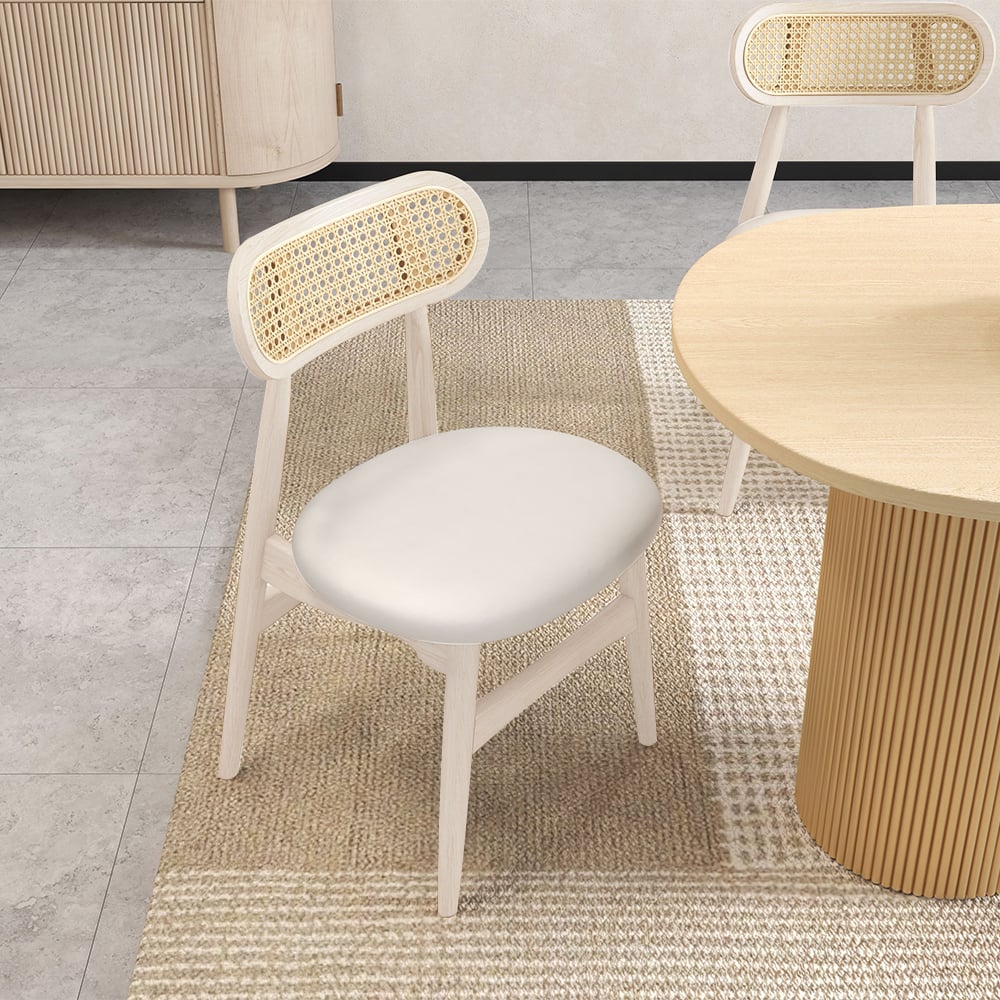
Both share the traits that define the style: solid wood, a pedestal base instead of four bulky legs, and a rounded shape that softens the room.
Key Takeaways
- Japandi is a real, established design term (not a made-up trend name) blending Japanese wabi-sabi with Scandinavian hygge.
- Japandi farmhouse keeps farmhouse’s natural wood warmth and simple joinery but trims away heavy distressing and ornate detail.
- Oval and round shapes, natural or walnut finishes, and pedestal bases are the clearest visual markers of the crossover.
- The style suits people who want calm and warmth together, and it’s easy to shop for right now since real products, like the Tintica oval table and the 39 inch round table above, already exist in this exact niche.
If you’re weighing shapes and sizes for your own dining room, start with how many people you need to seat regularly, then let the wood tone and base style narrow things down from there.
Frequently Asked Questions
Is Japandi a real design style or just a marketing trend? Japandi is a genuine, established interior design style that combines Japanese minimalism with Scandinavian design. The term dates back to around 2016 and is widely recognized in design publications and retail furniture descriptions, not something invented for a single product line.
What does “Japandi” mean exactly? Japandi is a portmanteau of “Japan” and “Scandi” (short for Scandinavian). It refers to interiors that combine Japanese wabi-sabi, the appreciation of natural imperfection, with Scandinavian hygge, a focus on coziness and comfort.
How is Japandi different from regular farmhouse style? Regular farmhouse style often uses distressed paint, chunky turned legs, and rustic plank tops. Japandi farmhouse keeps the natural wood but uses cleaner lines, rounder shapes, and a calmer, more neutral color palette.
What wood finishes work best for a Japandi farmhouse table? Natural wood tones, light gray-wash, and walnut finishes are the most common choices. These finishes let the grain show through instead of hiding it under heavy paint or a glossy lacquer.
Is an oval or round table more “Japandi” than a rectangular one? Oval and round shapes appear more often in Japandi furniture because curved edges create softer sightlines and feel less rigid in a room. A rectangular table can still work if the finish and detailing stay simple and uncluttered.
What size Japandi dining table fits a small apartment? A round table around 39 inches across comfortably seats two to four people and works well in tight dining spaces. For slightly larger households, an oval table around 70 inches seats four to six without feeling bulky.
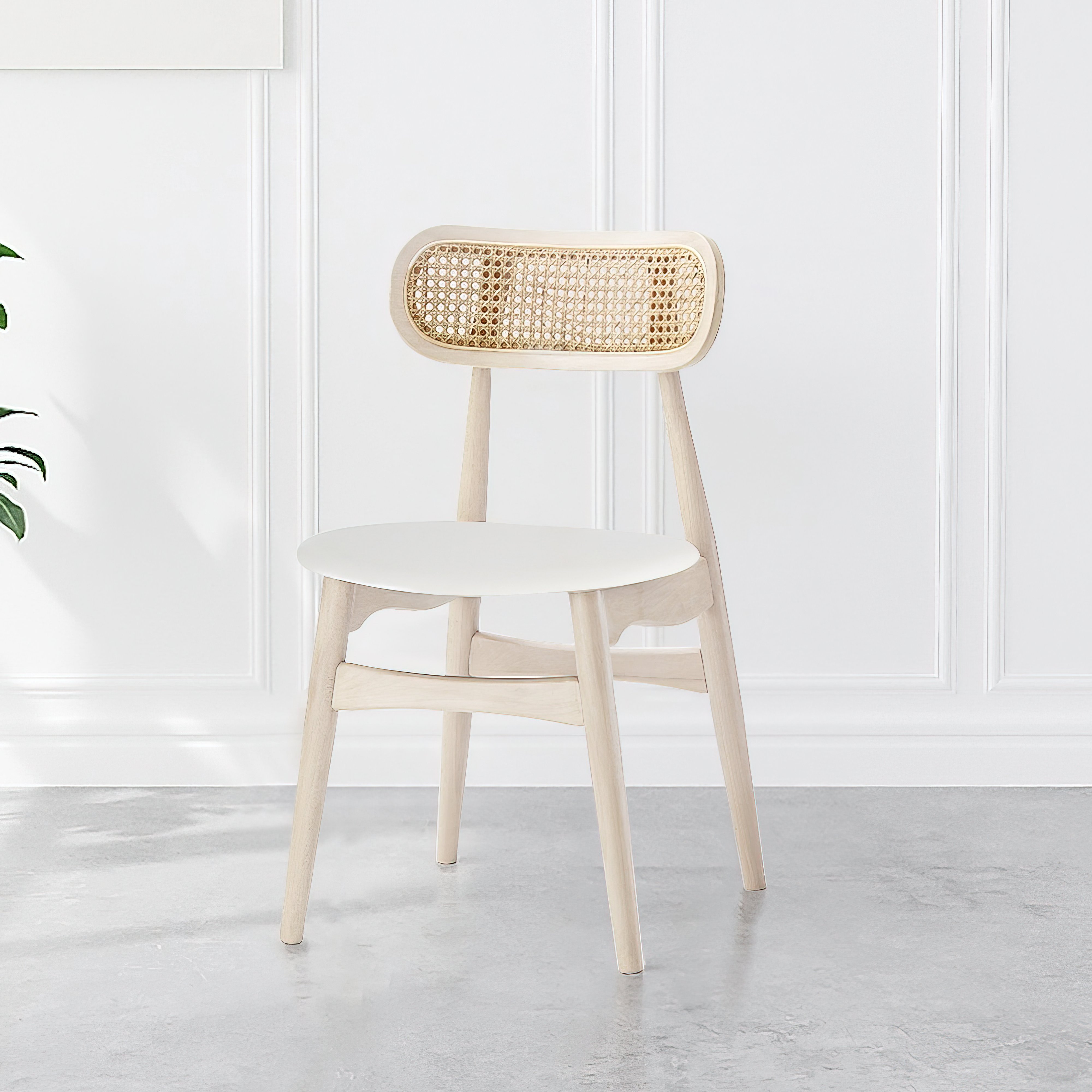
Does Japandi farmhouse style work with mismatched dining chairs? Yes, as long as the chairs share a similar wood tone or a simple, low-profile shape. The goal is a calm, cohesive look, not identical chairs, so slight variation in style is fine if the materials and colors stay consistent.
What makes a dining table base “Japandi style”? A pedestal base is common in Japandi dining tables because it keeps legroom open and avoids the visual clutter of four separate legs. Simple, unadorned joinery without carving or turned details also fits the aesthetic.
Is Japandi furniture more expensive than standard farmhouse furniture? Not necessarily. Prices vary by material and brand just like any furniture category. Solid wood Japandi farmhouse tables are available at similar price points to standard farmhouse tables, often between $700 and $1,200 for a quality solid wood option.
Can Japandi farmhouse style work in a home with other design styles? Yes, it tends to blend well with minimalist, contemporary, and traditional farmhouse rooms alike, since neutral tones and natural wood are common ground with most other styles. A Japandi table can anchor a dining room even if the rest of the home leans a different direction.