My neighbor spent a Saturday afternoon staring at paint chips and wood stain samples spread across her kitchen counter, trying to decide what to do with a farmhouse table she’d just bought. She wasn’t picking a color. She was picking how much wear and tear she was willing to touch up over the next ten years. That’s really what a finish decision comes down to.
A farmhouse dining table finish falls into four main types: natural stain (shows the wood grain), solid paint (hides the grain, easy to spot-touch), whitewash (a light, translucent wash that lets grain show through a pale coat), and two-tone (a painted base paired with a stained top). Each one changes how the table looks, how it holds up, and how much upkeep it needs.
Below is a real breakdown of all four, with actual tables you can look at right now to see the difference.
Natural Stained Wood: The Classic Farmhouse Look
Stain soaks into the wood instead of sitting on top of it like paint does. That means the grain, the knots, and the natural color variation in the wood stay visible. This is the look most people picture when they hear “farmhouse table”: warm wood tones, visible wood texture, a sense that the table came from a barn workshop rather than a factory.
Durability: Stain plus a topcoat (usually polyurethane or wax) holds up well against everyday wear. Scratches tend to blend into the existing grain pattern instead of standing out as a stark white mark, which is the opposite of what happens with paint.
Maintenance: Minor scuffs can often be buffed out or touched up with a matching stain marker. Deep gouges are harder to fix invisibly because you’re trying to match wood tone, not a flat paint color.
Room fit: Stained wood reads warm and works in traditional farmhouse, rustic, cabin, and transitional rooms. It can look heavy in a bright, all-white modern space unless you balance it with lighter walls or chairs.
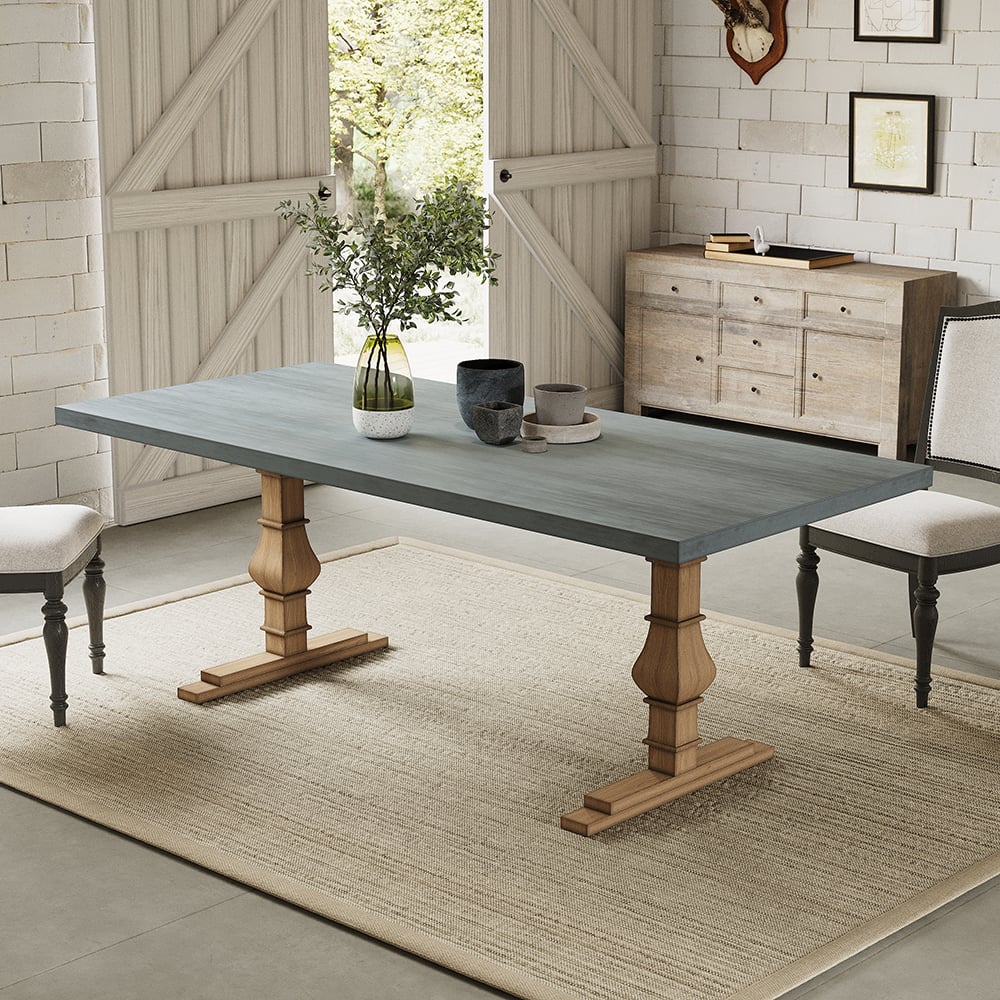
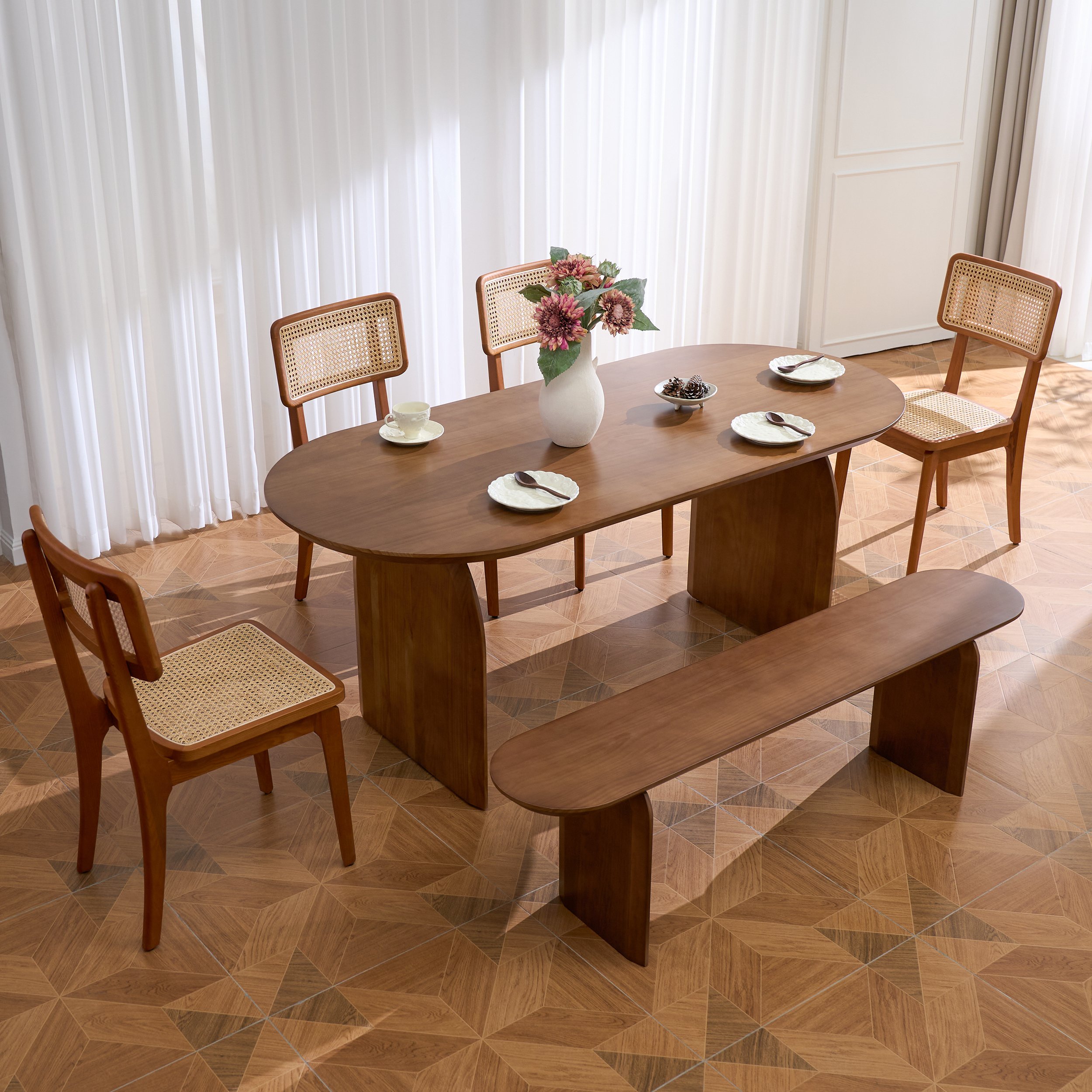
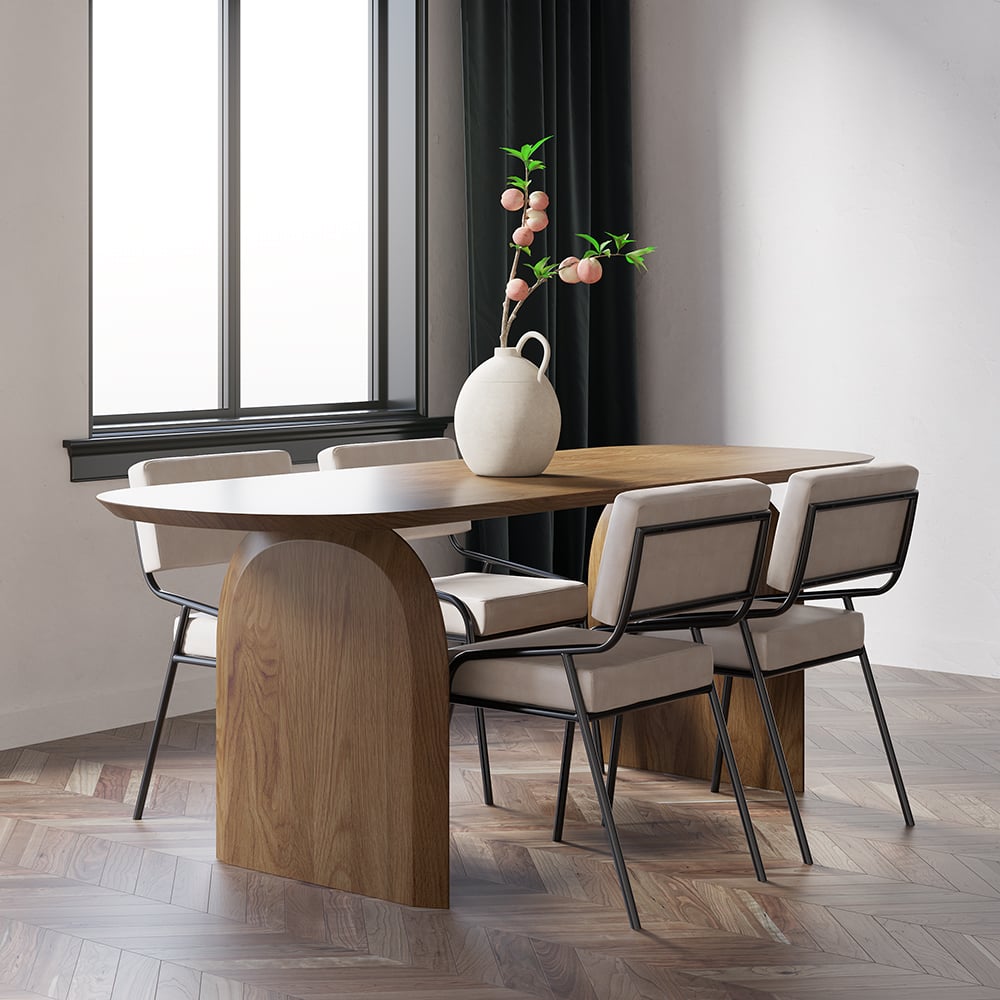
A good real-world example is the Tintica 79” Oval Walnut Wood Dining Table, a solid pine table with a walnut-toned stain and a double pedestal base. It’s rated 4.8 stars from 125 reviews and currently runs $1,189.99 (marked down from $1,619.99). The oval top seats up to 6 to 8 comfortably, and the visible wood grain is the whole point of the design.
Painted Solid Color: Clean and Easy to Touch Up
A painted table gets a solid coat of color (classic farmhouse white, black, sage green, navy) that fully covers the wood grain underneath. You get a flatter, more uniform surface. This is the finish most associated with cottage-style and modern farmhouse rooms that lean bright and airy.
Durability: Paint chips more visibly than stain does, especially on edges and corners where kids and chairs bump the table most. But because paint sits in a flat, even layer, touch-ups are simpler in one specific way: you just need matching paint, not a wood-tone match.
Maintenance: Keep a small jar of the matching paint color on hand. A quick dab covers a scratch in minutes. Full refinishing (sanding and repainting) is also more approachable as a DIY project than stripping and restaining a table, since you don’t need to worry about matching a natural material.
Room fit: Painted tables work well in cottage, coastal, and bright farmhouse kitchens. White and cream tables in particular open up a small dining space visually. Darker painted colors like black or navy add contrast in a room with lots of white trim and cabinetry.
Whitewashed Finish: Aged Look, Grain Still Visible
Whitewash is not the same as painting a table white. A true whitewash is a thin, translucent wash, often mixed close to a 2-to-1 or 3-to-1 ratio of white paint to water, that lets the wood grain show through underneath. The result looks aged, weathered, and softer than a solid painted white.
Durability: Because the coat is thin, whitewash finishes can wear faster in high-traffic spots than a full paint or stain job. Manufacturers typically seal the wash with a protective topcoat to help it hold up to daily dining use.
Maintenance: Light wear actually suits this finish, since the whole look is meant to feel a little worn and rustic already. Heavier damage is trickier to patch invisibly because you’re trying to match both the wash color and the amount of grain showing through.
Room fit: Whitewash is the finish of choice for coastal farmhouse, Scandinavian-farmhouse hybrid (“Japandi farmhouse”), and beachy interiors. It reads lighter and airier than natural stain but warmer than flat white paint.
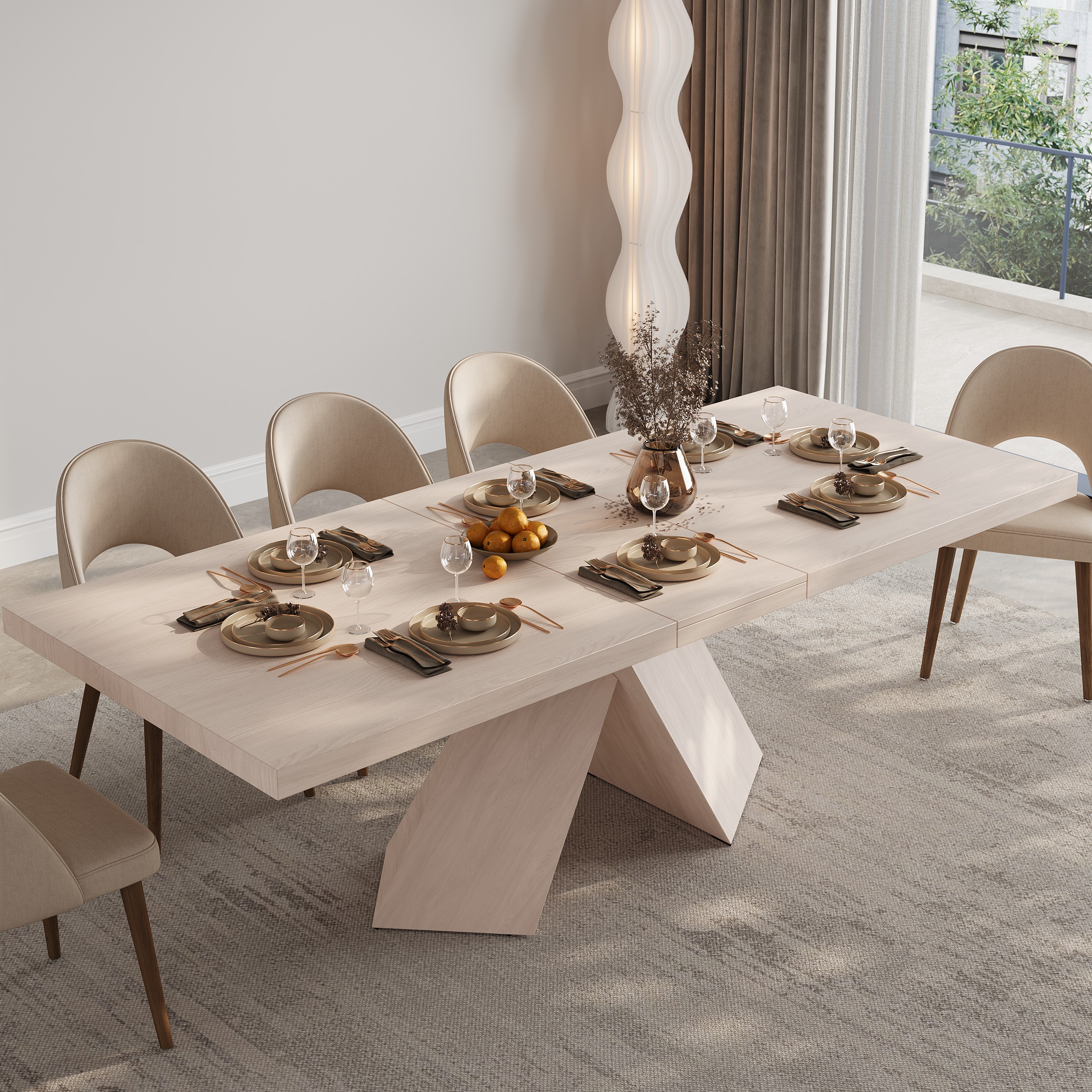
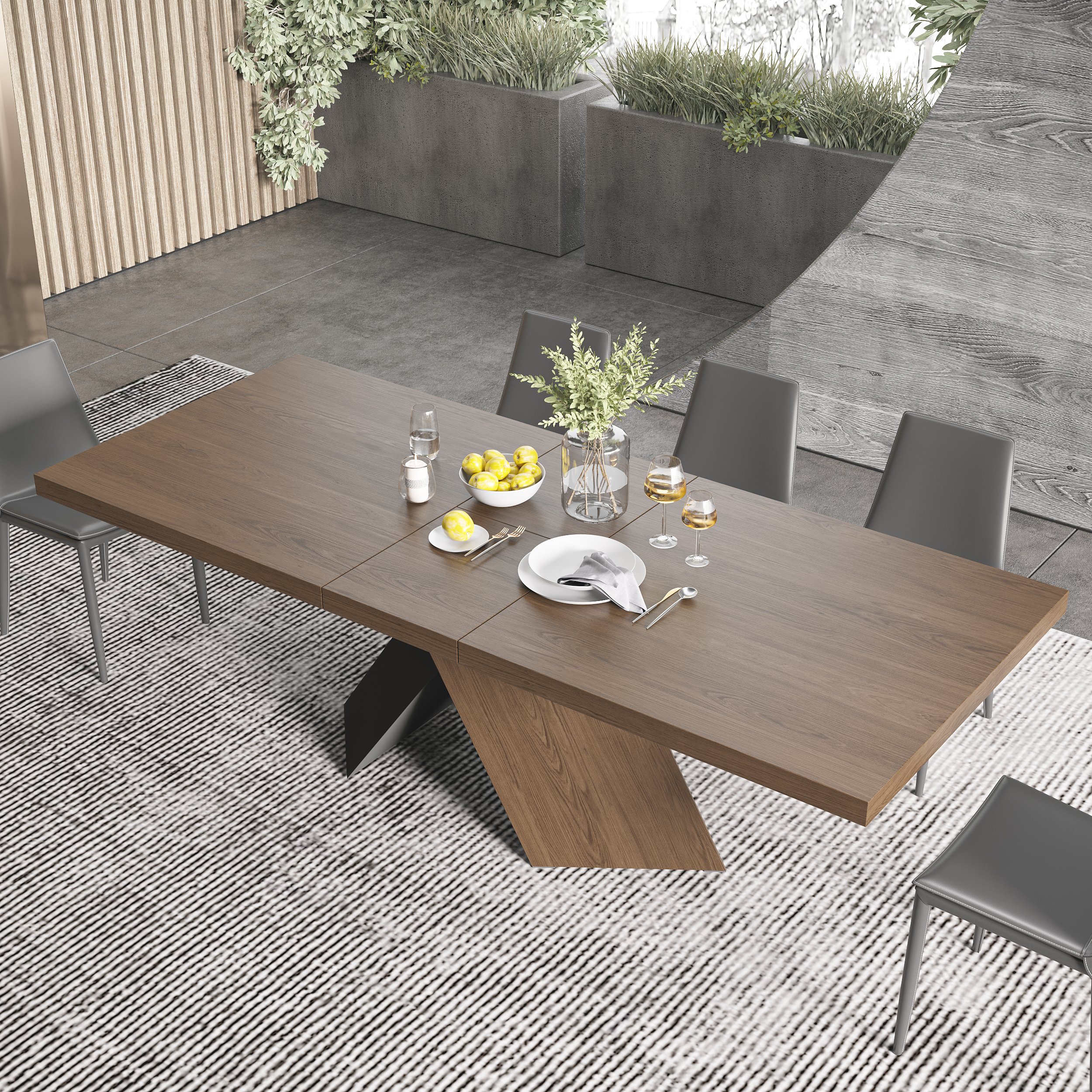
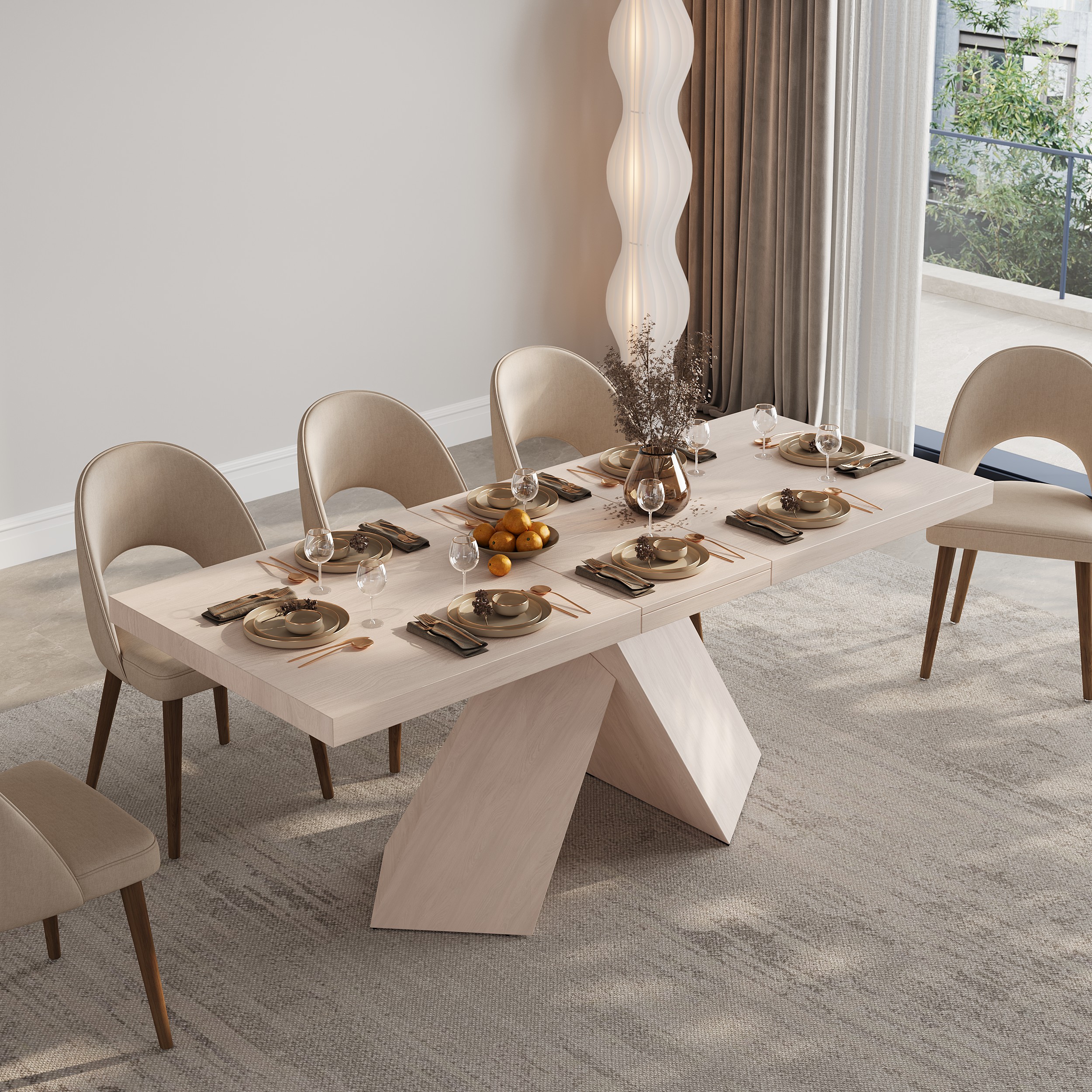
The Farmhouse 63”-79” Extendable Rectangular Whitewash Dining Table is a solid example of this finish done well. It’s currently listed at $1,189.99 (clearance price, down from $1,199.99), holds a 4.8-star rating across 55 reviews, and extends from 63 to 79 inches to seat 4 to 6 people, with the pale wash letting the wood-look grain still show through the tabletop.
Two-Tone: Painted Base, Stained Top
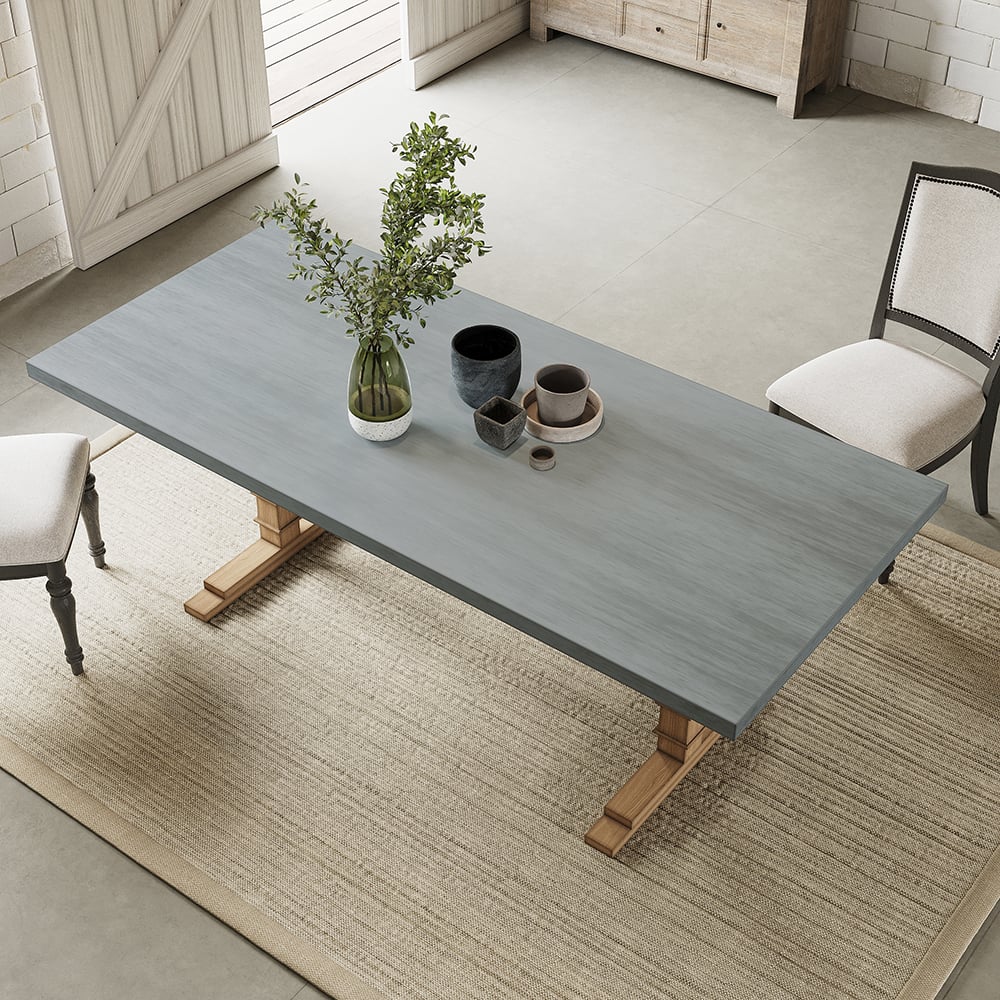
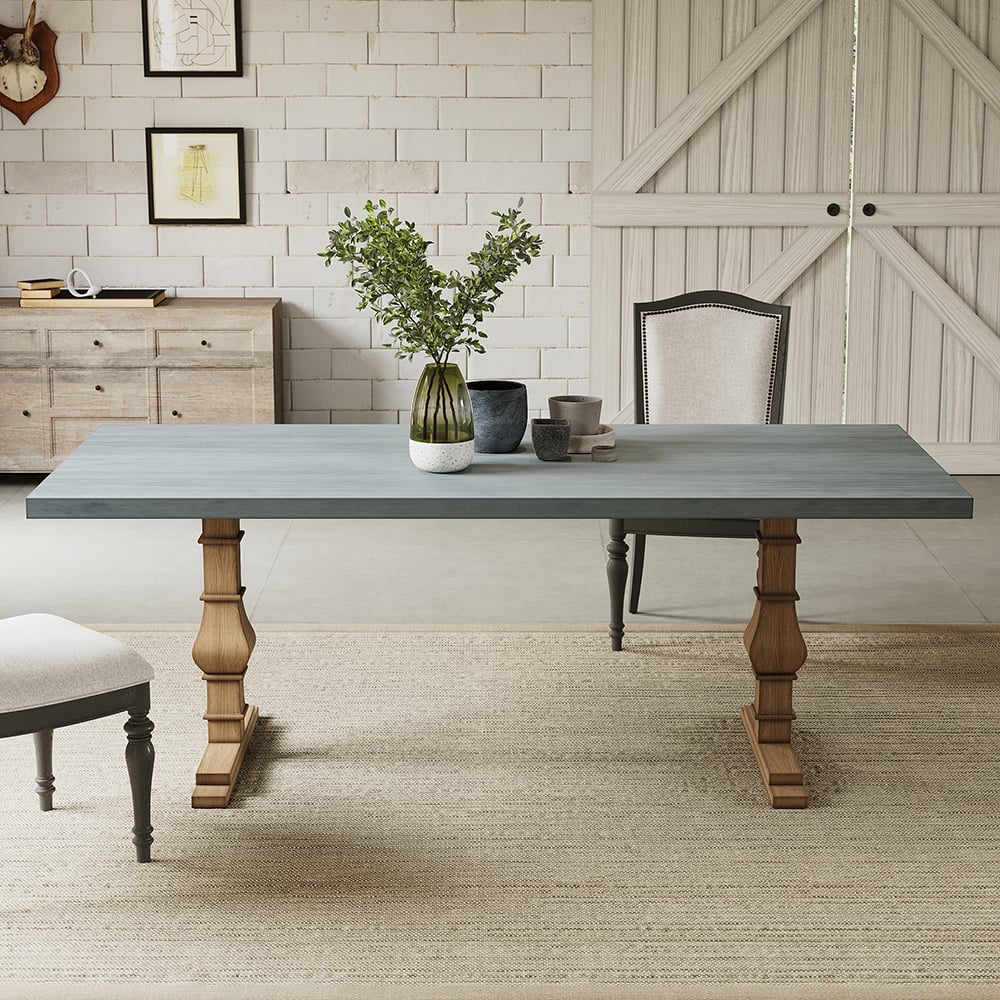
Two-tone is the finish you’ll see most often in modern farmhouse rooms right now. The base (legs, apron) gets a painted finish, usually white, black, or gray, while the tabletop keeps a natural or stained wood finish. It’s a deliberate contrast: solid color below, visible grain above.
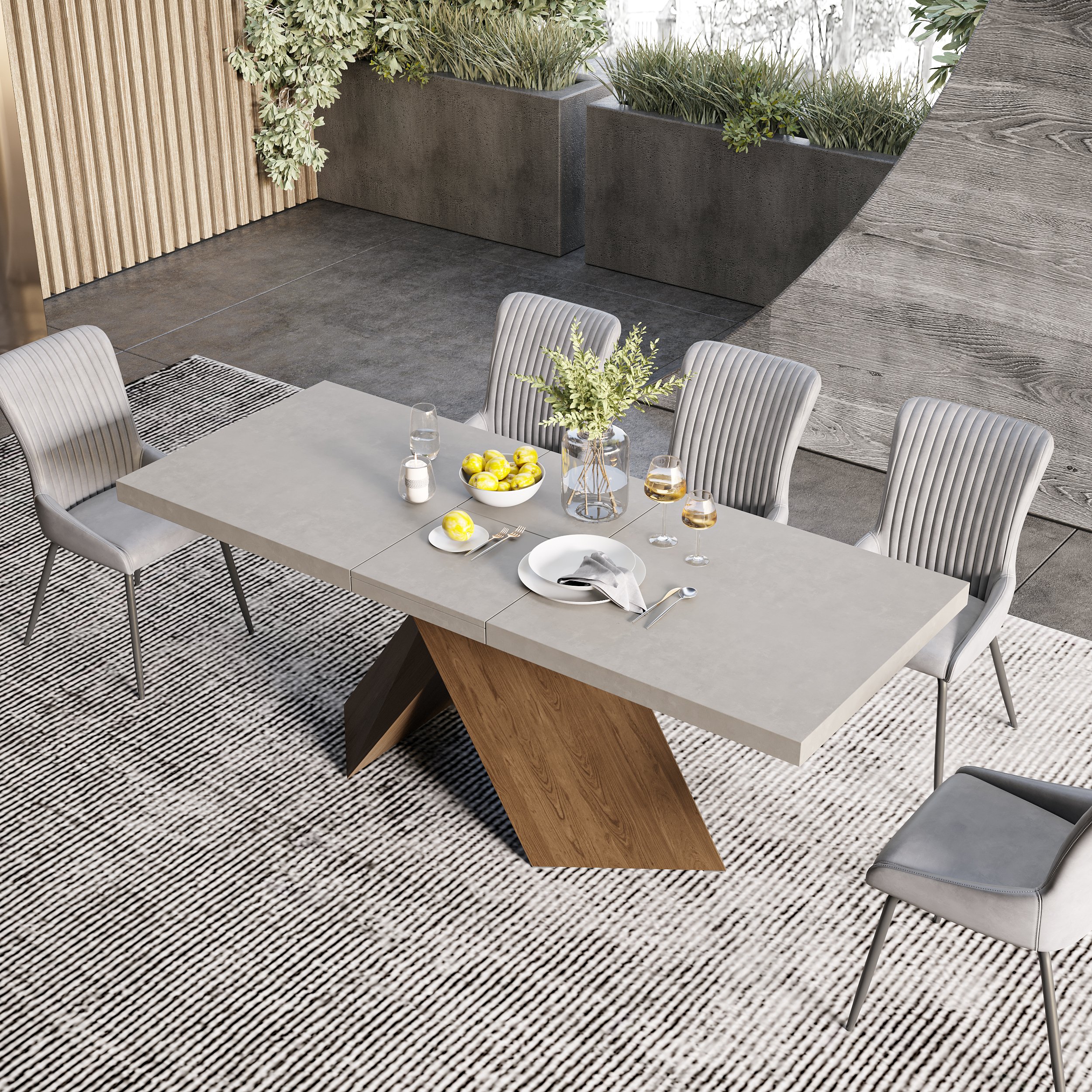
Durability: You get the best and worst of both finishes in one table. The tabletop, where most scratches and spills happen, has the more forgiving stained surface. The base, which takes fewer direct hits, carries the paint, which is more likely to chip on legs and corners from vacuum bumps and chair scrapes.
Maintenance: You’re managing two separate touch-up processes, a paint match for the base and a stain match for the top, instead of one. That is slightly more to keep track of than a single-finish table, but it also means most everyday tabletop wear can be handled with basic stain touch-up.
Room fit: This is the signature modern farmhouse combination. It pairs well with a mix of painted and wood furniture in the same room, and it tends to look intentional rather than mismatched, since the two-tone effect is the design, not an accident.
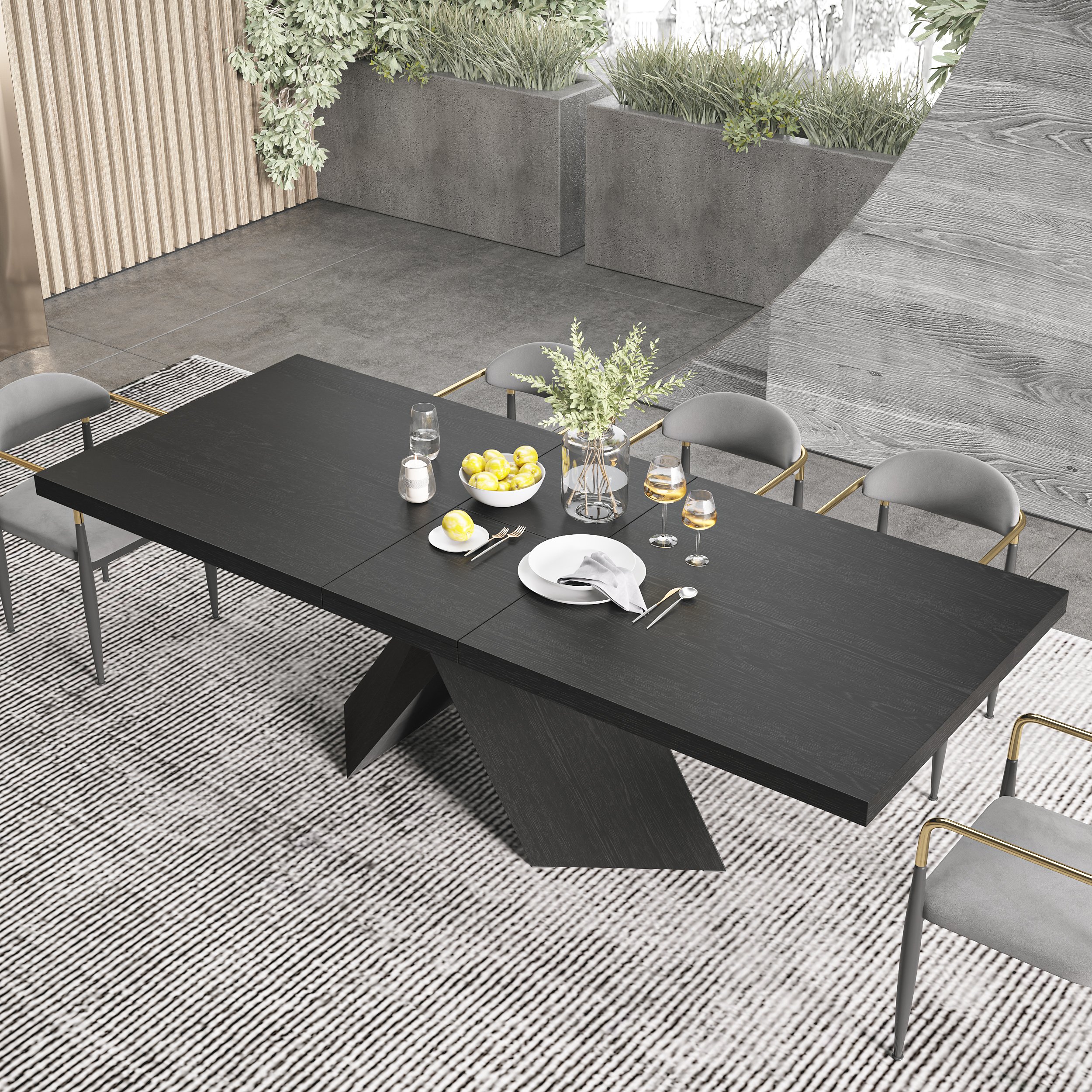
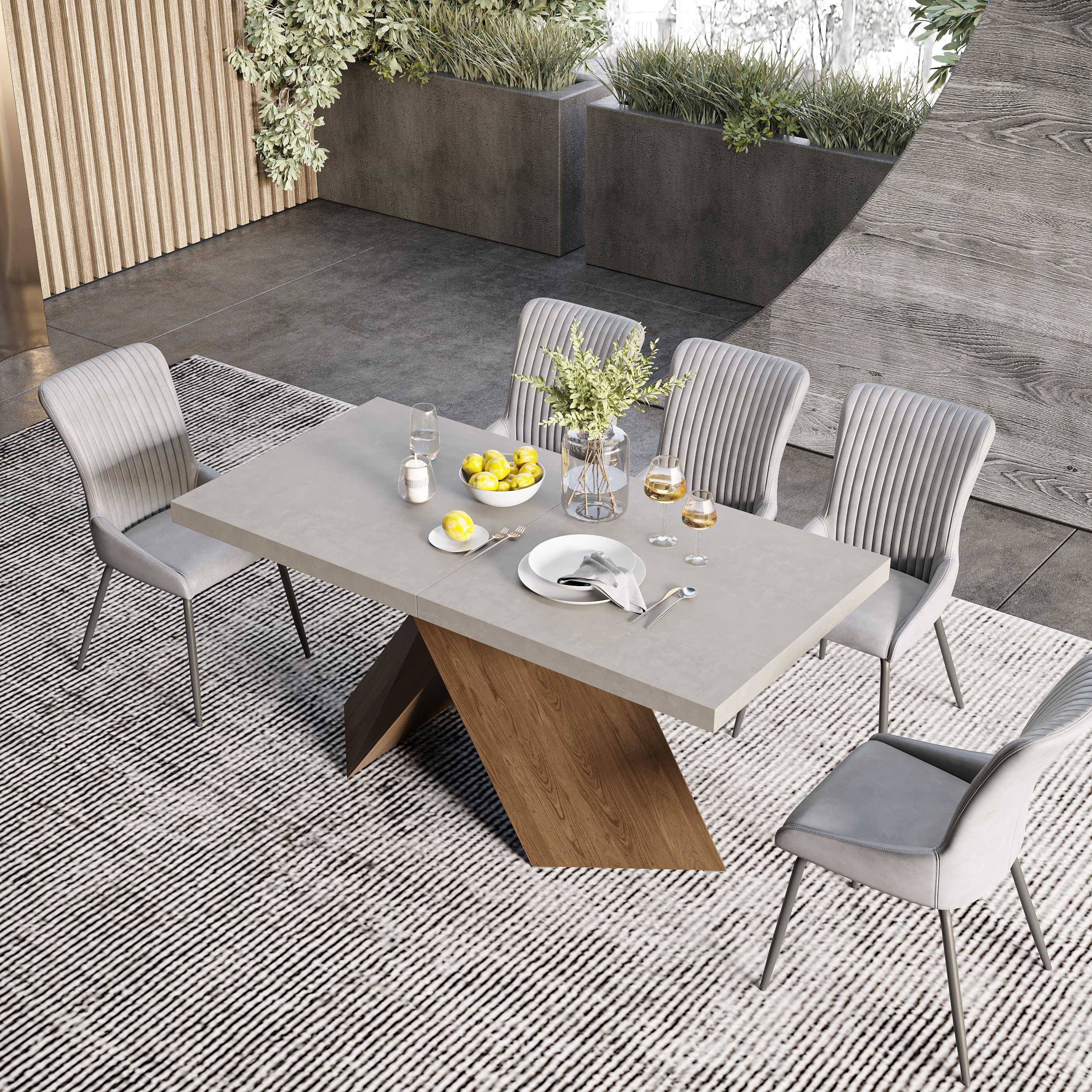
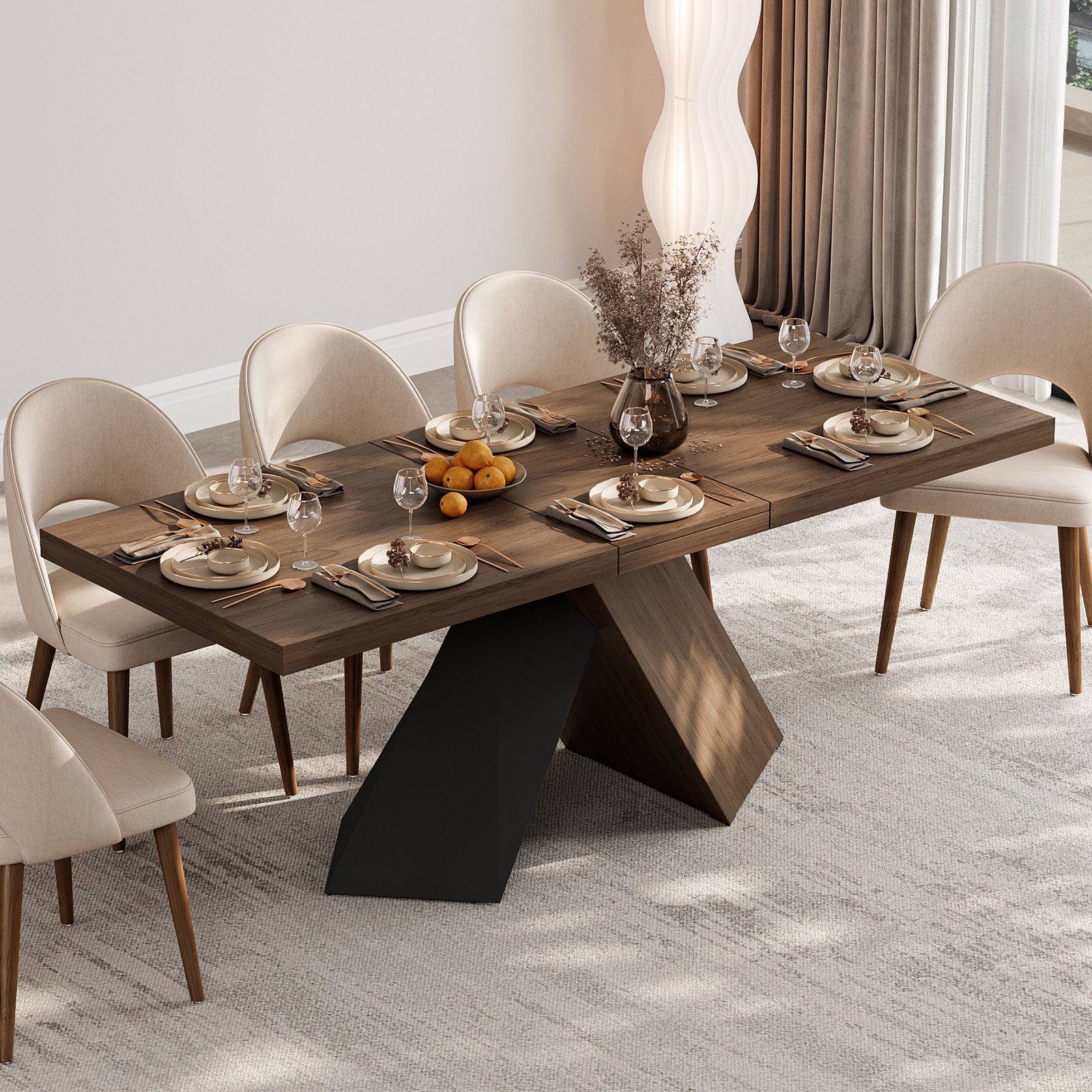
The Farmhouse 79”-94” Extendable Rectangular Concrete Gray Dining Table shows this combination with a gray-toned metal and engineered wood base under a wood-look tabletop. It’s priced at $1,599.99, rated 4.8 stars from 55 reviews, and extends to seat 6 to 8 people, which makes it a practical pick for a family that outgrows a fixed-size table.
Finish Comparison at a Glance
| Finish | Grain Visible? | Chip/Scratch Repair | Best Room Style | Example Table |
|---|---|---|---|---|
| Natural Stain | Yes, fully | Blends into existing grain | Traditional, rustic, cabin | Tintica Oval Walnut Table |
| Solid Paint | No | Easy paint dab touch-up | Cottage, coastal, bright farmhouse | (widely available in white, black, sage) |
| Whitewash | Yes, softly | Trickier to match wash + grain | Coastal, Scandinavian-farmhouse | Whitewash Extendable Table |
| Two-Tone | Yes, on top only | Two separate touch-up processes | Modern farmhouse | Concrete Gray Extendable Table |
How to Pick the Right One for Your Room
If you have young kids or expect heavy daily use, natural stain or a two-tone table (with the stained surface on top, where spills happen) tends to hide wear the best. If your dining room already leans bright and white, a solid painted table or a whitewash finish will match that palette instead of adding a heavier wood tone. If you’re not sure yet, two-tone is the safest middle ground: it works with both painted and wood furniture already in the room.
Key Takeaways
Stained wood shows the most grain and hides scratches best, since new marks blend into the wood pattern instead of standing out. Painted tables are easiest to spot-touch with matching paint but show chips more visibly on edges. Whitewash gives you an aged, translucent look, but the thin coat can wear faster in high-traffic spots. Two-tone tables combine a painted base with a stained top, which is why they’ve become the standard pick for modern farmhouse rooms.
If you’re shopping for a table now, look closely at where the finish sits (base vs. top) and how the seller describes the wear pattern, since that tells you more about long-term upkeep than the color alone.
FAQ
What is the most durable finish for a farmhouse dining table? Natural stain with a solid polyurethane topcoat is generally the most forgiving finish for daily use, since scratches tend to blend into the existing wood grain rather than showing as a stark mark. Two-tone tables with a stained top offer similar scratch resistance where it matters most.
Is whitewash the same as painting a table white? No. Whitewash is a thin, translucent wash (often mixed at roughly 2 parts paint to 1 part water) that lets the wood grain show through underneath. A solid white paint finish fully covers the grain and looks flatter and more uniform.
What is a two-tone dining table? A two-tone table pairs a painted base, usually white, black, or gray, with a stained or natural wood tabletop. It’s one of the most common finishes in modern farmhouse dining rooms because it blends painted and wood furniture styles in one piece.
Do painted farmhouse tables chip easily? Painted tables can chip at edges and corners from regular bumps, more visibly than a stained table would show similar wear. The upside is that touch-ups are simple: a small dab of matching paint usually covers a chip in minutes.
Which finish hides scratches best? Stained wood finishes hide scratches best because new marks tend to blend into the existing grain and color variation. Solid paint finishes show scratches and chips more clearly since the surface color is flat and uniform.
Can I whitewash a stained farmhouse table myself? Yes, whitewashing over an existing stain is a common DIY project. It typically involves lightly sanding the surface, then applying a thinned white paint mixture and wiping back some of it before it dries so grain still shows through.
What color base works best with a stained wood top? White and black are the most common base colors paired with a stained top, since both create clean contrast without competing with the wood tone. Gray bases, like the concrete gray finish seen on extendable farmhouse tables, are also popular for a softer look.
Is a two-tone table more expensive than a single-finish table? Not necessarily. Pricing depends more on materials, table size, and brand than on whether the finish is one color or two. Extendable two-tone tables in the $1,200 to $1,600 range are common at the same price point as single-finish stained or whitewash tables of similar size.
How do I clean a whitewashed dining table without damaging the finish? Use a soft, slightly damp cloth and a mild, non-abrasive cleaner, then dry the surface right away. Avoid harsh chemical cleaners or excessive scrubbing, since the thin wash coat is more delicate than a full paint or stain layer.
What farmhouse table finish is trending in 2027? Two-tone finishes, especially a painted or gray-toned base with a natural or walnut-stained top, continue to be the most requested look in modern farmhouse dining rooms, based on current furniture retailer offerings and design coverage.