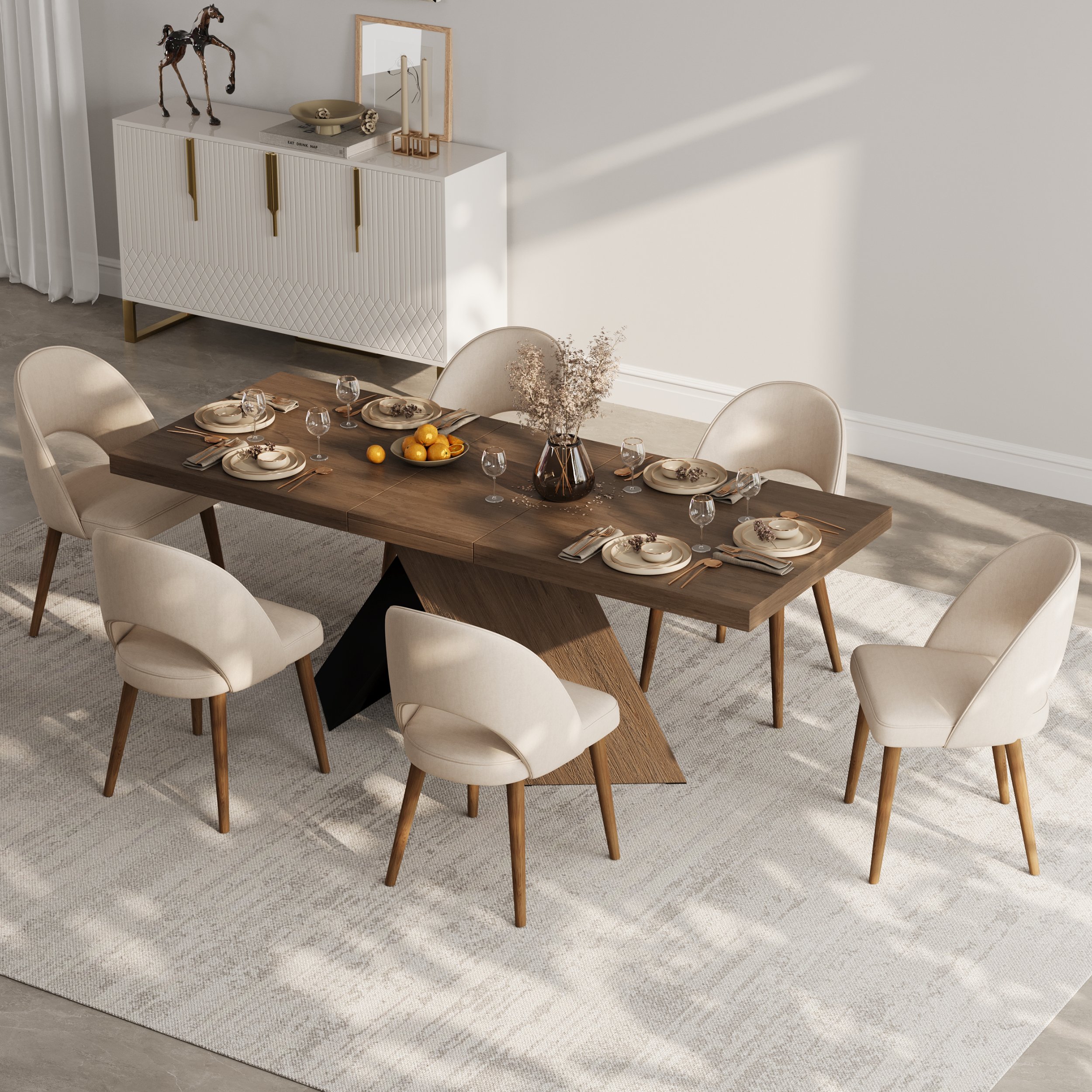
A friend of mine measured her dining room wall, ordered a farmhouse table that fit “perfectly,” and then couldn’t pull a chair out far enough to sit down without bumping the buffet behind it. The table was the right size. The room math was wrong. That gap between “fits the room” and “works in the room” is where most dining table purchases go sideways.
The most common farmhouse dining table buying mistakes are: choosing a size based on the room alone instead of chair clearance, skipping delivery measurements, picking a finish that can’t handle daily life, misjudging real seating capacity, buying a table and chairs separately without checking the heights match, underestimating extension leaf storage and weight, and not checking the return policy before buying online. Each one is fixable if you catch it before you order.
Here’s how to spot and avoid each one.
Mistake 1: Buying a Table That’s Too Big or Too Small for the Room
People measure the room, then measure the table, and assume that’s the whole job. It isn’t. The real question is how much space is left once the chairs are pushed in and pulled out.
The standard rule: leave 36 to 48 inches of clearance between the table edge and the nearest wall or furniture piece. That gives room to sit down, stand up, and walk behind someone who’s seated, without anyone getting bumped mid-meal.
If your dining area is tight, measure the full width of the room first, subtract 36 to 48 inches on each side the table needs clearance, and whatever is left is your real table size limit. Not the other way around.
A quick trick: lay painter’s tape on the floor in the exact footprint of the table you’re considering, plus taped outlines of pulled-out chairs. Walk through the space for a day. If you’re squeezing past a chair to get to the kitchen, size down or reconsider the shape.
Mistake 2: Not Measuring Doorways and Hallways Before Delivery
The table fits the room. Great. Can it get to the room?
Farmhouse tables are usually one solid slab top, and solid wood doesn’t bend around a hallway corner. Before you buy, measure the width of every doorway, hallway, and stairwell turn between the front door and the dining room. Measure the diagonal too, since that’s often the tightest point when a mover has to angle a tabletop through a doorway.
Check the table’s listed dimensions against your narrowest doorway, not your widest one. If the tabletop is over 40 inches wide and your hallway turns are under 36 inches, ask the retailer whether the table ships with a removable or detachable top and base. Many extendable farmhouse tables often ship in separate pieces for this reason.
Mistake 3: Choosing a Finish That Won’t Survive Real Life
A raw, light-washed farmhouse top looks great in photos. It also shows every water ring, crayon mark, and scratch within a month if you have young kids or you host often.
Match the finish to how the table actually gets used, not how it looks in a showroom:
| Household Situation | Better Finish Choice | Why |
|---|---|---|
| Young kids, frequent spills | Sealed matte or satin finish, darker wood tones | Hides scuffs and water marks better than raw or bleached wood |
| Frequent entertaining | Stain-resistant sealed top | Withstands wine, sauce, and hot dishes without staining |
| Minimal daily wear (formal dining only) | Raw or whitewashed finish | Aesthetic can take priority since use is lighter |
| Humid climate or near exterior doors | Solid wood with a moisture-resistant sealant | Reduces warping and swelling over seasons |
Ask before buying whether the finish is sealed or raw, and whether the manufacturer recommends a specific cleaner. If the answer is “just wipe it down,” that’s a sealed finish. If they mention conditioning oil or special care instructions, that’s a raw or lightly treated finish that will show wear faster.
Mistake 4: Ignoring Seating Math (“Seats 6” Doesn’t Always Mean 6 Comfortably)
Listings say “seats 6” based on table length divided by a minimum chair width, not on what’s comfortable for an actual dinner. Give each diner about 24 inches of table edge as a bare minimum, and 26 to 30 inches if you want elbow room for a real meal, not just a squeeze.
A 60 inch table technically “seats 6” at 20 inches per person, but that’s tight even for a fast weeknight dinner, and it gets worse with wide farmhouse-style dining chairs, which commonly run 20 to 24 inches wide including armrests.
Before trusting a “seats X” claim, do the math yourself: table length divided by the actual width of the chairs you plan to use. If the number is under 24 inches per seat, plan for fewer people at that table than the listing promises, or choose a longer or extendable option.
Mistake 5: Buying Chairs and Table Separately Without Checking They Actually Fit Together
Mixing and matching a table from one retailer and chairs from another is common, and it’s where height mismatches sneak in. The standard gap you want between the underside of the tabletop and the top of the chair seat is 10 to 12 inches. Too little and knees hit the table. Too much and the chair feels like a booster seat.
Most dining tables sit around 28 to 30 inches tall. Most dining chair seats sit around 17 to 19 inches high. If you’re buying separately, check both numbers and do the subtraction before you order either piece; don’t assume “standard height” on both sides means they’ll match.
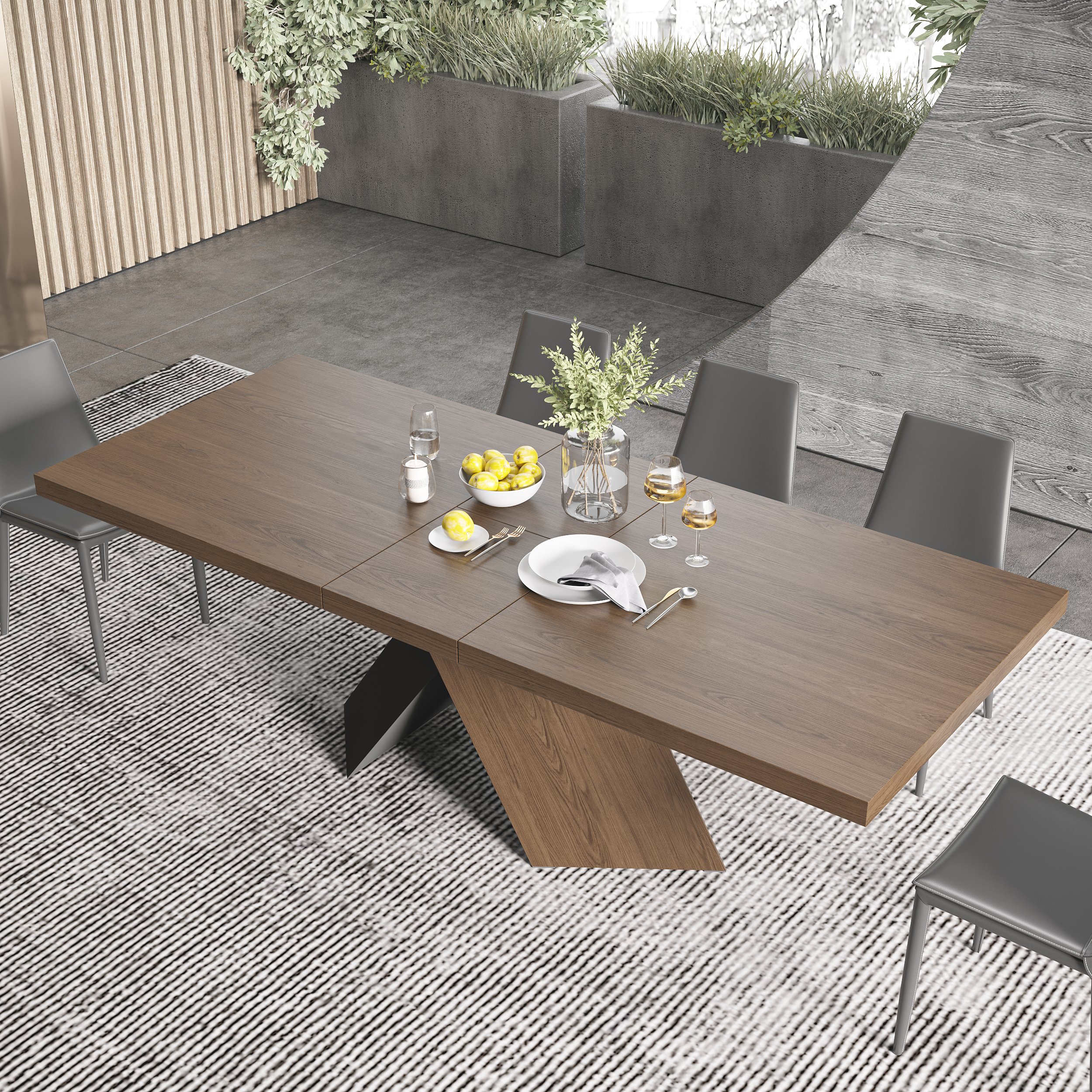
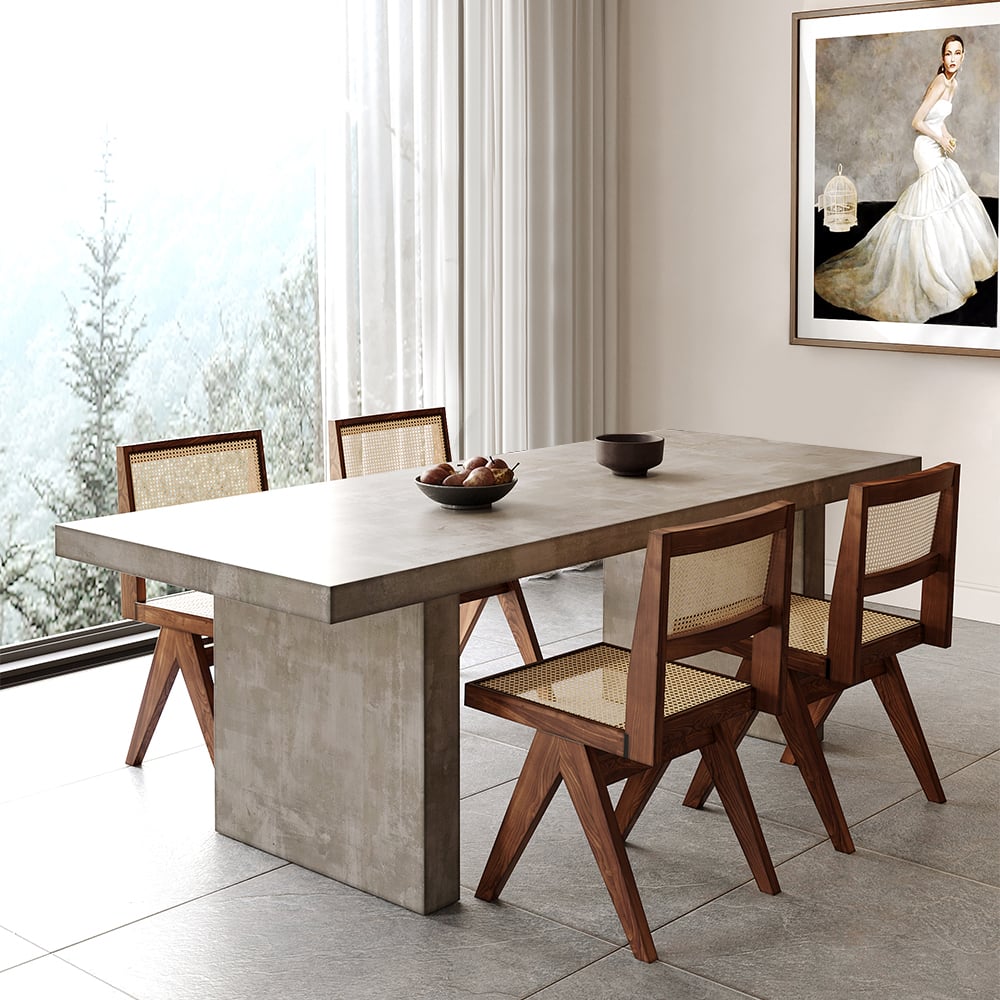
If you’d rather skip the math, a pre-matched dining set removes the guesswork. Homary’s 64” to 80” extendable walnut dining table with 6 chairs is sold as a set so the clearance between seat and tabletop is already correct, which is one less measurement to worry about.
Mistake 6: Underestimating the Extension Mechanism (Weight and Leaf Storage)
Extendable farmhouse tables solve the “not enough seating for holidays” problem, but people rarely think through two practical issues before buying: how heavy the table is to extend, and where the removable leaf lives the rest of the year.
Solid wood and metal-based farmhouse tables are heavy by design; that’s part of the aesthetic. Some extension mechanisms need two people to pull the top apart and lock the leaf in. Others use a self-storing leaf that folds and slides under the tabletop, which avoids the “where do we keep this giant board 11 months a year” problem entirely.
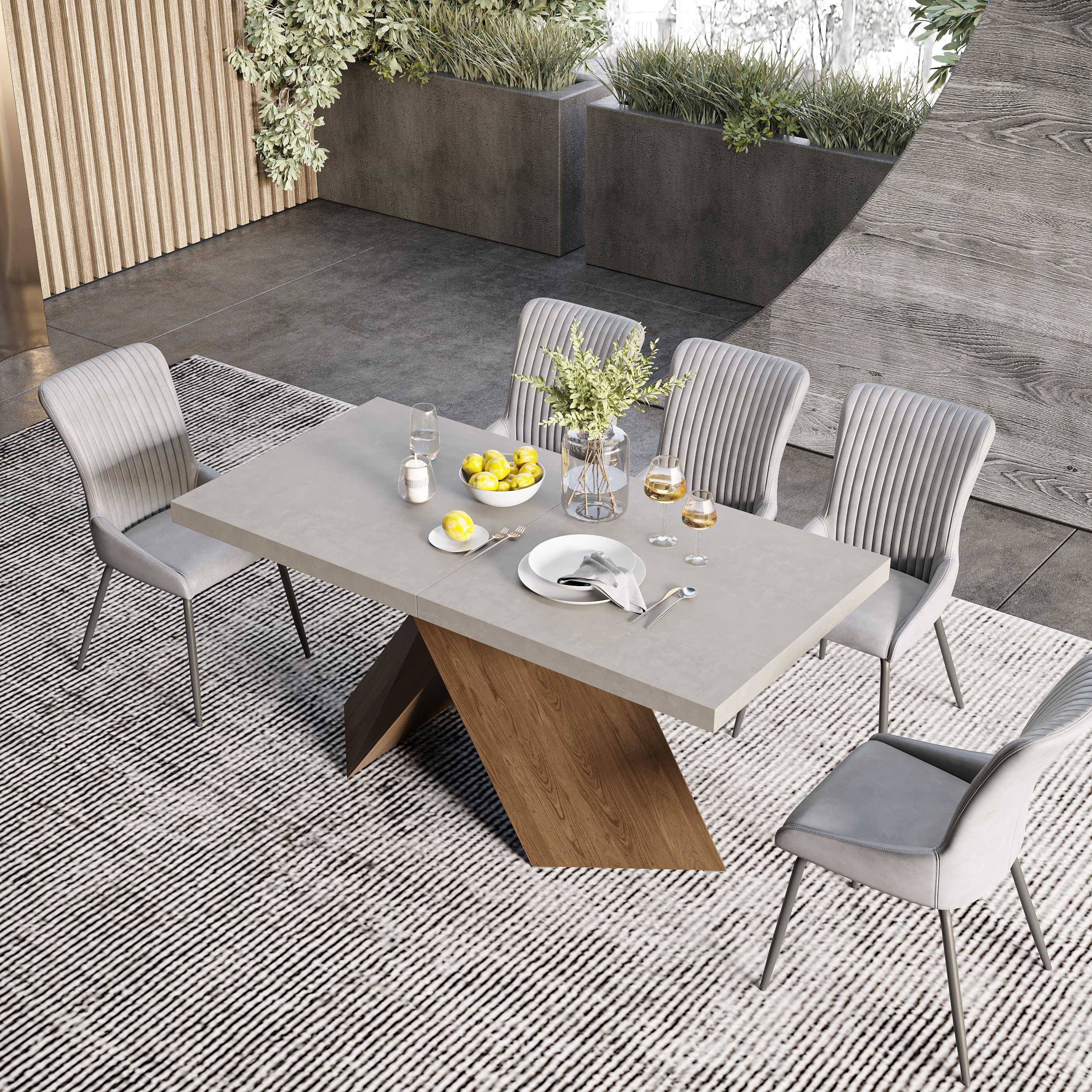
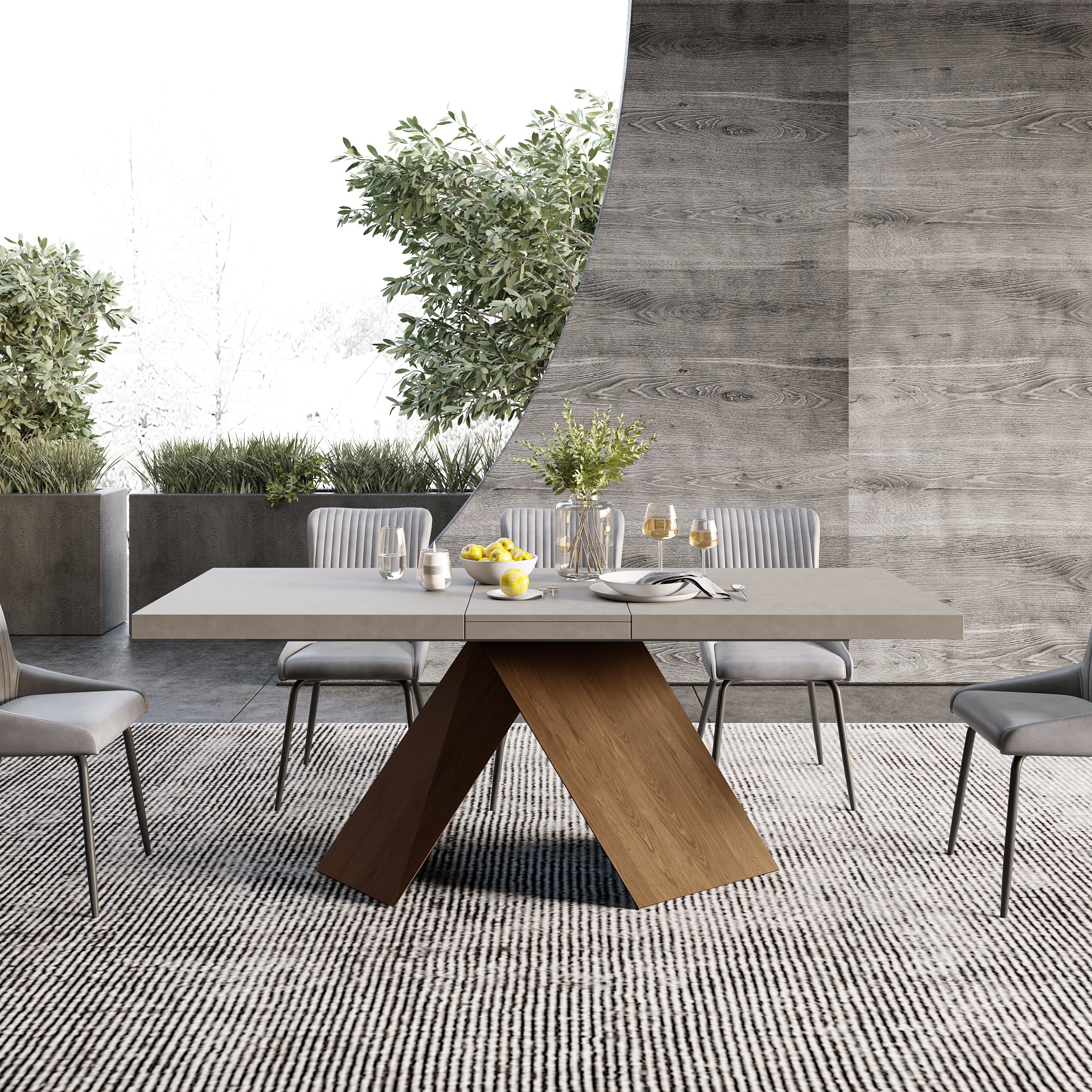
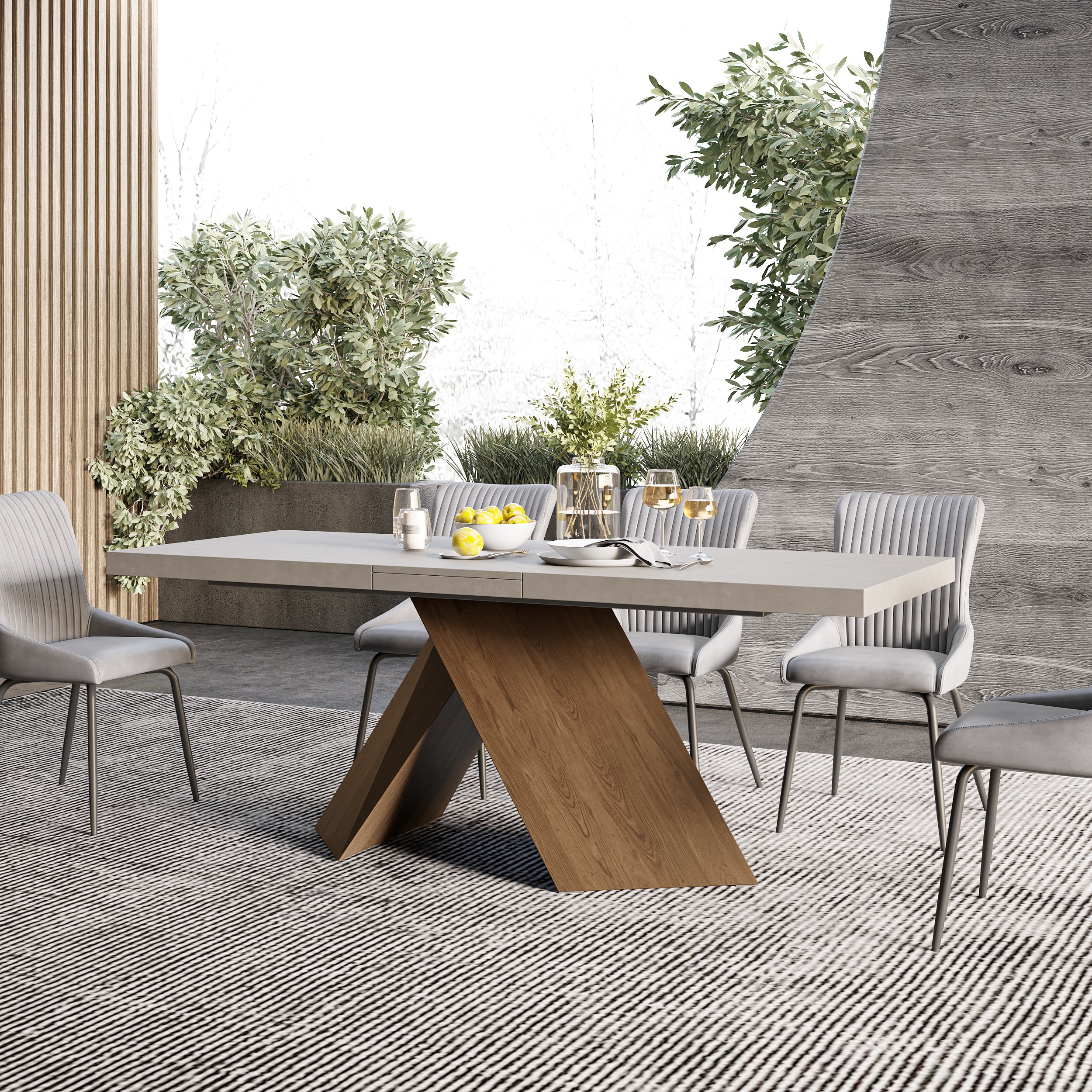
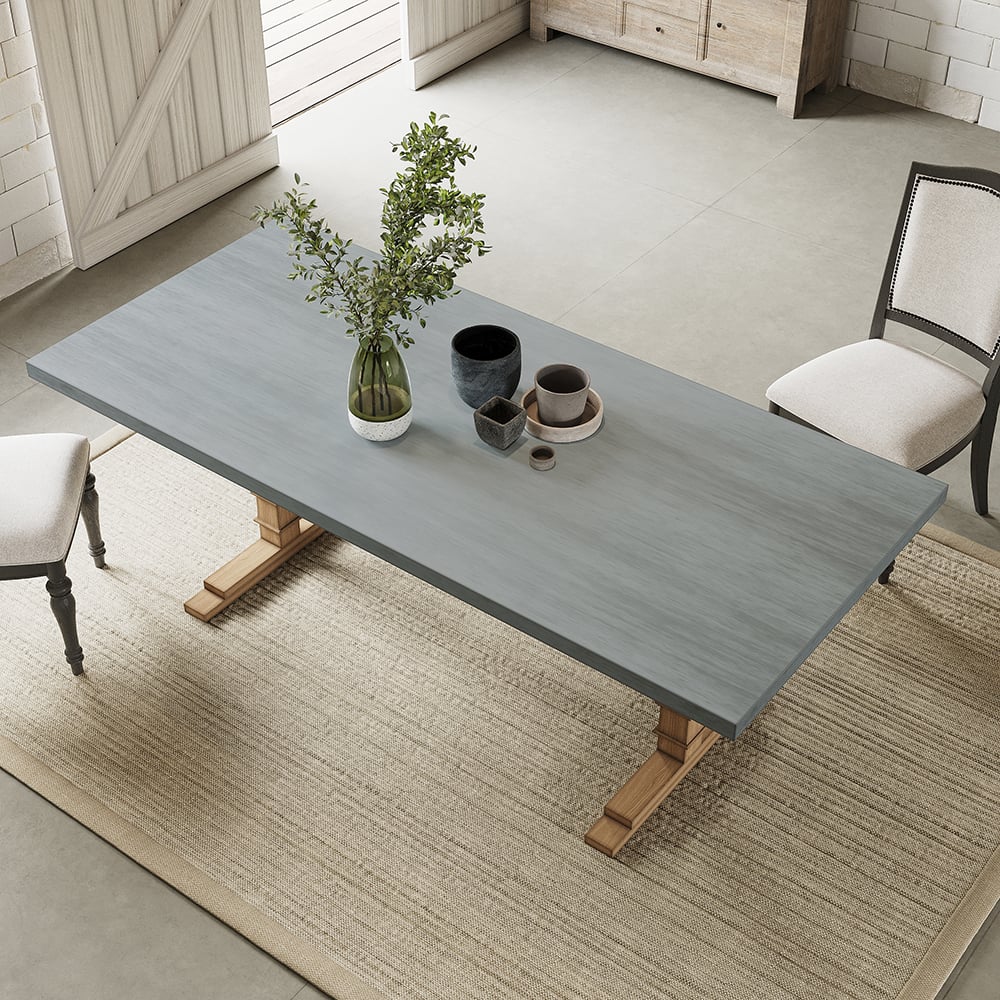
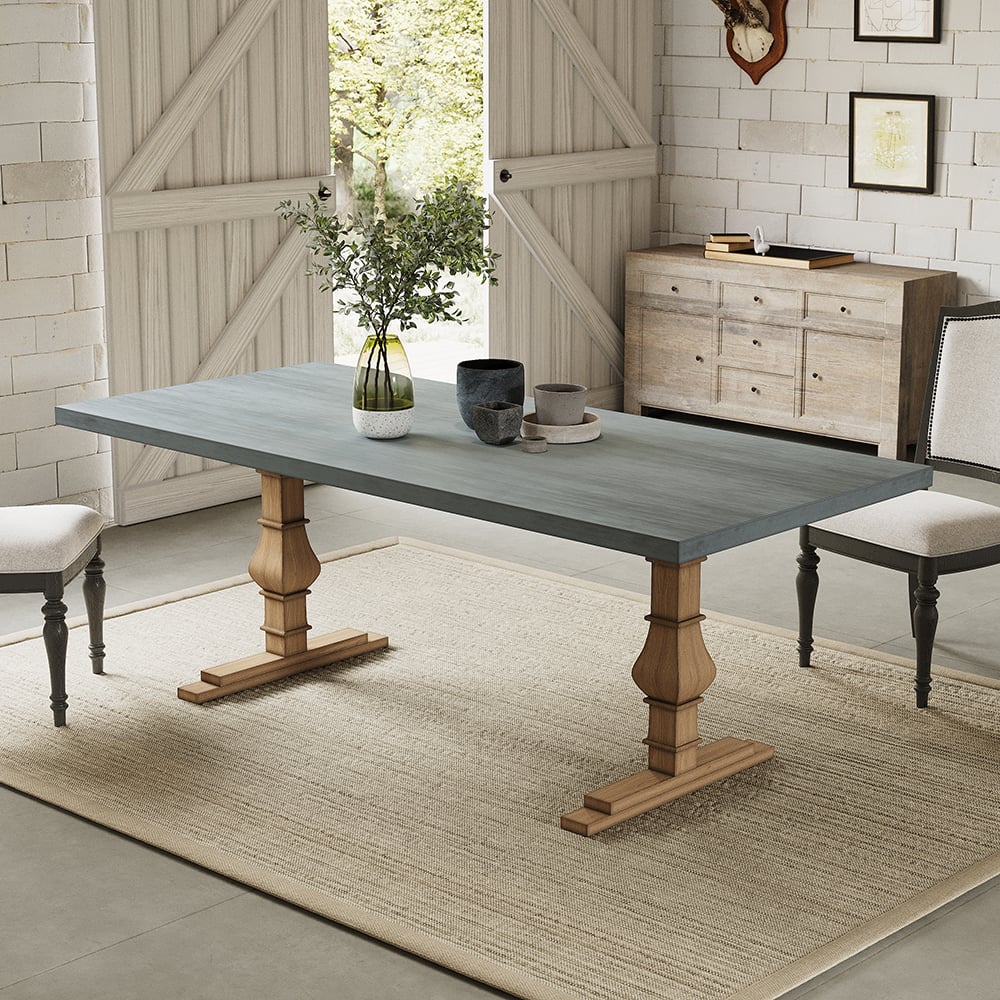
Homary’s Farmhouse 63” to 79” Extendable Dining Table (concrete gray top, 4.8 stars from 55 reviews) and its walnut counterpart (4.8 stars from 56 reviews) both use a self-contained extension design, so there’s no separate leaf to store in a closet. If you’re short on storage space, ask whether the leaf is self-storing before you buy, since plenty of extendable tables still require you to store a separate board somewhere in the house.
Mistake 7: Skipping the Return and Assembly Policy Before Buying Online
Furniture bought online arrives boxed, and farmhouse tables in particular often need base assembly, leg attachment, or leaf mechanism setup before first use. Two things to check before you click buy:
- Assembly requirements. Does the table arrive fully built, or does it need tools and two people? Heavy solid tops are hard to flip and assemble solo.
- Return window and condition rules. Large furniture often has a shorter return window than small goods, and some retailers charge a return shipping fee for oversized items, or won’t accept a return once the table has been assembled.
Read the shipping and returns page for the specific retailer before ordering, not after the box arrives with a hairline crack in the top. If a table doesn’t list clear return terms on the product page, that’s worth a message to customer service before you buy, not after.
Key Takeaways
- Clearance matters more than the table’s raw dimensions. Leave 36 to 48 inches from table edge to wall, and use painter’s tape to test the layout before you buy.
- “Seats 6” is a marketing number. Do the math yourself at 24 to 30 inches per person using your actual chair width.
- If buying table and chairs separately, check the 10 to 12 inch gap between chair seat and tabletop before ordering either piece.
- Check assembly and return policy on the product page, and measure your narrowest doorway before you fall in love with a table that can’t get inside.
If you’re shopping now, start with the room measurements and the doorway check first. Everything else on this list is easier to fix than a table that’s stuck in your hallway.
FAQ
How much space do you need around a dining table? Leave 36 to 48 inches of clearance between the table edge and the nearest wall or furniture. Use the lower end (36 inches) if no one needs to walk behind seated diners regularly, and the higher end (44 to 48 inches) if the space doubles as a walkway to the kitchen or another room.
What size dining table seats 6 people comfortably? A rectangular table between 60 and 78 inches long generally works for 6, but check the real chair width you’re using and aim for 24 to 30 inches of table edge per person rather than trusting the listing alone.
How do I know if my dining table will fit through my door? Measure your narrowest doorway and hallway turn, including the diagonal, and compare it to the table’s widest single piece (usually the tabletop). If the tabletop is wider than your tightest doorway, ask the retailer if the base and top ship separately.
What is the standard height for a dining table and chairs? Most dining tables are 28 to 30 inches tall, and most dining chair seats sit 17 to 19 inches high. Aim for a 10 to 12 inch gap between the two for comfortable knee clearance.
Is an extendable dining table worth it for a small family? Yes if you host occasionally or expect your household to grow. An extendable table lets you keep a smaller footprint daily and add seating only when needed, without buying a second table later.
Do farmhouse dining tables scratch easily? It depends on the finish. Raw or lightly treated wood shows scratches and water marks faster than a sealed matte or satin finish. If you have kids or host often, a sealed finish holds up better over time.
How do I store the leaf for an extendable table? Some extendable tables have a self-storing leaf that folds or slides under the tabletop, so there’s nothing separate to store. Others come with a removable leaf that needs a closet or under-bed storage space. Check this before buying if storage is limited.
Can I buy a dining table and chairs from different brands? Yes, but check the heights match first. Confirm the table height, subtract the chair seat height, and make sure the result is 10 to 12 inches before ordering either piece separately.
What’s the return policy usually like for furniture bought online? It varies by retailer, but large furniture often has a shorter return window than small items, and some charge return shipping fees for oversized pieces or restrict returns once a table has been assembled. Always check the specific product’s shipping and returns page before ordering.
How heavy are farmhouse dining tables? They tend to be heavier than modern minimalist tables because of solid wood tops and substantial metal or wood bases. This is part of the sturdy farmhouse look, but it also means extension mechanisms may need two people to operate and the table itself is harder to move once placed.