Ten years ago most families pushed a bench against the wall and used it for storage overflow. Now it sits at the head of the dining room, paired with a solid wood farmhouse table, doing the job of two or three chairs at once. That shift is not just a design trend. It is a math problem homeowners keep running into when they try to seat six or eight people around a table built for four.
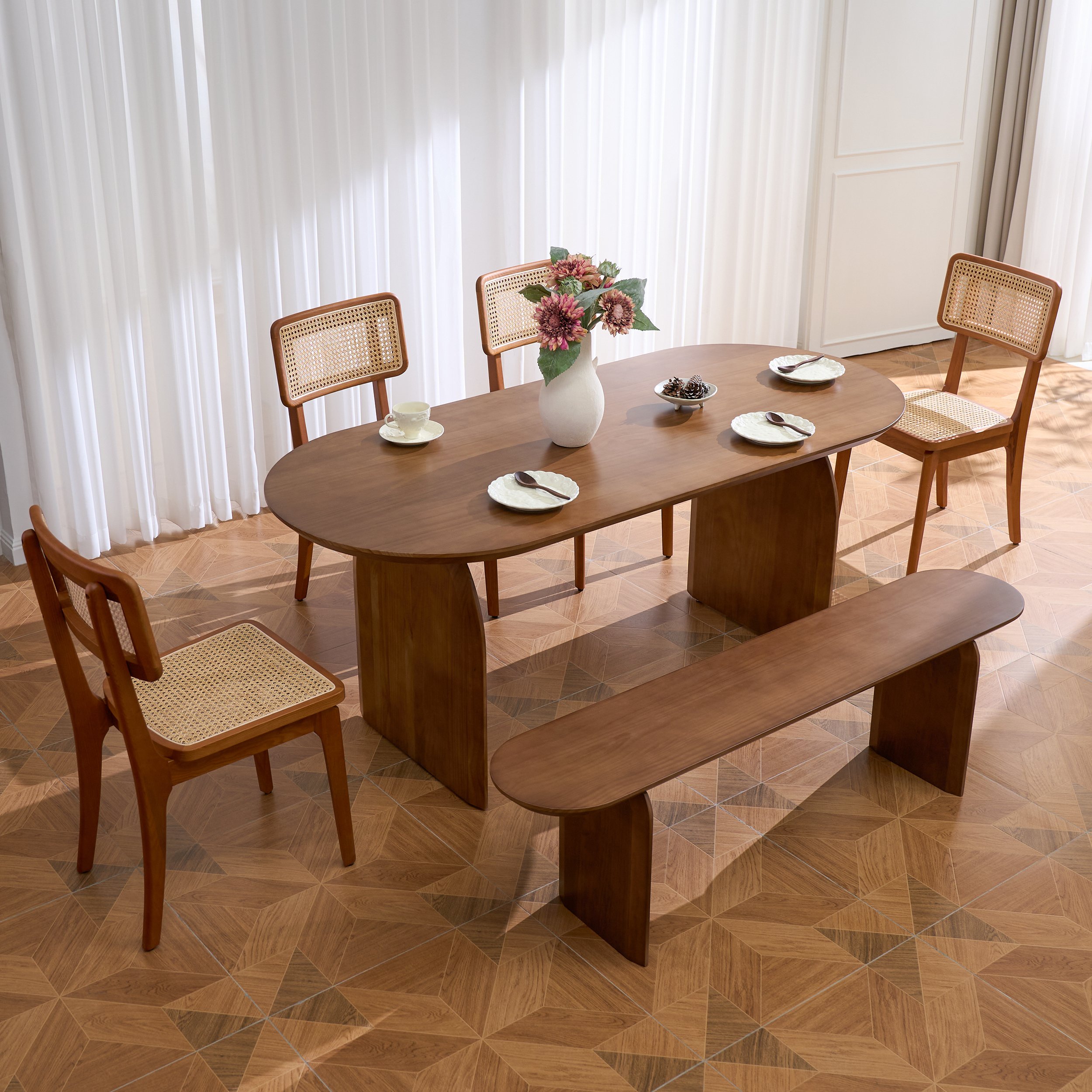
A farmhouse dining table with a bench is exactly what it sounds like: a rectangular wood table, usually with a pedestal or trestle base, paired with a backless wooden bench on one or both long sides instead of individual chairs. The bench fits more people per foot of table length, slides under the tabletop when not in use, and gives the room a casual, family-style look. Chairs typically still fill the ends or the opposite side.
This guide walks through when a bench makes sense, when it does not, how to mix benches with chairs, and what to actually buy.
Why Bench Seating Fits the Farmhouse Look
Farmhouse style grew out of working kitchens and big families, where the table had to flex from breakfast for two to a holiday meal for ten. A long bench does that better than a matching set of six chairs ever could.
It fits more people per linear foot. A bench typically seats about 1.5 to 2 times as many people per linear foot compared to individual chairs. Chairs need room for arms, legs, and frames, so you usually budget 24 inches of table length per chair. A bench lets people sit shoulder to shoulder with just 18 to 20 inches each, sometimes less for kids. On a 72 inch table side, that is the difference between fitting 3 chairs or 4 to 5 people on a bench.
It reads casual and family-friendly. A row of chairs looks formal, almost like a boardroom. A bench looks like Sunday dinner. Guests scoot over, kids pile in next to parents, and nobody worries about pulling out a heavy chair.
It works well for kids. Toddlers and young kids can be lifted onto a bench and boxed in by an adult on either side, which is safer than a single chair they might tip. Benches also survive spills, climbing, and kicked feet better than upholstered dining chairs.
It tucks away. A backless bench slides completely under the table when the room needs floor space, which matters in smaller dining areas or open-concept layouts where the table doubles as a homework station.
The Real Tradeoffs
Bench seating is not a free upgrade. A few things get harder once you commit to one.
No back support. This is the biggest complaint people have after living with a bench for a few months. Long meals get uncomfortable without something to lean on. Some people solve this by pushing the bench close to a wall, but that limits where the table can go in the room.
Getting in and out is harder. Anyone with a hip replacement, bad knees, or general mobility limits will struggle more with a bench than a chair with arms to push off. Older relatives at a holiday dinner may quietly avoid the bench side altogether, which defeats the point of the extra seating.
Seating math gets fuzzy. A table “seats 6” with chairs, but that number changes once you swap one side for a bench. You might fit 3 more people on the bench side, but only if they are willing to sit close. Families with teenagers or larger adults should measure actual hip room, not just divide the table length by 18 inches.
No individual scooting. With chairs, one person can slide back to grab a serving dish. On a bench, that usually means everyone on that side has to shift.
Bench vs. Chairs: Quick Comparison
| Factor | Bench | Chairs |
|---|---|---|
| People per linear foot | Higher (about 1.5x to 2x chairs) | Lower, roughly 1 per 24 inches |
| Back support | None, unless against a wall | Yes |
| Ease for elderly or limited mobility | Harder to get in and out | Easier with arms to push off |
| Storage / floor space | Tucks fully under table | Takes up floor space when pulled out |
| Good for kids | Yes, easy to fit more, safer than tipping a chair | Fine, but needs a booster for small kids |
| Formality | Casual | More formal, especially with arms |
| Price per seat | Usually cheaper than buying 3 to 4 matching chairs | Adds up fast for 6 to 8 seats |
How to Mix Bench and Chairs
Most farmhouse dining rooms do not go all-bench. The common setup is a bench on one long side (often the one against a wall) and chairs on the other side and both ends. This gives you the best of both worlds: extra capacity where you need it, and back support and easy access for the people who want it.
A few rules of thumb:
- Put the bench on the wall side. It solves the no-back problem for anyone sitting close to the wall and keeps the walking path on the chair side clear.
- Keep bench height matched to the table. Standard dining table height is 30 inches, and a bench should sit around 18 inches, the same as a standard dining chair seat height. Mismatched heights look off and feel worse to sit in.
- Use chairs with arms at the ends for older guests or anyone who needs help standing up.
- If you have young kids, put them on the bench between two adults rather than at the end.
Table Shape and Base Matter
Benches work best with rectangular tables, not round or oval ones. A long straight edge is what makes the “sit close together” math work, and round tables do not have a flat run of edge long enough for more than two or three people.
The base matters too. A table with four individual legs at the corners gets in the way of bench seating, since someone’s knees end up fighting a table leg. A pedestal base (one central column) or a trestle base (two end supports) keeps the space under the table open, so the bench can seat people at any point along its length without a leg blocking anyone.
Product Example Worth a Look
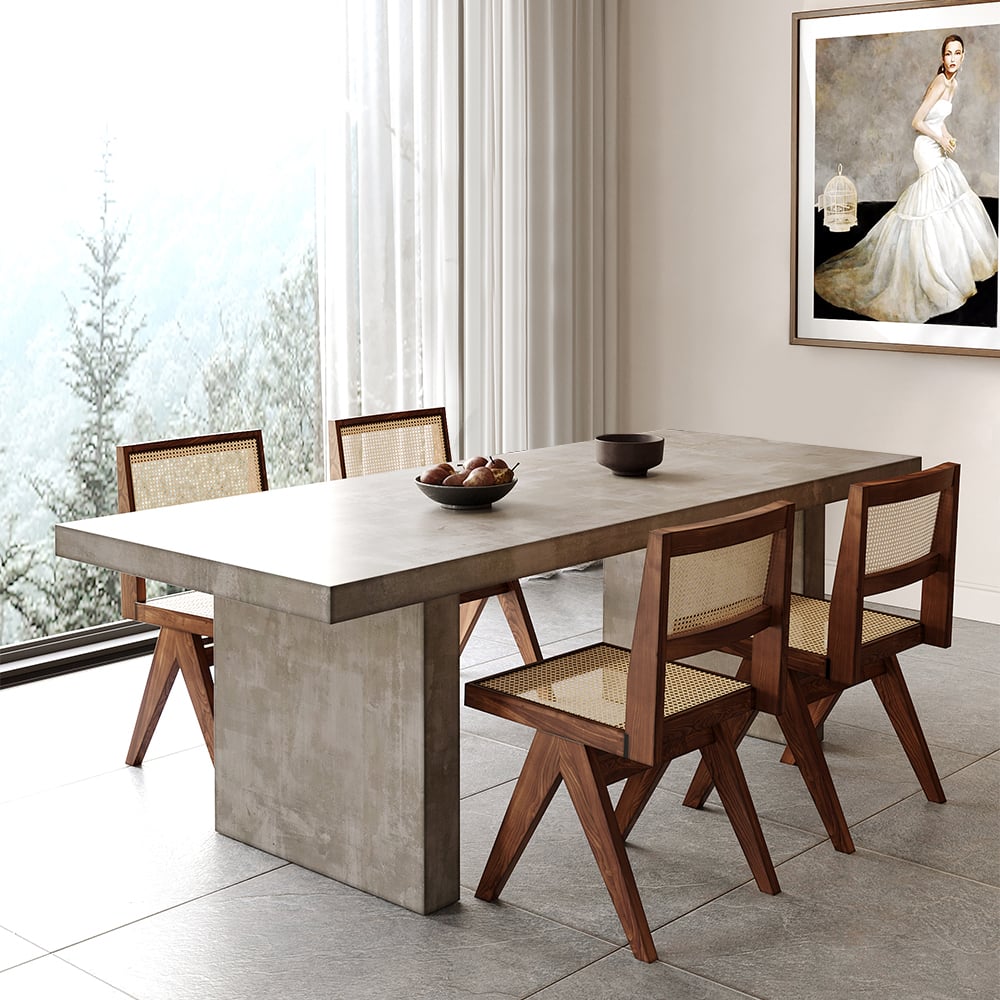
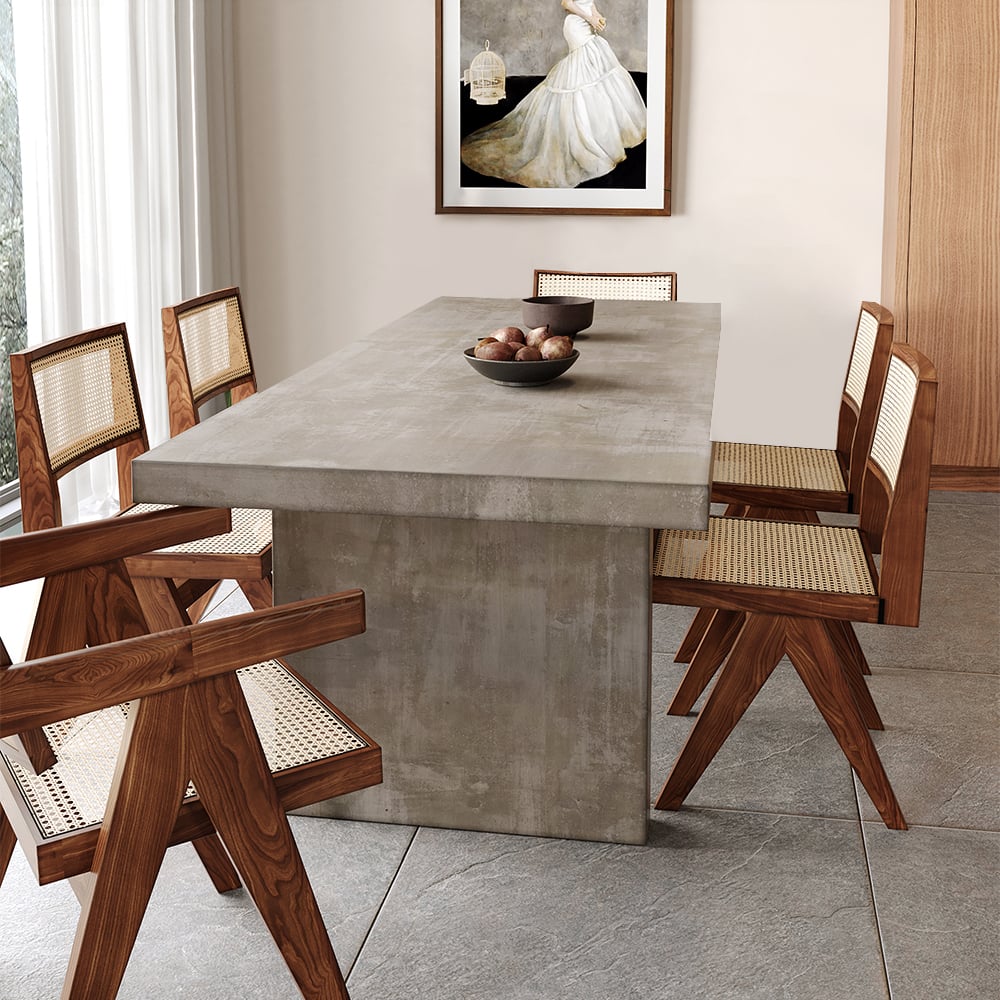
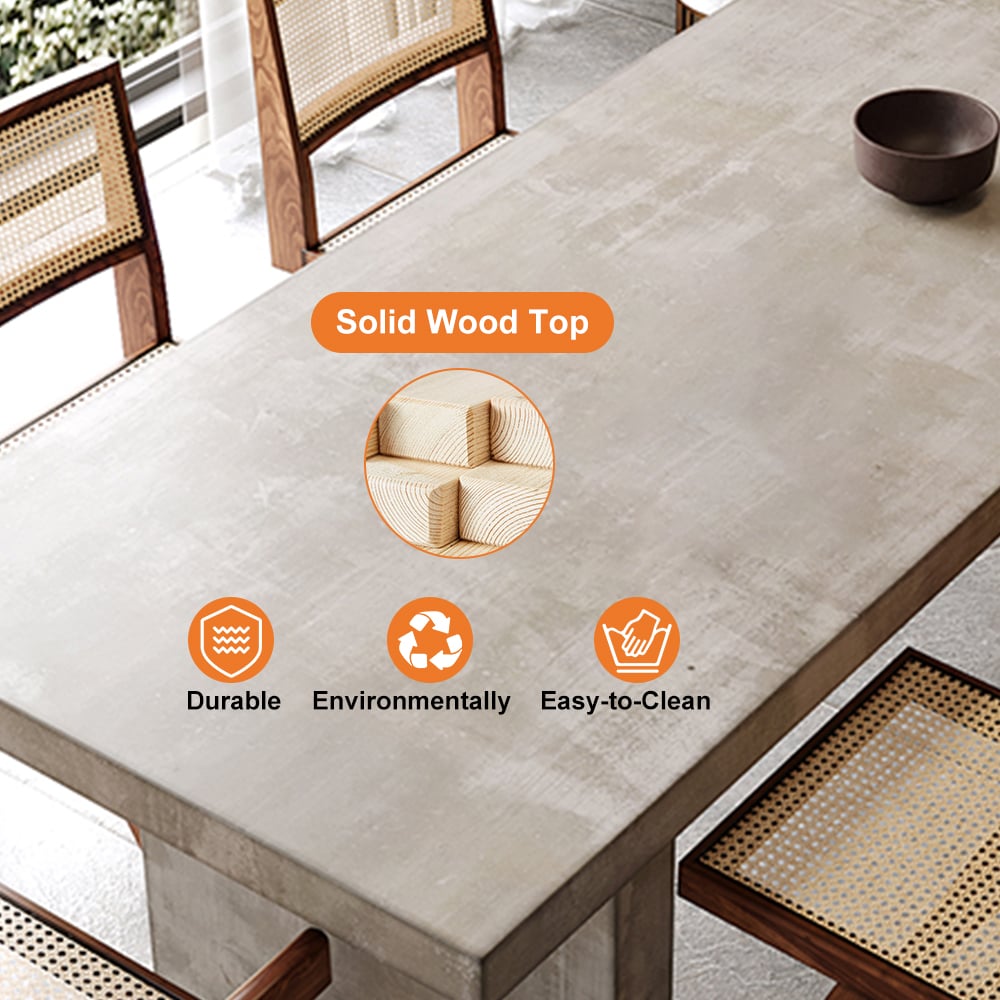
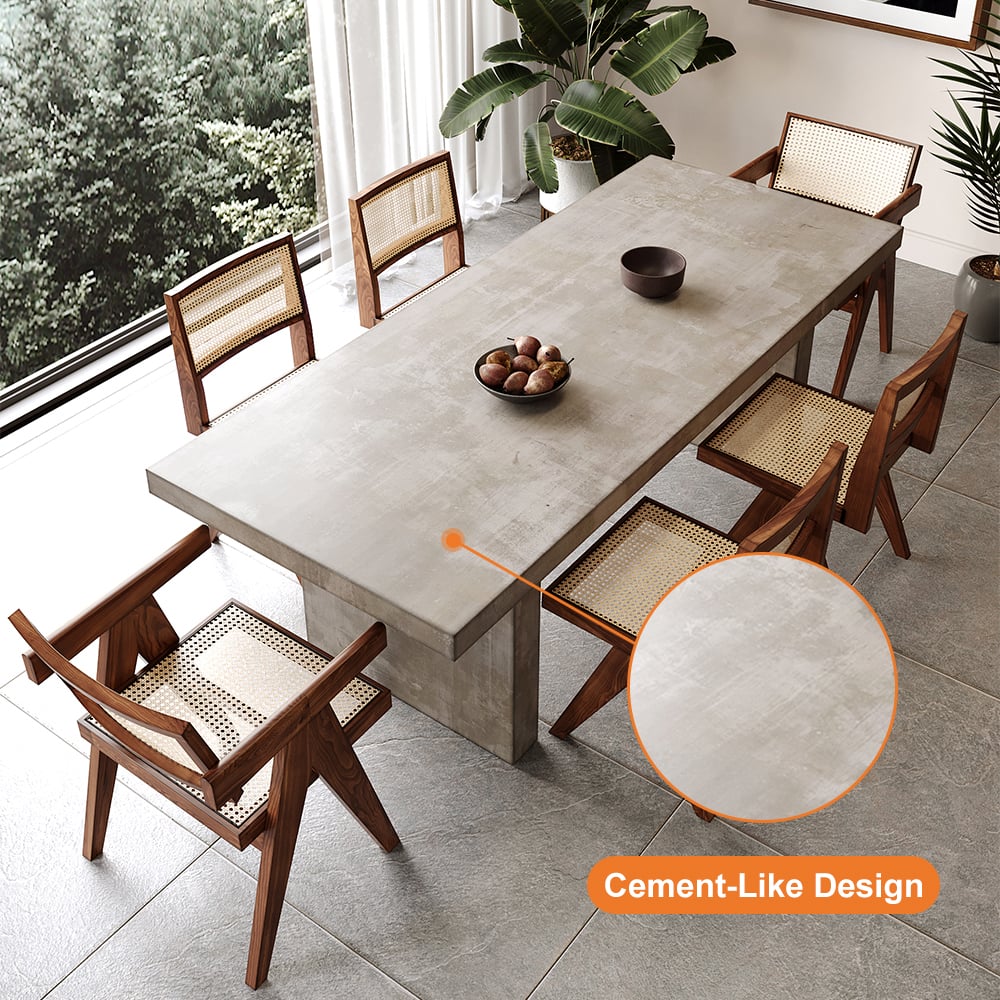
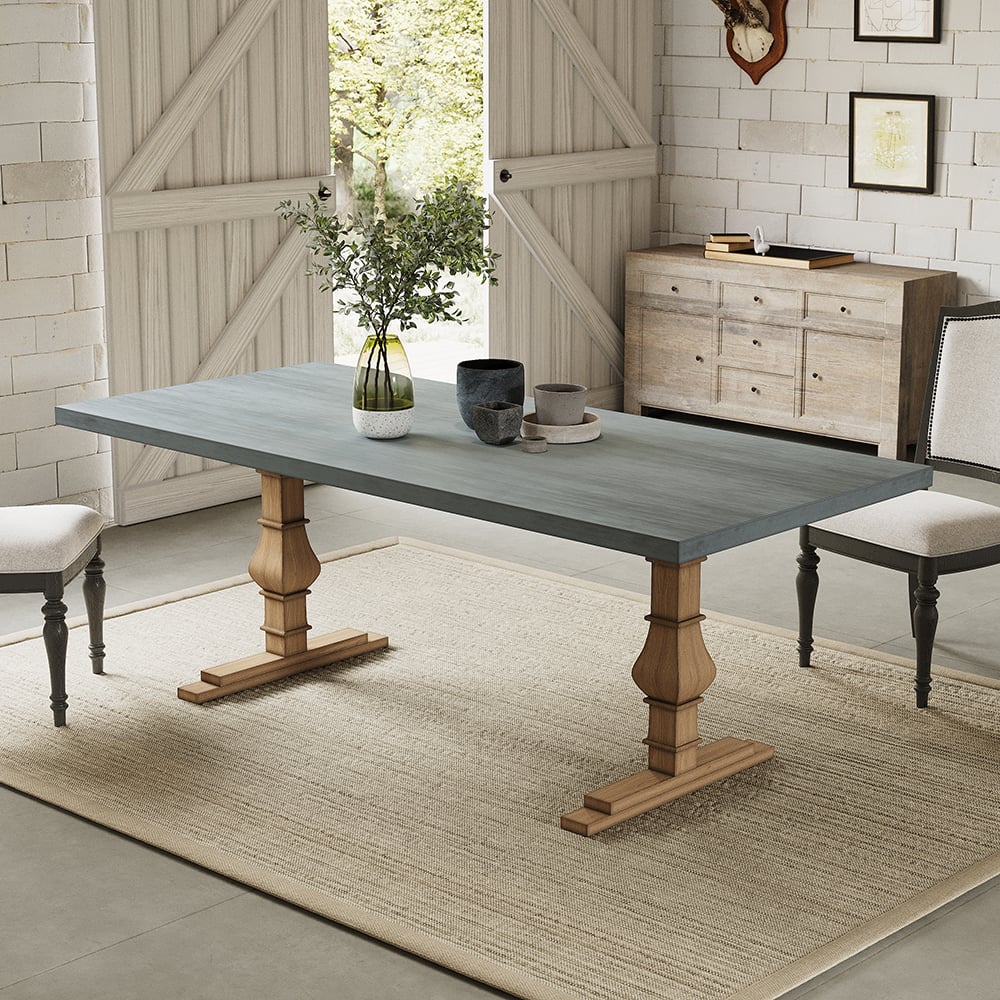
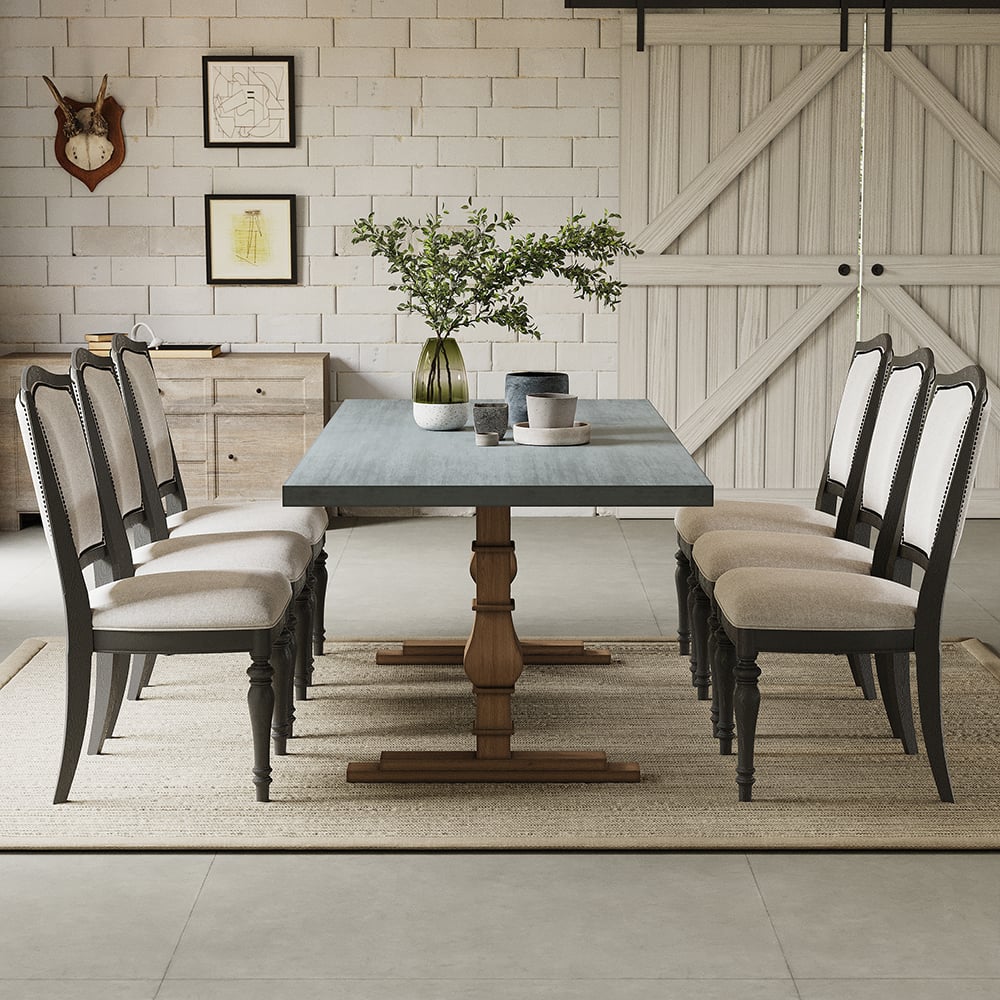
Homary’s Upoak Series 70.9” Farmhouse Rectangle Wood Dining Table is a strong candidate for bench pairing. It runs $1,159.99, holds a 4.9 star rating across 36 reviews, and comes in a concrete gray finish with a double pedestal base. The rectangular shape and open-leg design are exactly what a bench needs to work well, since there is no corner leg to crowd a bench sitter’s knees.
To be straightforward about it: Homary’s current dining table catalog does not include a matched table-and-bench set as a single product. If you want the bench look, plan to buy a separate bench sized to match the table length (roughly the same length as one long side, or a few inches shorter) and a seat height around 18 inches so it lines up with the table. A double pedestal table like the Upoak Series gives you the clearest runway for that kind of pairing.
Key Takeaways
- A bench seats about 1.5 to 2 times as many people per linear foot as chairs, which is the main reason farmhouse tables pair with one.
- Benches lack back support and are harder for elderly or mobility-limited guests, so a mixed setup (bench on one side, chairs elsewhere) usually works better than an all-bench table.
- Rectangular tables with a pedestal or trestle base are the easiest shape and base style to pair with a bench, since there are no corner legs in the way.
- If you like a farmhouse table such as the Upoak Series, budget for a separately purchased bench sized to the table rather than expecting a matched set, since one is not currently sold as a single product.
Measure your space, count how many people you actually need to seat at once, and decide from there whether a bench earns its spot at your table.
FAQ
Does a bench seat more people than chairs at a dining table? Yes. A bench typically seats about 1.5 to 2 times as many people per linear foot as individual chairs, because people can sit closer together without chair arms or frames taking up space. The exact number depends on the bench design and how snug people are willing to sit.
Is a bench comfortable for a full dinner? It depends on the length of the meal and whether the bench is against a wall. Short meals are fine for most people, but long dinners can get uncomfortable without back support, especially for older adults.
What size bench fits a farmhouse dining table? A good rule is to match the bench length to one long side of the table, or go a few inches shorter so it does not stick out past the corners. Bench seat height should be around 18 inches to match standard dining chair height.
Can you use a bench on both sides of a dining table? Yes, though most households use a bench on one side and chairs on the other or at the ends. All-bench setups maximize seating but remove back support and easy exit for everyone at the table.
Are benches good for small kids? Generally yes. A bench lets you sit a child between two adults, which is more secure than a single dining chair a toddler might tip. Benches also hold up better to spills and climbing than upholstered chairs.
What table shape works best with a bench? Rectangular tables work best because they have a long, straight edge for the bench to run along. Round or oval tables do not have enough straight edge length to seat more than two or three people comfortably on a bench.
Does a bench work with a table that has four legs at the corners? It can, but it is not ideal. Corner legs tend to get in the way of knees for anyone sitting mid-bench. A pedestal or trestle base leaves the space under the table open and works better with bench seating.
Is it hard for older adults to use a dining bench? It can be. Benches have no arms to push off of and no back to lean against, which makes sitting down and standing up harder for anyone with hip, knee, or balance issues. Seating older guests in chairs with arms and reserving the bench for kids or younger adults is a common workaround.
Can a bench tuck under the table when not in use? Yes, that is one of its biggest advantages. A backless bench slides fully under the tabletop, which frees up floor space in smaller dining rooms or rooms that double as a workspace.
Is a bench cheaper than buying matching dining chairs? Usually. A single bench that seats 3 to 4 people typically costs less than buying 3 to 4 individual dining chairs of similar quality, though prices vary by material and brand.