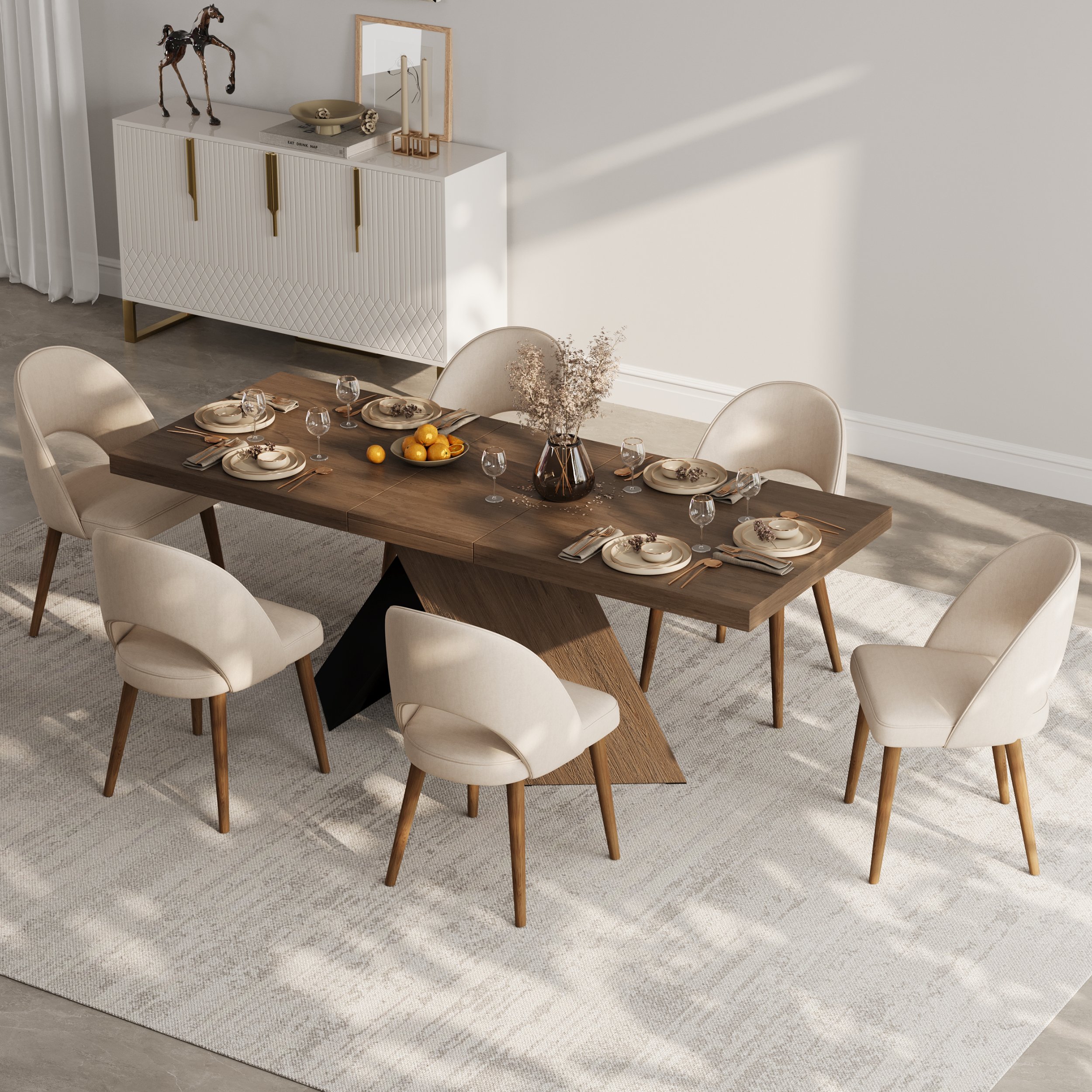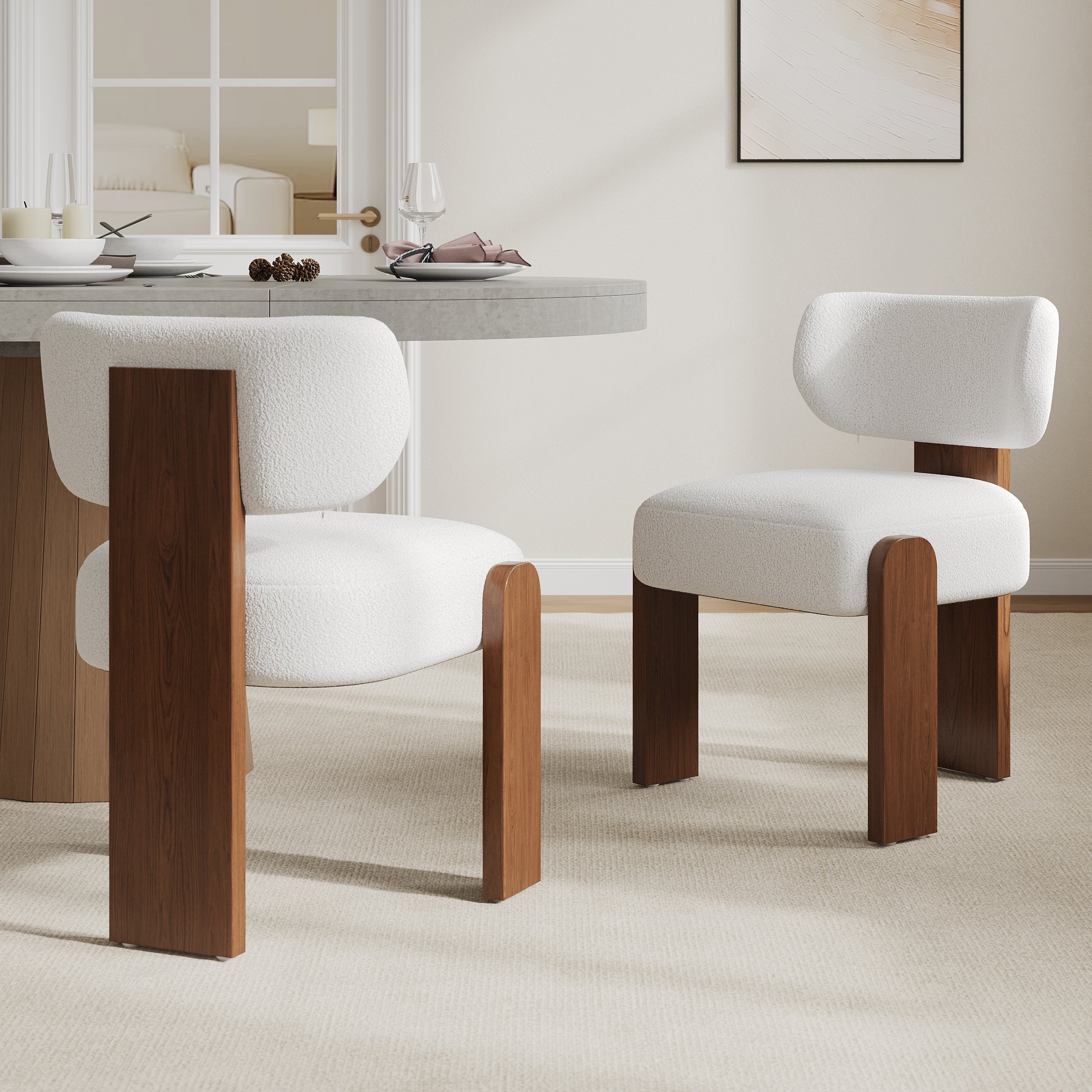
Stand in front of three farmhouse dining sets online and you’ll notice the chairs almost never match the table description. One site calls a spindle chair “farmhouse,” another calls the same shape “Windsor,” and a third throws “cross-back” onto a chair with two crossed boards and calls it French country. The names aren’t interchangeable. Each one refers to a specific, centuries-old chair construction.
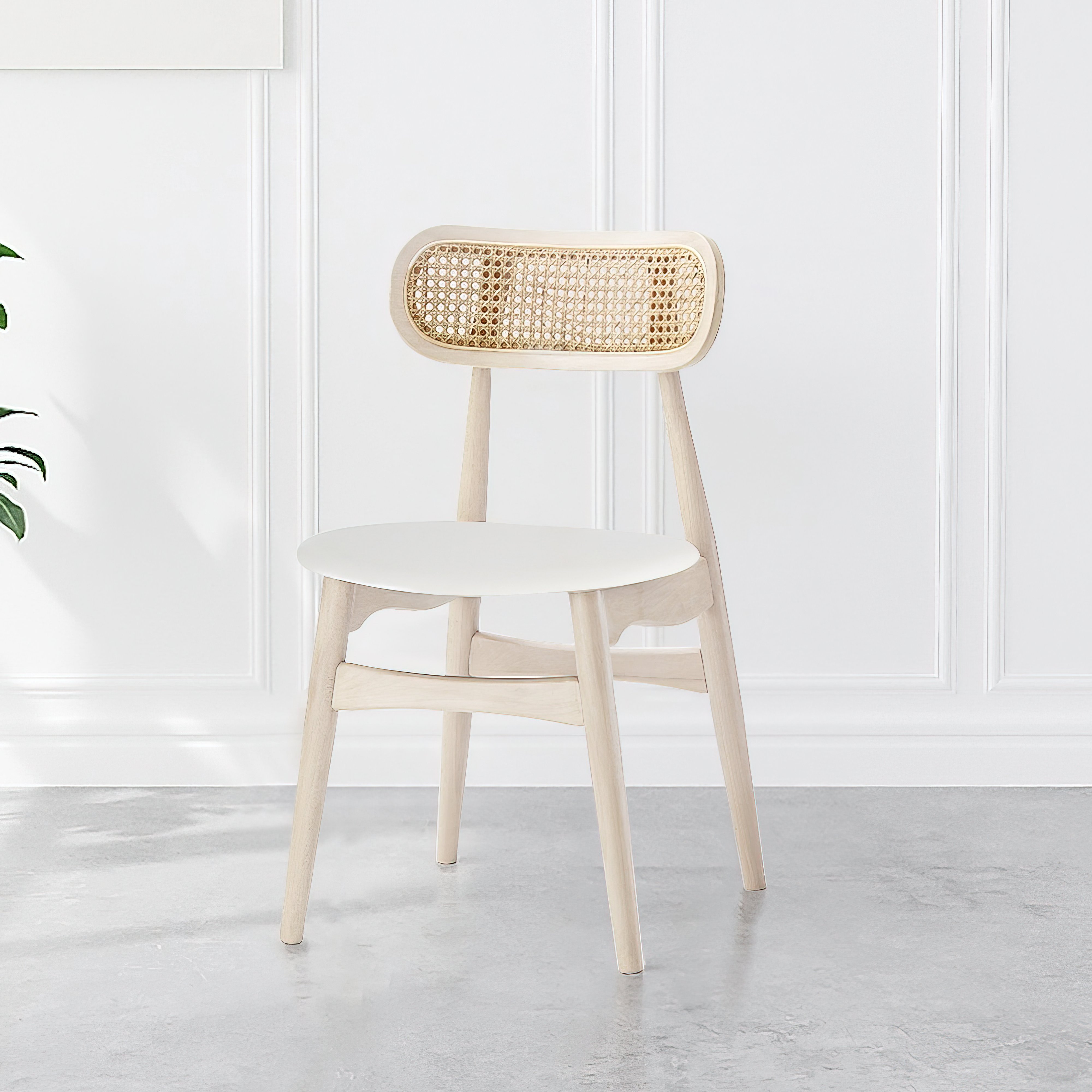
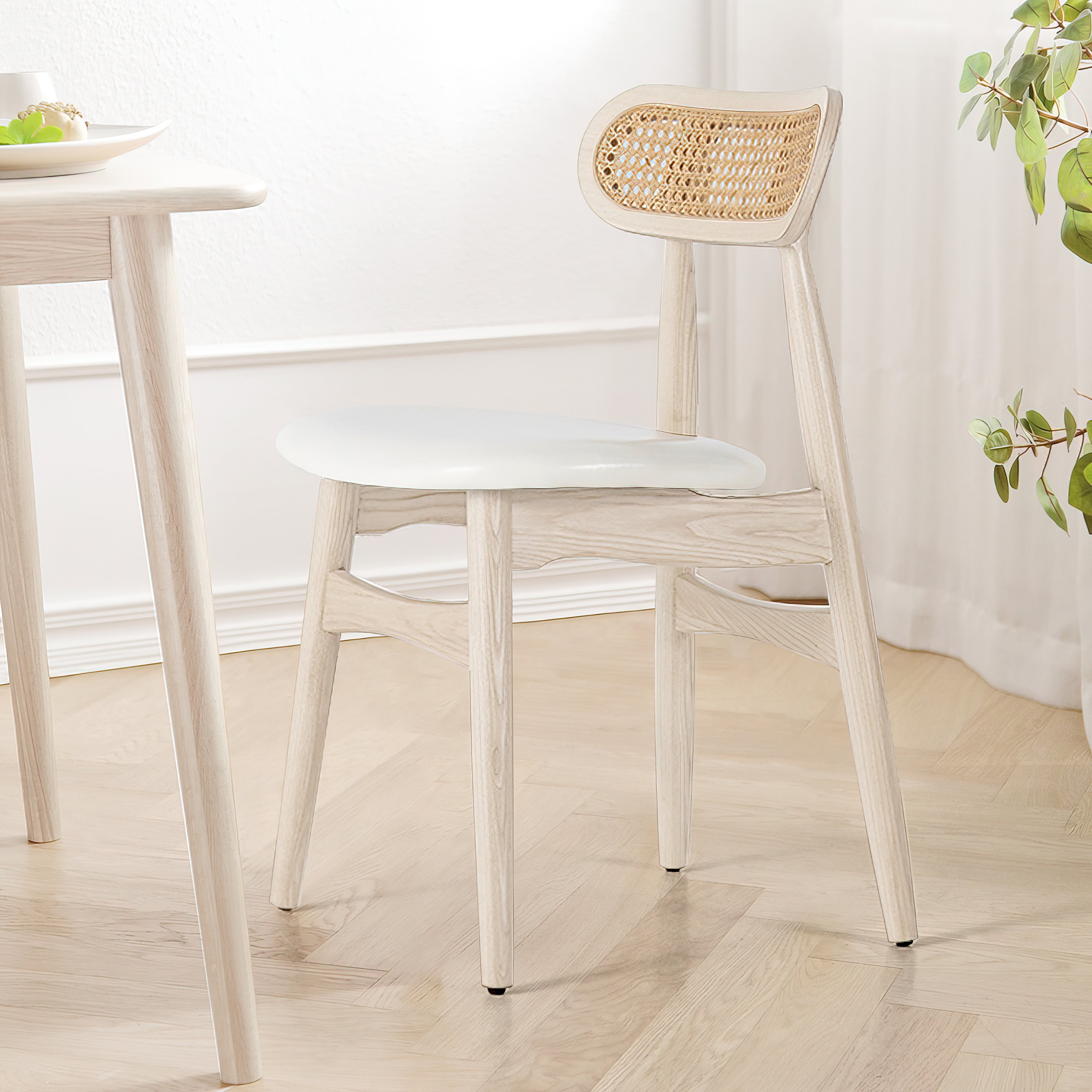
Windsor, ladder-back, and cross-back chairs are three distinct farmhouse dining chair styles that differ mainly in how the back is built: a Windsor has thin round spindles fanning up from a solid seat, a ladder-back has flat horizontal slats stacked like rungs, and a cross-back has two slats set at an angle to form an X. All three show up in farmhouse and modern farmhouse rooms, but they come from different countries, different centuries, and they sit differently too.
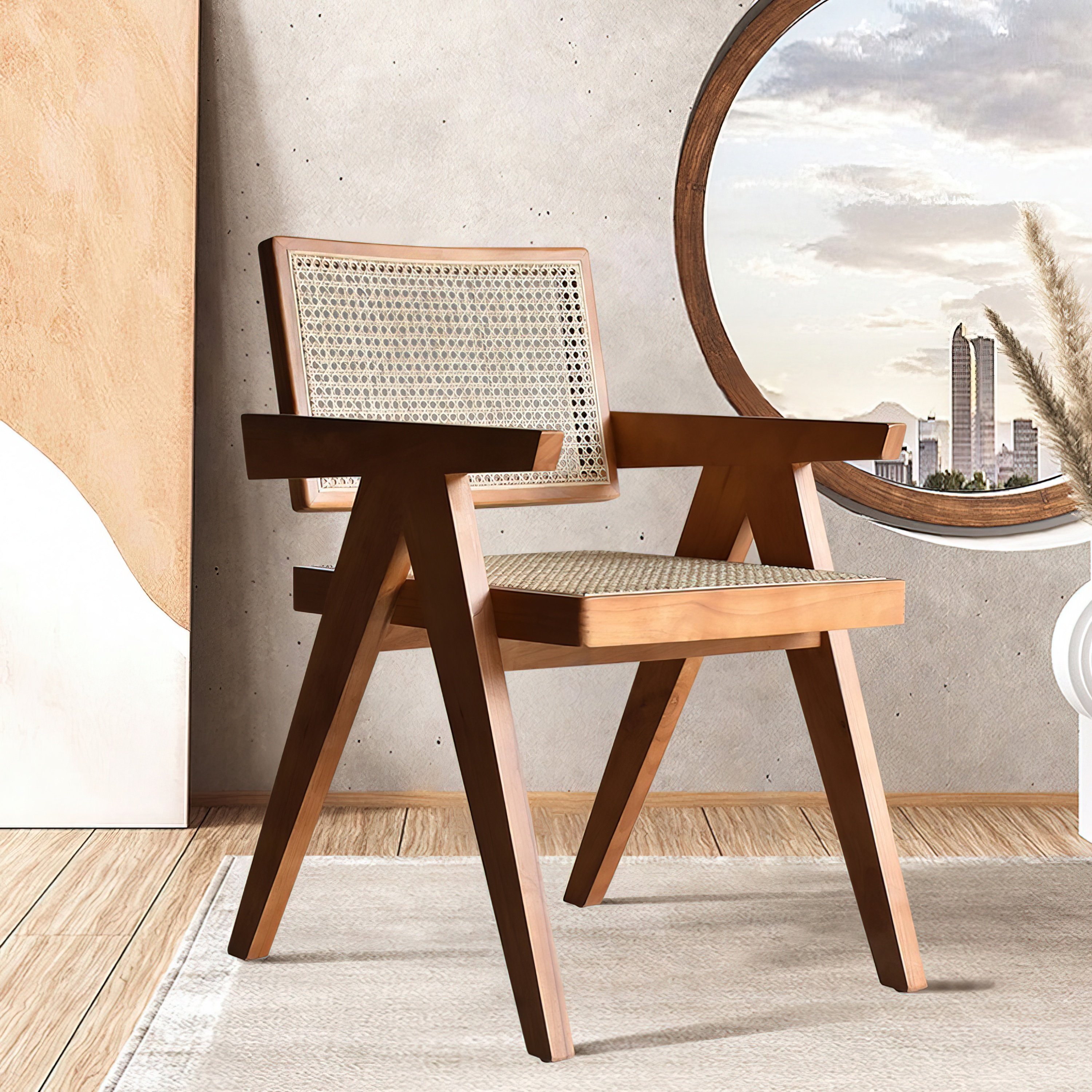
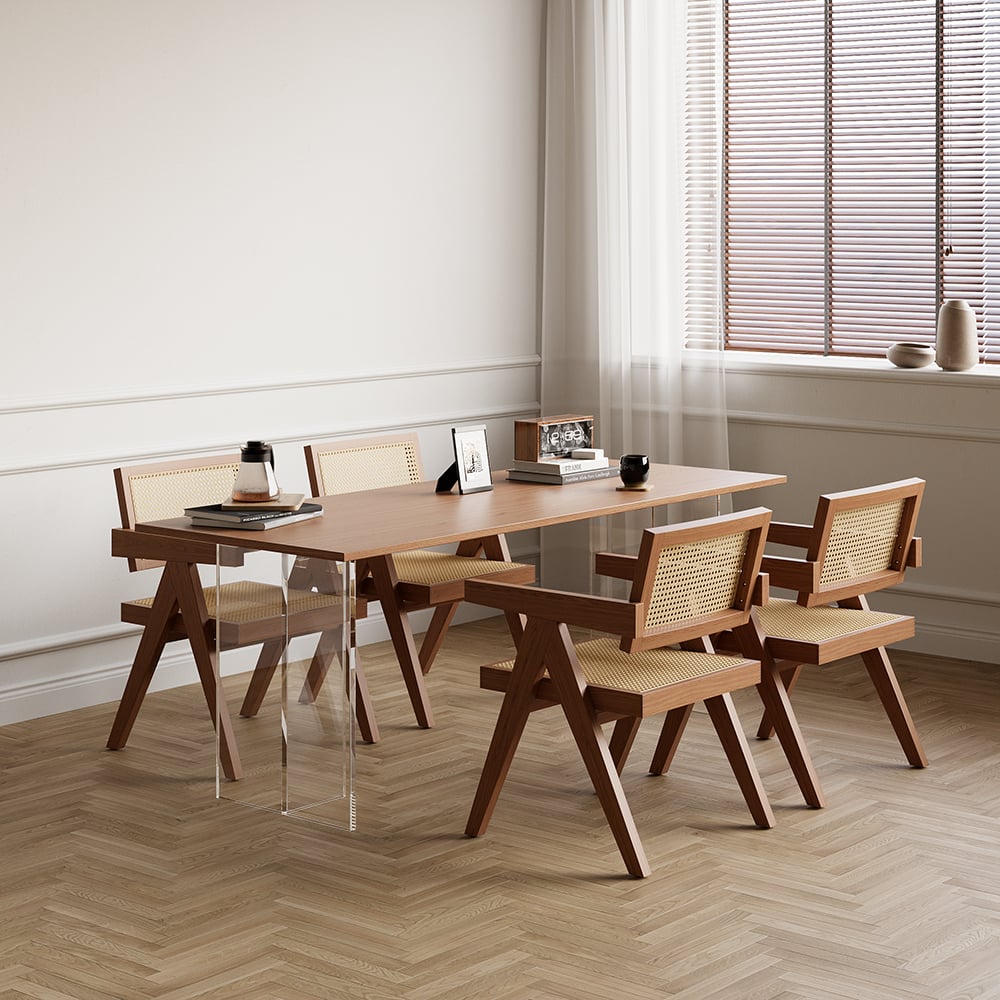
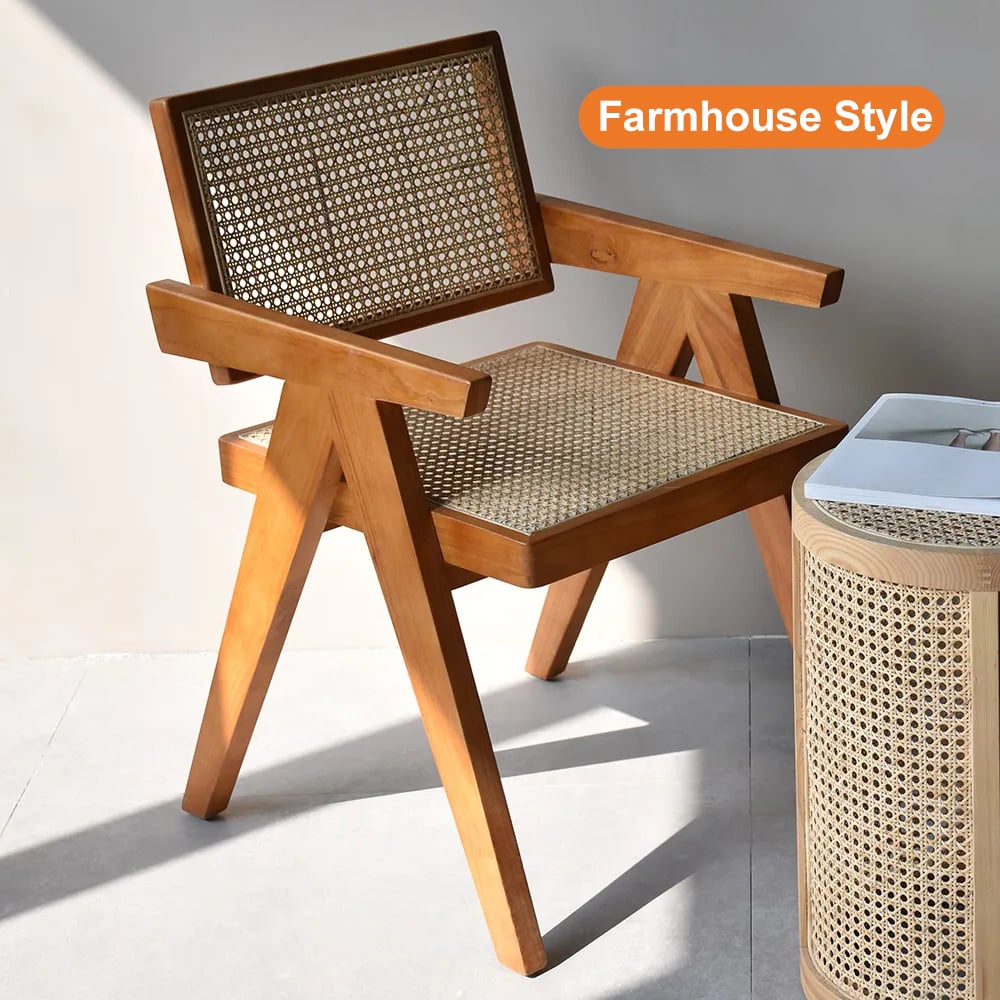
Below is what each style actually looks like, where it came from, how comfortable it tends to be, and which rooms it fits best.
Windsor Chairs: The Spindle-Back Original
A Windsor chair is built around a solid wood seat. The legs and the back spindles are round-tenoned, meaning they’re carved into dowels and pushed into holes drilled straight into that seat, rather than joined the way a normal chair frame is joined. That’s the detail that makes a Windsor a Windsor, not just the fan of spindles you see from across the room.
The style traces back to England, with wheelwrights shaping chair spindles the same way they shaped wagon wheel spokes as early as the 1500s. It picked up the “Windsor” name once it became associated with the English town of Windsor in the 1700s. High Wycombe, in Buckinghamshire, became the real manufacturing center for the style. The story that King George II “discovered” the chair about sheltering from rain during a storm is a popular legend, but historians treat it as unverified, not fact.
Visually, a Windsor has:
- A solid, saddle-shaped wooden seat
- Turned (lathe-shaped) legs, often splayed outward
- Thin spindles radiating up from the seat into a curved top rail or comb
Ladder-Back Chairs: The Farmhouse and Shaker Staple
A ladder-back chair swaps the spindles for two to six flat horizontal slats stacked between two vertical back posts, the way rungs stack on a ladder. It’s one of the oldest chair forms still in common production.
Ladder-back construction dates to the Middle Ages in homes across Europe, and by the 1600s it was one of the most common chair styles in England. It carried over to colonial America and became closely tied to the Shakers, a religious community that built ladder-back chairs as a core part of their furniture business. Shaker ladder-backs added a distinctive feature: tilters on the rear feet, a Shaker invention that let a sitter lean back without wearing down the chair legs.
Visually, a ladder-back has:
- Straight, usually turned back posts
- Two to six horizontal slats between them
- Seats that are often woven rush, cane, or a simple wood plank
Cross-Back (X-Back) Chairs: The Modern Farmhouse Favorite
A cross-back chair (sometimes called an X-back) replaces the spindles or slats with two angled boards that meet in the middle of the backrest, forming an X. It is the newest of the three styles by a wide margin.
Cross-back chairs trace to early 20th-century French bistros and cafes, furniture makers wanted something sturdy, simple, and cheap to produce for high-turnover seating. The design draws on the bentwood tradition popularized by Thonet, simplified down into flat, angled slats instead of curved bent wood. The X shape adds structural bracing to the back and keeps the chair light to stack and move.
Visually, a cross-back has:
- Two straight or slightly curved slats crossing in an X
- A simple frame, usually turned or straight legs
- A low-to-medium back height compared to a Windsor’s tall spindle fan
Cross-backs are the style you’ll see flooding modern farmhouse Pinterest boards and wedding venues right now, the shape reads as “farmhouse” instantly, with no carving or ornamentation required.
Side-by-Side Comparison
| Feature | Windsor | Ladder-Back | Cross-Back |
|---|---|---|---|
| Back detail | Fanned round spindles | Horizontal flat slats | Two angled slats forming an X |
| Origin | England, 16th-18th century | Medieval Europe, refined in 17th-century England and by American Shakers | Early 20th-century French bistros |
| Seat | Solid carved wood, saddle-shaped | Often rush, cane, or wood plank | Wood or upholstered |
| Typical back height | Tall (comb-back or hoop styles common) | Medium | Low to medium |
| Overall look | Detailed, slightly formal country | Plain, humble, Shaker-simple | Clean, versatile, cafe-casual |
Comfort Differences
None of these three were built with cushions in mind, but they don’t sit the same.
A Windsor’s solid saddle seat is carved with a slight contour, so it can be more comfortable bare than people expect, the spindle back still offers little lower-back support. Ladder-back chairs put the support exactly where the slats sit, so a chair with slats spaced to hit the mid and lower back tends to feel better over a long dinner than one with slats bunched up high. Cross-back chairs usually have a shorter back, which means less support during a long meal. Many modern cross-back chairs come upholstered or with a seat cushion built in, which offsets that.
If comfort during long meals matters more than look, a padded seat pad on any of the three closes most of the gap between them.
Which Room and Style Each One Fits
Windsor chairs pair naturally with traditional or English country kitchens, a farmhouse table with turned legs, or a room that already has some historical detail (wainscoting, a hutch, older wood tones). They read as classic rather than trendy, so they tend not to date the way a very current style might.
Ladder-back chairs fit true cottagecore, Shaker-inspired, or minimalist farmhouse rooms. The look is plain by design, so they work well when the rest of the room already has visual interest (a patterned rug, open shelving, colorful dishware) and you don’t want the chairs competing for attention.
Cross-back chairs suit modern farmhouse, French country, and transitional dining rooms. They’re the easiest of the three to mix with a more contemporary table, since the shape reads as “farmhouse-adjacent” without pulling in as much historical weight as a full Windsor.
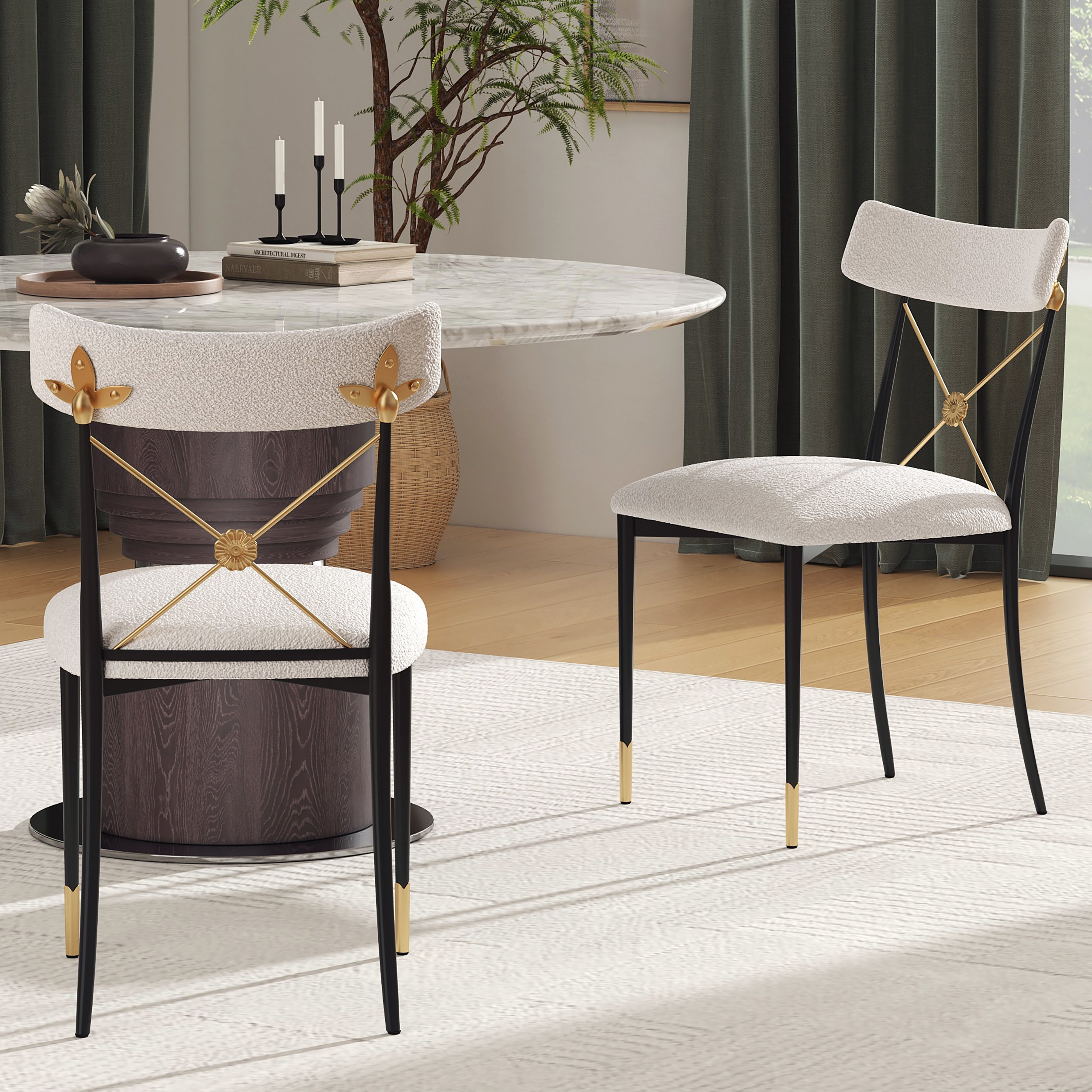
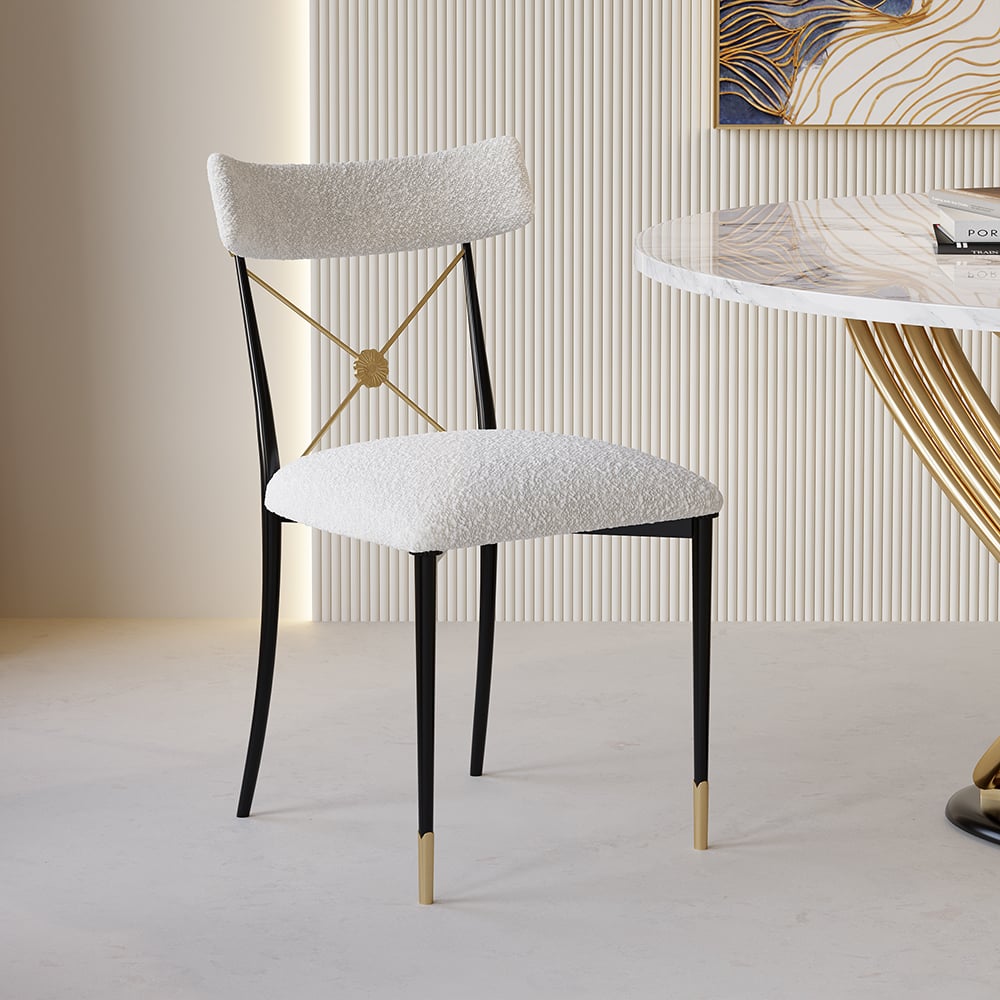
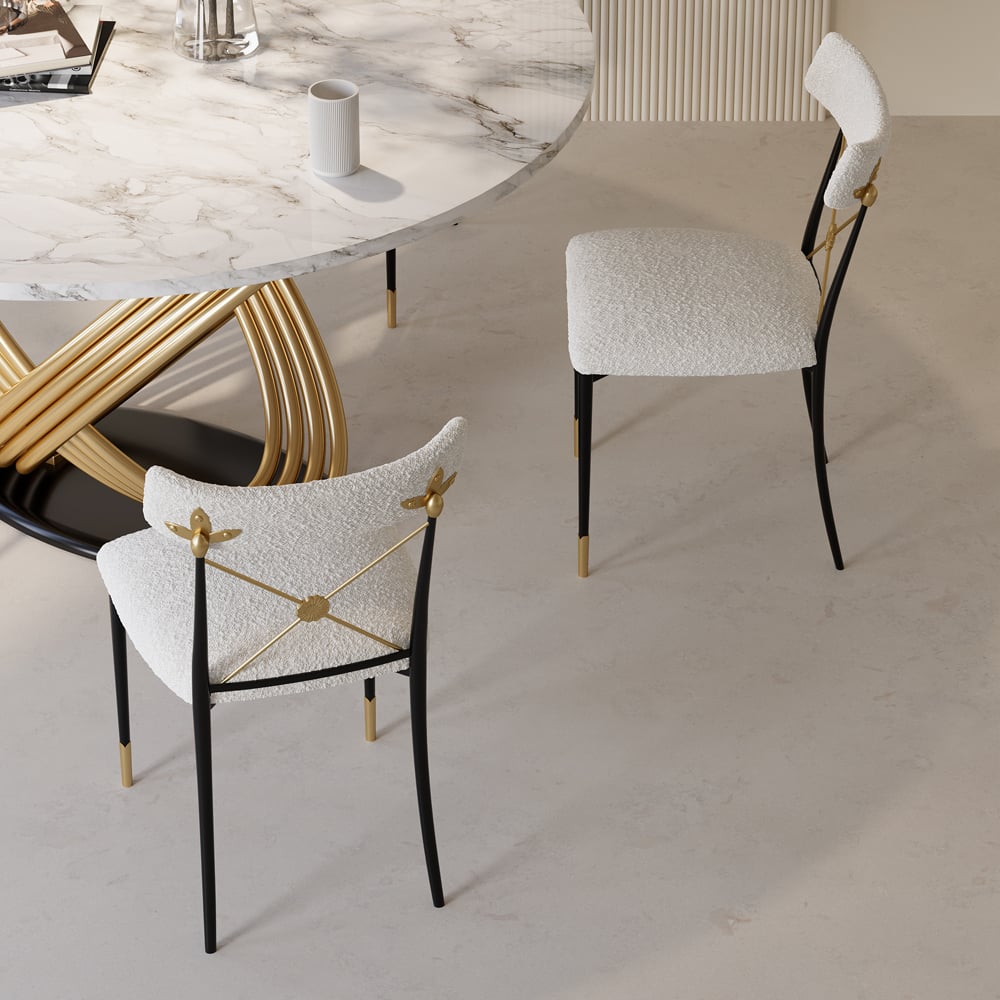
A quick product note: Homary’s dining chair catalog currently carries one chair labeled “cross back,” a Mid-Century Modern Dining Chair with Sherpa Upholstery ($329.99, listed at 4.2 stars from 14 reviews). Worth flagging honestly: it has a stainless steel frame and boucle upholstery, so it reads as mid-century modern rather than a traditional wood farmhouse X-back. A search of Homary’s current catalog did not turn up a dedicated Windsor or ladder-back dining chair to recommend alongside it. If you want a true wood spindle or slat-back chair, you’ll likely need to look beyond Homary’s current lineup, at least until their catalog expands.
Key Takeaways
- Windsor chairs use round spindles set into a solid carved seat, and the style goes back to 16th-century England.
- Ladder-back chairs use flat horizontal slats and trace to medieval Europe, later refined by American Shakers.
- Cross-back chairs use an X-shaped slat pattern and are the youngest of the three, developed for French cafes in the early 1900s.
- Pick based on the room: Windsor for classic country kitchens, ladder-back for pared-down Shaker-style spaces, cross-back for modern farmhouse and French country rooms.
If you’re shopping for a full dining set, look at how the chair back height compares to your table’s apron height and try to sit in at least one sample chair of your chosen style before buying a full set of six.
FAQ
What is the difference between a Windsor chair and a ladder-back chair? A Windsor chair has thin round spindles set into a solid wood seat. A ladder-back chair has flat horizontal slats stacked between two back posts instead. Windsors use a distinct construction method too: the legs and spindles are round-tenoned directly into the seat, not joined the way a standard chair frame is joined.
What is a cross-back chair called? It is most often called a cross-back chair or an X-back chair, named for the X shape formed by the two angled slats in the backrest. It is sometimes grouped under French country or bistro chair styles, tracing to its origin in early 20th-century French cafes.
Are Windsor chairs comfortable for everyday dining? Windsor chairs can be reasonably comfortable, since the solid seat is usually carved with a slight contour to fit the body. The spindle back gives little lower-back support, so a seat cushion helps for meals that run long.
Is a ladder-back chair the same as a Shaker chair? Not exactly. Ladder-back is the general chair style with horizontal slats. Shaker chairs are a specific American branch of ladder-back design, known for extra simplicity and a rear-foot tilter feature the Shakers invented.
Do cross-back chairs work with a farmhouse table that isn’t rustic? Yes. Cross-back chairs tend to look clean and simple enough to pair with a lightly finished or even a more contemporary table, which is part of why they show up so often in modern farmhouse and transitional dining rooms.
Which style is easiest to find with arms for the head of the table? Windsor chairs are the most commonly produced with armrests, since the spindle-and-comb construction extends naturally into an arm captain’s chair. Ladder-back and cross-back armchairs exist but are less common in furniture catalogs.
Why are cross-back chairs so popular in farmhouse decor right now? The X shape reads as rustic and farmhouse-style instantly, with no carving or heavy ornamentation needed, making it an easy visual shortcut for the look. It has roots in cafe seating too, so it tends to look casual and versatile rather than formal.
Can you mix Windsor, ladder-back, and cross-back chairs at the same table? You can, and many farmhouse rooms do mix styles, especially using a different chair at the head of the table. The easiest way to keep it looking intentional is to keep the wood tone or finish consistent, no matter how much the back style differs.
What wood is typically used for these three chair styles? Traditional Windsor and ladder-back chairs were often made from a mix of woods in one chair, such as elm or pine for the seat and hickory, ash, or maple for the spindles and legs, since different woods suit different parts of the construction. Cross-back chairs are commonly made from beechwood, historically bent using heat and molds.
Are any of these three styles considered more durable than the others? Ladder-back and Windsor chairs both have long track records of holding up for decades when built from solid wood, relying on mortise-and-tenon or round-tenon joinery rather than glue alone. Cross-back chairs can be just as solidly built, but durability depends more on the individual manufacturer’s materials than on the style itself.