The pumpkins go into a box in the basement every November. The Easter eggs get packed away every spring. If your centerpiece bin is starting to take over a whole shelf, you don’t need more decor. You need a system.
A farmhouse dining table centerpiece is built from one reusable base, like a wooden tray, a woven runner, or a low dough bowl, plus a small rotating set of seasonal pieces such as florals, candles, or greenery that get swapped every few months. This keeps the tablescape fresh year round without buying an entirely new centerpiece four times a year. The trick is picking a base that works in every season and only changing the accents.
Why a Base-Plus-Accents System Works Better Than Buying New Every Season
Most people who search for centerpiece ideas end up with four unrelated purchases a year: a spring vase, a summer bowl, a fall arrangement, and a winter set of candles. None of it matches, and half of it gets used once.
A farmhouse table looks pulled together when the same wood tones, textures, and container shapes show up in every season. So the fix is simple. Pick one neutral base you keep on the table all year, then change only the small stuff sitting on top of it.
Here’s what that looks like in practice.
| Element | Stays the same all year | Changes every season |
|---|---|---|
| Tray or runner | Yes | No |
| Candle holders | Yes (just swap candle color) | Candle color/scent only |
| Vase or dough bowl | Yes | No |
| Florals/greenery | No | Yes |
| Small accent pieces (pumpkins, eggs, pinecones) | No | Yes |
Pick Your Reusable Base First
Before picking a single seasonal accent, choose the base piece the rest of the centerpiece will sit on. A good base is neutral in color (unfinished wood, matte black, cream, or galvanized metal), long and low rather than tall, and sized to about two thirds the length of your table.
Common options that work in every season:
- A long wooden tray or dough bowl (the classic farmhouse choice)
- A linen, burlap, or waffle-weave table runner
- A galvanized metal tray
- A simple wood or ceramic pedestal bowl
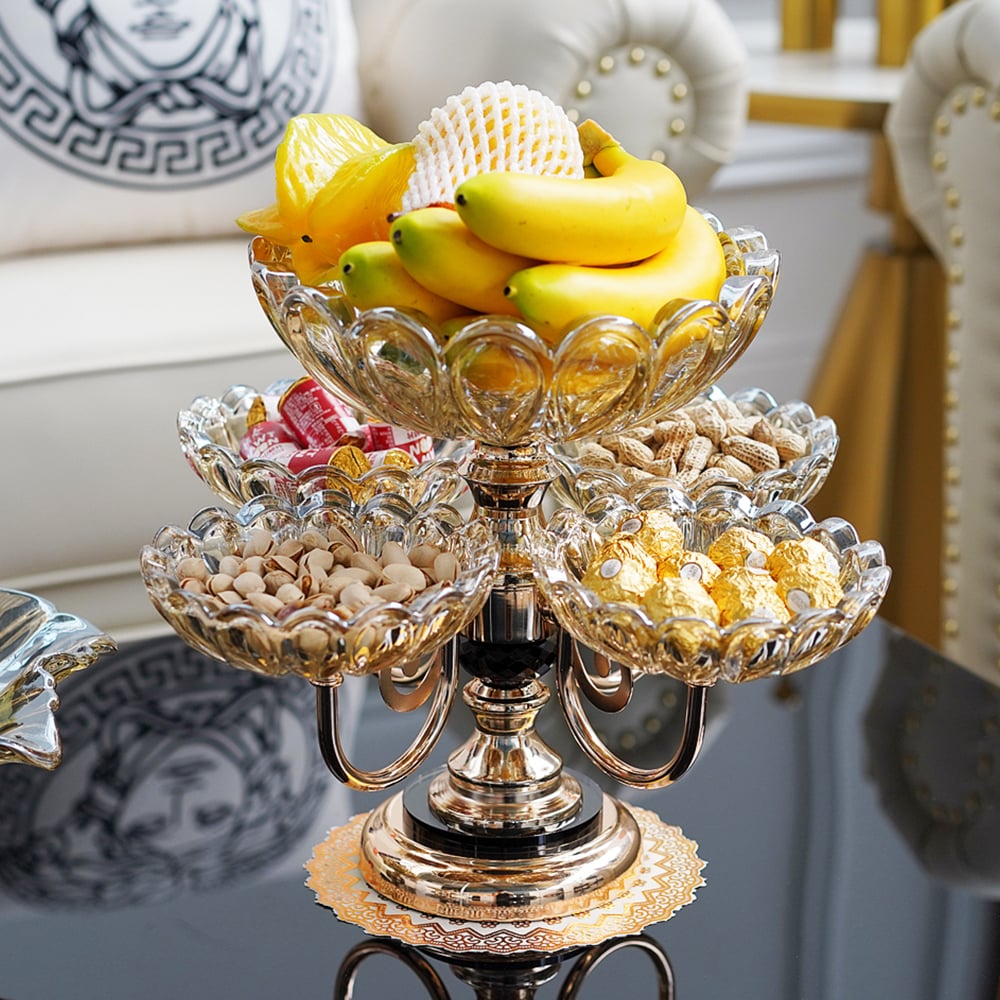
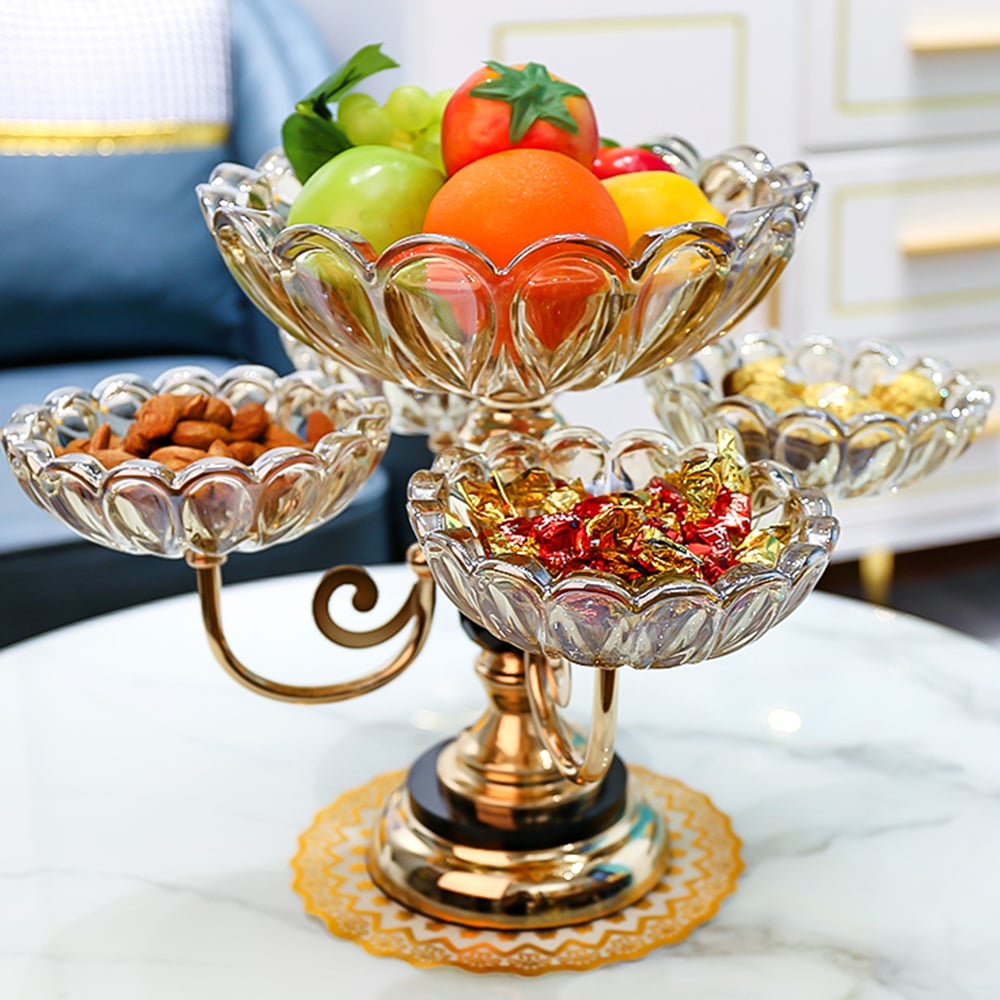
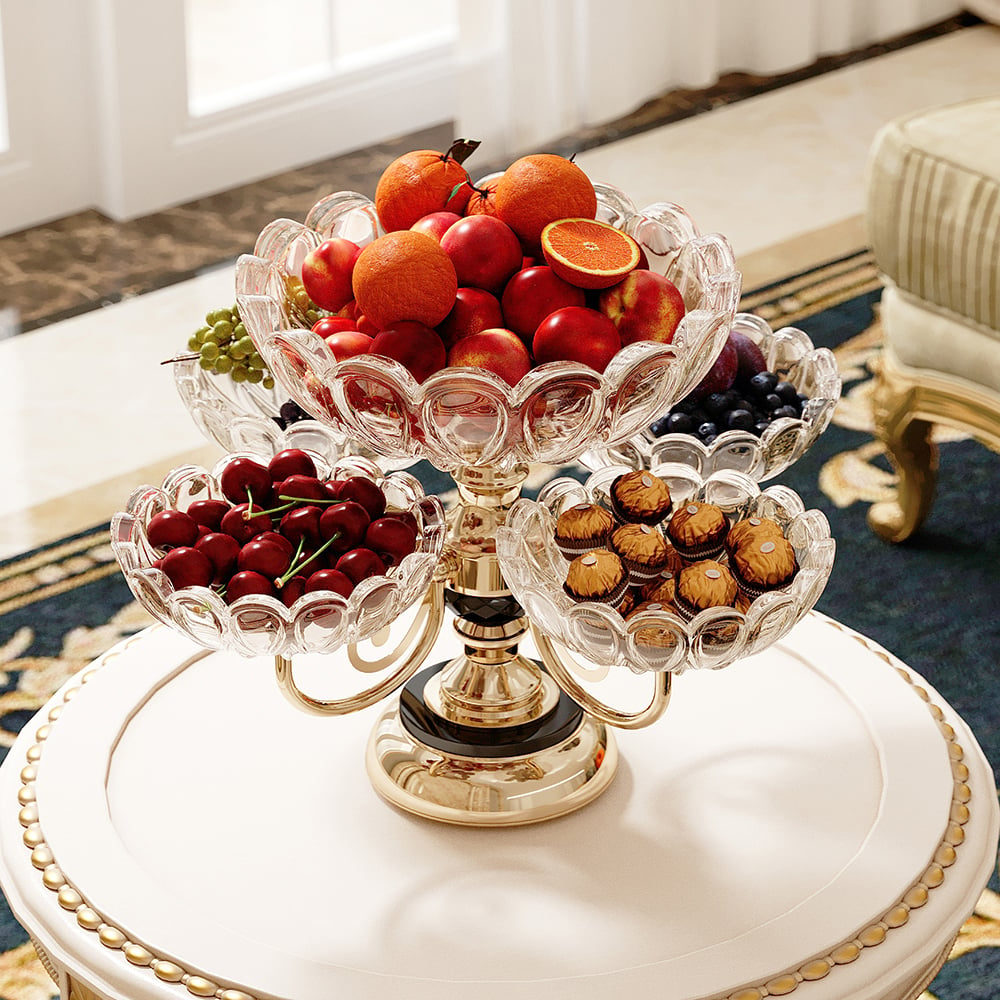
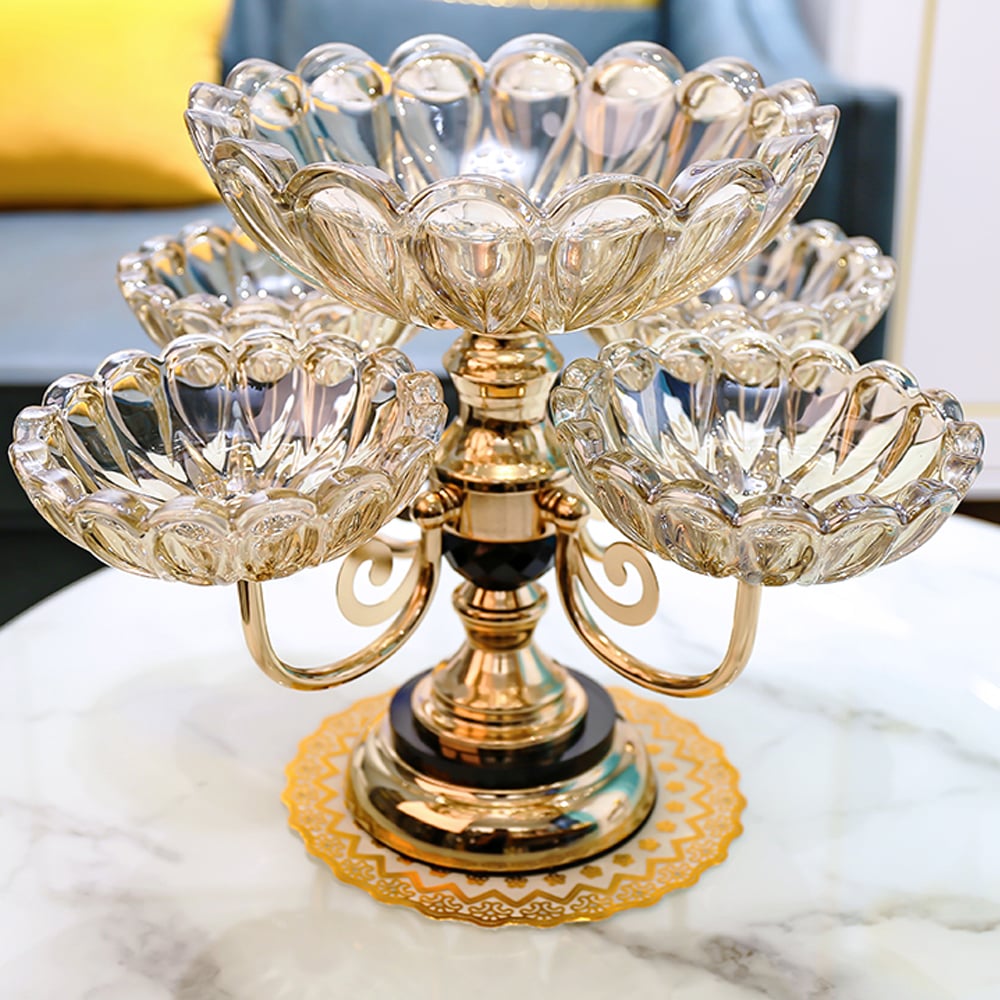
Homary’s catalog leans more toward modern and organizational decor pieces than rustic wood trays, so if you’re shopping specifically for a distressed wood dough bowl or a burlap runner, a dedicated farmhouse or home goods retailer will have more options that match that exact look. One piece worth knowing about if you want something for the summer fruit-bowl look below: Homary carries a Rotatable Glass Fruit Basket Multilayer Decor Bowl with Base, a tiered glass bowl on a rose gold base, confirmed live on their site at $129.99. It reads more modern glam than rustic farmhouse, so it fits best as a summer accent piece in a mixed-style dining room rather than as your year-round base.
Spring: Fresh Florals and Pastel Accents
Spring is the easiest season to keep simple because fresh flowers do most of the work on their own. Set a few stems of tulips, ranunculus, or ordinary grocery store daisies into a mason jar or small pitcher, then set that on your base tray.
Add pastel accents in small doses: a few speckled or pastel eggs scattered around the base, a linen napkin in sage or blush, or a handful of moss. Keep the color palette to two or three shades so it doesn’t turn into an Easter basket.
If fresh flowers aren’t practical, a single stem of faux pussy willow or blossom branch in a tall vase gives the same lift with zero maintenance.
Summer: Fruit Bowls and Light, Airy Greenery
Summer centerpieces should feel like they took five minutes, because in a good farmhouse kitchen they usually did. A shallow bowl of lemons, limes, or a mix of stone fruit sits right on your base tray and doubles as an actual snack when guests want one.
Pair the fruit bowl with a few sprigs of eucalyptus or olive branch in a low vase. Skip heavy florals this time of year. Light stems that move a little in the breeze from an open window suit the season better than dense arrangements.
Keep the whole thing under 10 inches tall. Summer dinners tend to run later into the evening light, and a tall arrangement blocks the view across the table right when people want to actually see each other.
Fall: Pumpkins, Wheat Stalks, and Warm-Tone Candles
Fall is where farmhouse style really shows up. Mini pumpkins and gourds (real or faux) cluster nicely around the base of your tray. Add a bundle of dried wheat stalks or dried hydrangea in a short vase for height without bulk.
Warm-tone candles, think amber, cream, or terracotta, in varying heights along the runner add glow for earlier sunsets. Stick to unscented or lightly scented candles at the table so they don’t compete with dinner.
A quick note on safety: keep any lit candle at least a few inches from napkins, place cards, or dried wheat, since dried stalks catch faster than fresh greenery.
Winter and Holiday: Pinecones, Greenery Garlands, and String Lights
Winter centerpieces lean on texture more than color. A simple garland of fresh or faux pine down the center of the table, studded with pinecones and a few sprigs of red berries, reads as classic farmhouse without looking like a craft store display.
Tuck a strand of warm white string lights into the greenery for evening dinners. Battery-powered strands are worth the extra cost here since they skip the cord running across your table.
If you host a big holiday meal, keep the greenery flat and low along the runner rather than piled into a tall arrangement in the middle. Guests need to see and talk to whoever is sitting across from them, and a tall centerpiece piled with ornaments blocks that faster than people expect.
Centerpiece Height: The Rule Almost Everyone Breaks
The single most common centerpiece mistake has nothing to do with style. It’s height. A centerpiece taller than about 12 to 14 inches blocks sightlines for anyone seated at a standard 29 to 30 inch high dining table.
A simple test: sit down at your usual spot and look across the table. If you can’t see the face of the person across from you without leaning to one side, the centerpiece is too tall for that dinner. Save taller arrangements for buffets, sideboards, or tables that are only set for display, not for a seated meal.
Low and long beats tall and narrow almost every time on a dining table. A runner-based centerpiece that spreads out lengthwise instead of stacking up gives you more visual interest without blocking anyone’s view.
Key Takeaways
- Keep one reusable base (a tray, runner, or dough bowl) on the table year round and only swap the small seasonal accents.
- Match the season with texture and color rather than buying all new pieces: fresh florals for spring, fruit and light greenery for summer, pumpkins and wheat for fall, pinecones and garland for winter.
- Keep any centerpiece under about 12 to 14 inches tall so it doesn’t block the view across a seated table.
- Store just the swappable accent pieces between seasons, not the whole setup, and the whole system takes up a fraction of the storage space a full new centerpiece would.
Start with whatever tray, runner, or bowl you already own. Add one seasonal element at a time and stop once the table feels finished rather than full.
Frequently Asked Questions
What is a good centerpiece for a farmhouse dining table? A low wooden tray, dough bowl, or linen runner topped with simple seasonal touches like fresh flowers, a fruit bowl, or a small greenery arrangement works well. The farmhouse look comes from natural materials and a relaxed, uncluttered arrangement rather than anything elaborate.
How tall should a dining table centerpiece be? Keep it under about 12 to 14 inches so seated guests can see each other across the table. Taller arrangements are fine for buffets or tables not being used for a seated meal.
How do I make a farmhouse centerpiece without buying new decor every season? Keep one neutral base, like a tray or runner, on the table year round. Store only the small seasonal accents (florals, pumpkins, pinecones) in a bin and swap them out, rather than replacing the whole centerpiece each time.
What can I use as a farmhouse centerpiece base? A distressed wood tray, a dough bowl, a galvanized metal tray, or a burlap or linen runner all work as a reusable, neutral base. Pick one that’s about two thirds the length of your table.
What flowers work best for a spring farmhouse centerpiece? Tulips, ranunculus, and daisies in a mason jar or small pitcher give an easy, casual look. Faux blossom branches in a tall vase work well too if you want zero upkeep.
What should I put on my table for summer? A shallow bowl of lemons, limes, or stone fruit paired with light greenery like eucalyptus works well. Keep the arrangement low and simple since summer dinners tend to run into the evening.
Are real pumpkins or faux pumpkins better for a fall centerpiece? Real mini pumpkins look great for a few weeks but soften and need replacing. Faux pumpkins cost more upfront but get reused every fall, which fits the reusable-base approach better.
How do I add lights to a winter centerpiece safely? Use battery-powered string lights woven into the greenery rather than a corded set, since a cord running across the table becomes a trip or spill hazard during a meal.
Can I use the same runner or tray in every season? Yes, a neutral wood, linen, or galvanized metal base works in every season because the seasonal color and texture come from the accents you place on it, not the base itself.
How do I keep a centerpiece from blocking conversation at a dinner party? Sit down at the table before guests arrive and check your own sightline across to the opposite seat. If a tall vase or arrangement blocks your view, swap it for something lower and wider, like a runner-based display.